Search


22 Apr 2026
Search
22 Apr 2026

Please allow ads as they help fund our trusted local news content.
Kindly add us to your ad blocker whitelist.
If you want further access to Ireland's best local journalism, consider contributing and/or subscribing to our free daily Newsletter .
Support our mission and join our community now.
To continue reading this article, you can subscribe for as little as €0.50 per week which will also give you access to all of our premium content and archived articles!
Alternatively, you can pay €0.50 per article, capped at €1 per day.
Thank you for supporting Ireland's best local journalism!


A father who was urinating up to 18 times in a 24-hour period because of an enlarged prostate the “size of an orange” has said a new robot-assisted surgery has “significantly improved” his quality of life.
Mark Oliver, 67, a retired electrical engineer living in Long Hanborough, West Oxfordshire, first started experiencing symptoms of an enlarged prostate around 2016, which initially began with interrupted sleep when needing to get up a couple of times to use the loo.
Within two years, Mark said he noticed that his ability to control passing urine “started to fade”, so he went to the doctor, who completed a series of tests which all came back normal.
Mark was prescribed medication to treat symptoms of an enlarged prostate, as later investigations discovered his was “the size of an orange” – when the NHS says it is usually the size of a walnut.
As a result, Mark regularly and involuntarily lost control of his bladder and started needing to wear incontinence pads, before he was offered a new type of surgery called aquablation therapy – a minimally-invasive procedure which uses a high-pressure water jet to remove excess prostate tissue.

Mark told PA Real Life: “When I explain to people how big the improvement is – if normal activity in going to the loo is 100%, I was down to having probably 10% control.
“Now I’m at about 80% control, so it’s not 100% but it’s not far off.
“I’m in a much better place.”
When Mark first started experiencing symptoms at 57 in 2016, he initially thought it might be due to prostate cancer, as his father was diagnosed with the condition in his mid-70s and lived a further two decades.
But investigations over the years – including blood tests, urine flow tests, kidney tests, abdomen MRI scans and neurology appointments – all came back normal and he was diagnosed with an enlarged prostate, known as Benign Prostatic Hyperplasia (BPH).

An enlarged prostate is very common in men over the age of 50, with around one in three of these displaying urinary symptoms, according to Prostate Cancer UK.
The charity says the two main risk factors are age and hormone levels, and having an enlarged prostate does not increase the risk of getting prostate cancer.
Within a couple of years, Mark said he was prescribed a medication called tamsulosin to help reduce the symptoms of an enlarged prostate gland by relaxing the muscle around the area so he could urinate more easily, which “helped a little but not significantly”.
At its worst, Mark said he was using the toilet “a dozen times” during the day and up to “six times a night” when he was forced to get out of bed.
“I’d have pretty sad nights waking up tired and irritable,” Mark said.
By his late 50s, Mark said he was forced to start using low level incontinence pads due to bladder control issues, eventually increasing it to level four, which indicates a need for moderate absorbency, according to the incontinence care company Attends.

“There were times when I’d be out playing golf and I’d be absolutely saturated,” Mark said.
“It was the embarrassment of trying to find a bush to pass urine in, but not concentrate on the game or the company that you were in.
“It was bringing on a little bit of depression and anxiety because it was in the forefront of my mind all the time.
“It made me go into a shell and not socialise.”
Before Mark realised coffee and tea were triggers, he said he would have to leave work meetings up to five times across a couple of hours to use the loo and he could “feel people looking” at him every time he got up.

Being in public became a logistical difficulty for Mark, too.
“I spent most of my time planning my day around where I could go to the loo,” he said.
“I’d even got one of those master keys for disabled toilets so I could dive in there whenever I needed.”
In 2021, aged 62, Mark’s doctor suggested a procedure called Turp – a transurethral resection of the prostate – to help manage his symptoms, but there was a risk of side effects, such as erectile dysfunction and worsening incontinence.
Despite this, Mark said it was “nice to think that there was light at the end of the tunnel”, so he joined a waiting list.
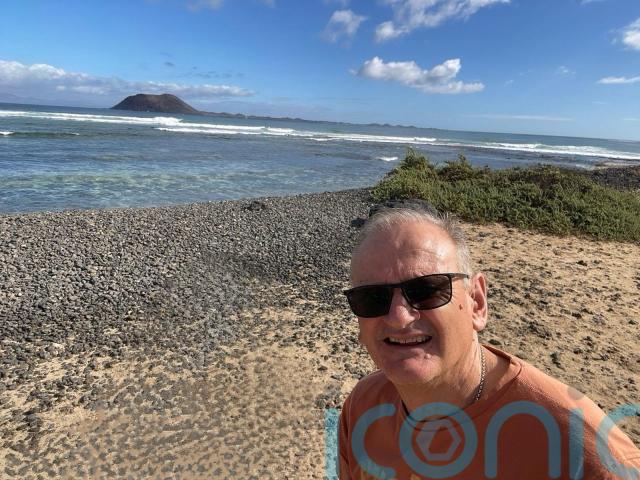
By November 2024, aged 66, he said he was still waiting but he received a phone call from his consultant to offer him an alternative procedure called aquablation therapy – a robotic-assisted, heat-free waterjet procedure for the treatment of enlarged prostates.
It is becoming increasingly available in 13 NHS hospitals across the UK, as well as at Nuffield Health in nine hospitals – including Oxford, Wimbledon, Cardiff, Guildford, Brighton, Warwick, Brentwood, Wolverhampton and Woking.
As an NHS patient, Mark was offered the treatment with no fee at The Manor Hospital in Oxford, a Nuffield Health hospital.
Mark said he was a “little bit apprehensive” but he decided to go through with the two-hour procedure three weeks later.

Mark was admitted and put under general anaesthetic, describing the “most painful” part of the procedure as the moment his catheter was removed around 24 hours after the surgery, but this pain only lasted “a minute or two”.
“It all went very well,” Mark said. “The care was incredible and I was treated so well.”
As for the recovery, Mark added: “It was painful, but not intolerable.
“It was explained to me that there would be no significant improvement for six weeks or so – and there wasn’t.”
But within a year, Mark said his condition “significantly improved” and he is in a “much better place” with his urinary incontinence.
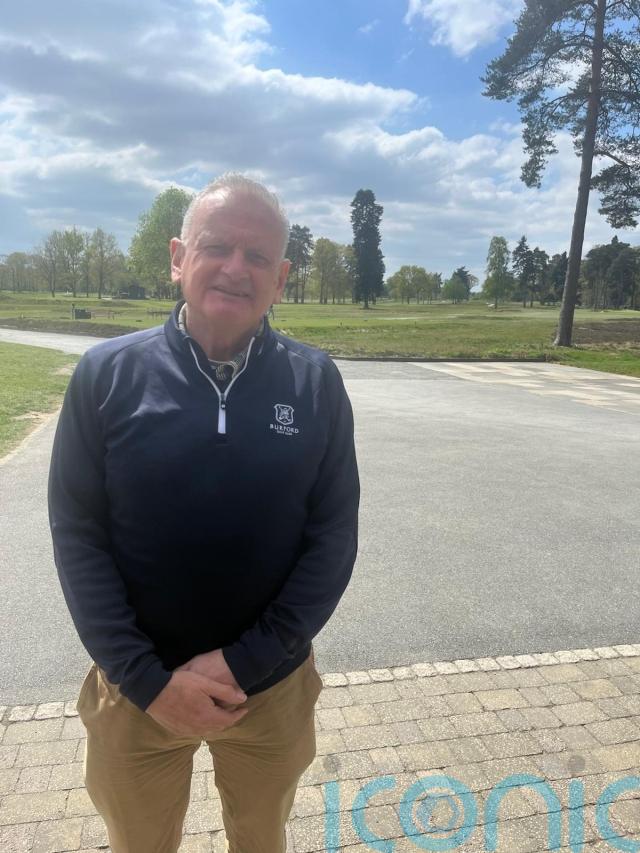
During a normal day, he said he now only uses the loo “two or three times at the most”, but he still has to be careful about his liquid consumption, including nothing after 7pm and watching his caffeine and alcohol intake.
Mark said he still also wears level one or two incontinence pads as an “added precaution”, but he believes it is mainly a “psychological thing”.
The biggest change Mark has noticed is his confidence in public, explaining that he went out with a group of friends last week, which he would not have done if it was pre-aquablation.
Mark said it is important for him to be open about his enlarged prostate because he wants to “drill home the importance of getting checked out” if men are experiencing any symptoms.
He added: “Men of my generation, we keep our personal stuff to ourselves and it can have severe consequences.
“So I think the more you can open up and talk about it, the more likely it is that more people’s lives will be saved.”
For more information about Aquablation therapy with Nuffield Health, visit their website at: https://www.nuffieldhealth.com/treatments/aquablation-therapy

Subscribe or register today to discover more from DonegalLive.ie
Buy the e-paper of the Donegal Democrat, Donegal People's Press, Donegal Post and Inish Times here for instant access to Donegal's premier news titles.
Keep up with the latest news from Donegal with our daily newsletter featuring the most important stories of the day delivered to your inbox every evening at 5pm.

This publication supports the work of the Press Council of Ireland and Office of the Press Ombudsman, and our staff operate within the Code of Practice of the Press Council. You can obtain a copy of the Code, or contact the Council, at www.presscouncil.ie, Lo-call 1800 208 080 or email: info@presscouncil.ie.