Search


22 Apr 2026
Search
22 Apr 2026

Please allow ads as they help fund our trusted local news content.
Kindly add us to your ad blocker whitelist.
If you want further access to Ireland's best local journalism, consider contributing and/or subscribing to our free daily Newsletter .
Support our mission and join our community now.
To continue reading this article, you can subscribe for as little as €0.50 per week which will also give you access to all of our premium content and archived articles!
Alternatively, you can pay €0.50 per article, capped at €1 per day.
Thank you for supporting Ireland's best local journalism!


Two highly venomous snakes, housed in tiny tanks in a terraced house are just two of the dangerous pets veteran reptile rescuer James Hennessy has been called to.
In Ireland, licences are not needed to keep animals like these so there is no way of know what is being kept, where they are being kept, how well they are secured or being looked after.
This particular pair, a gaboon viper and a puff adder, were discovered by a landlord after his tenant left the country and his animals.
The creatures were found in a small bedroom where their owner “had about a foot of space” between his bed and the “way too small” tanks which had not been cleaned in months.
Mr Hennessy said the animals were living “in about two inches of their own faeces”.
He describes gaboon vipers and puff adders as having “life-threatening venom” that could “kill fairly rapidly”.
The row of houses had adjoining attics, he added, and if they had escaped “it wouldn’t have been just that person’s problem, it would have been everybody’s”.
Despite dogs needing to be licensed, in Ireland there is very little regulation around the ownership of dangerous animals by private individuals.
Mr Hennessy said the public would be “massively” surprised if they knew the variety and number of exotic animals kept in homes around the country.
In Northern Ireland, there is a list of types of animals, including venomous snakes, must be licensed under the the Dangerous Wild Animals (Northern Ireland) Order 2004 and are subject to annual inspections.
Records there show there are licences for 39 animals held by five different people.
They include two western diamondback rattlesnakes in Co Armagh and three squirrel monkeys in Co Antrim.
The rest are registered in County Down, along with three ring-tailed lemurs there are 31 venomous snakes.
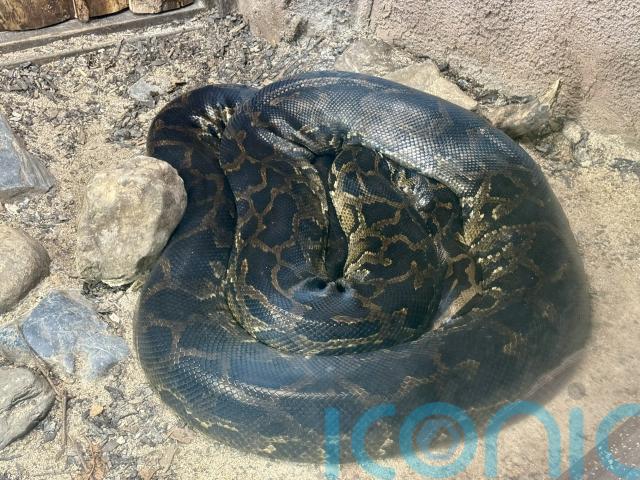
Among the snakes are a king cobra, the world’s longest venomous snake; spectacled cobra, one of the “big four” species of snakes; and three monocled cobras.
If most of these were moved to the Republic of Ireland there would be no way of tracing where, or how, they are housed.
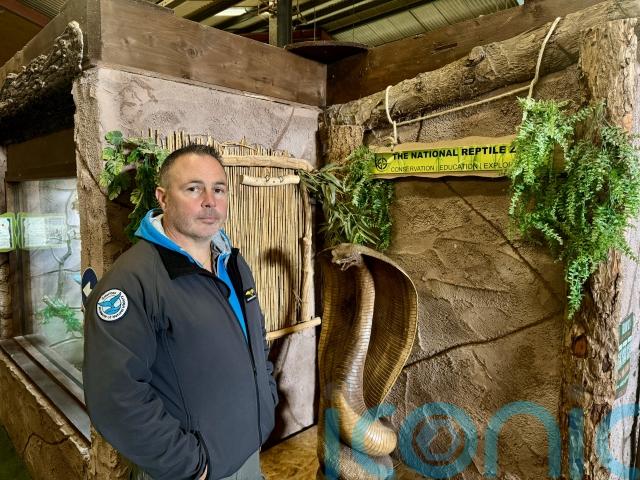
Mr Hennessy’s organisation, the National Reptile Zoo in Kilkenny, is home to several of the animals he has rescued or which have been surrendered by their owners.
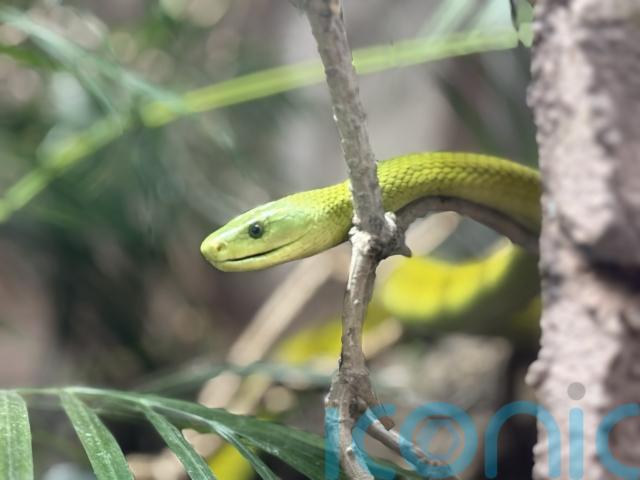
He describes a regular interaction between his staff and zoo visitors: “They’re like, ‘oh look, you’ve got a green mamba, that’s really dangerous, imagine having that in your house’.
“And the two green mambas we have were ex-pets, they were pets that people owned.”
Other former pets include an 8ft long boa constrictor, which if it started to constrict around a person’s neck, it wouldn’t “take a lot to close your airway off before you go unconscious,” said Mr Hennessy.
He has also been called out to properties where crocodiles were being kept.
He said most people do want to care for their animals but there is a lack of understanding and awareness of how to look after exotic pets.
He said often owners end up “killing them with kindness” leaving the animals in an extremely poor condition.
Other animals have been surrendered to his zoo because the owners cannot cope with the demands of an animal that grows large or lives for a long time.
Currently, in Ireland, licenses are only needed for exotic animals if they are regulated under the Convention on International Trade in Endangered Species of Wild Fauna and Flora (Cites).
Mr Hennessy describes the legislation as being about the “rareness of the animal” rather than any potential danger it may pose.
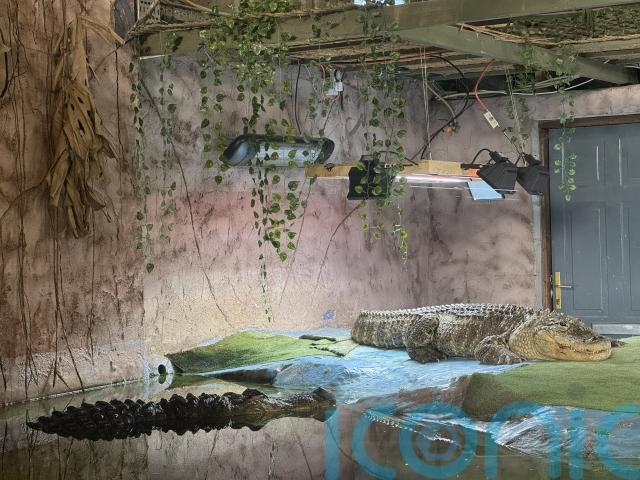
He describes two scenarios: one involving a Siamese crocodile; the other an American alligator; he said they can both reach the same size and are equally as dangerous but only the Siamese crocodile needs to be microchipped and have certificates to prove it has not been taken from the wild, while “there’s no regulation” on the alligator.
He said “if they’re not Cites-listed there is free movement of them within the European Union,” adding if an animal comes into Ireland from Germany or Holland there is “no log of that coming into the country”.
The attitude in Ireland, he said, is “if something hasn’t happened, up to now, it’s probably not going to happen”.
But adds there have been cases of people being admitted to hospital for venomous bites which have “gone under the radar a little bit”.
He said his reptile zoo is the only place in Ireland that holds anti-venom, and only for the species they have.
When asked if there are any plans to introduce a licensing system for dangerous exotic animals, the Department of Agriculture, Food and the Marine pointed to current rules around importation, saying: “Safeguards are in place to control their entry including prior approval, official veterinary certification and inspection at the Border Control Post.”

Subscribe or register today to discover more from DonegalLive.ie
Buy the e-paper of the Donegal Democrat, Donegal People's Press, Donegal Post and Inish Times here for instant access to Donegal's premier news titles.
Keep up with the latest news from Donegal with our daily newsletter featuring the most important stories of the day delivered to your inbox every evening at 5pm.

This publication supports the work of the Press Council of Ireland and Office of the Press Ombudsman, and our staff operate within the Code of Practice of the Press Council. You can obtain a copy of the Code, or contact the Council, at www.presscouncil.ie, Lo-call 1800 208 080 or email: info@presscouncil.ie.