Search


21 Apr 2026
Search
21 Apr 2026

Please allow ads as they help fund our trusted local news content.
Kindly add us to your ad blocker whitelist.
If you want further access to Ireland's best local journalism, consider contributing and/or subscribing to our free daily Newsletter .
Support our mission and join our community now.
To continue reading this article, you can subscribe for as little as €0.50 per week which will also give you access to all of our premium content and archived articles!
Alternatively, you can pay €0.50 per article, capped at €1 per day.
Thank you for supporting Ireland's best local journalism!


Were you gifted a bird feeder over Christmas – and are you wondering if it’s a safe one to use?
Many budding birders will be getting ready for the RSPB’s annual Big Garden Birdwatch, the world’s largest garden wildlife survey in which hundreds of thousands of nature lovers record the birds in their gardens and local green spaces to help build a picture of how garden birds are faring.
Hayley Willmington, RSPB head of buying and merchandising, offers the following advice.
Features and feeders to avoid
Don’t go for feeders that aren’t easy to take apart or clean, or that require extra tools to do so.
Also, watch out for feeders with sharp perch edges or gaps, which could cause injury to birds.
Avoid suet that comes in netting as birds could get beaks or feet trapped in it.
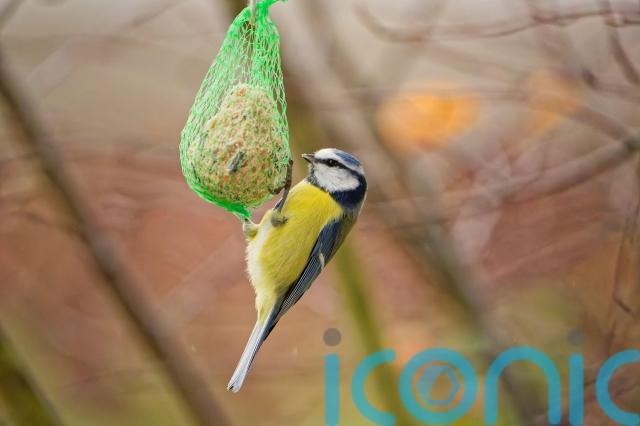
And avoid flat feeders including bird tables, but also flat trays beneath hanging feeders due to the potential for the spread of disease. There is evidence to suggest that damp food on flat feeding surfaces like bird tables can increase the risks of spreading disease among some garden birds, the RSPB says.
What feeders should you be using?
Hanging feeders are simple to set up, can be hung in various locations and are a great option for smaller gardens or balconies where space is limited, says the RSPB.
When selecting which style to use, or if you’ve been gifted one, key things to look out for are features that promote good standards of cleanliness and hygiene.
Use feeders which are well-constructed and can be easily taken apart for cleaning without the need for any additional tools. The material is also important, as this needs to be something non-porous such as glazed ceramic, plastic or powder coated metal.
Use feeders which keep out damp
Be aware of types of feed to use with hanging feeders
Garden birds’ diets differ from species to species, so it’s important to reflect this variation in the provision of the feed you offer, says the charity. Suet pellet feeders often draw various species of the tit family, alongside nuthatches, while fat balls or cakes will appeal to tits as well as starlings.
Peanuts tend to prove popular with tits, woodpeckers, nuthatches and siskins, and nyjer seeds are particularly well-suited to goldfinches and siskins (though ensure you use a specialist feeder with narrower port holes, to avoid the very fine seeds from falling to the ground). If you’d like to attract a broad range of visitors, then sunflower hearts are popular with a lot of garden species.
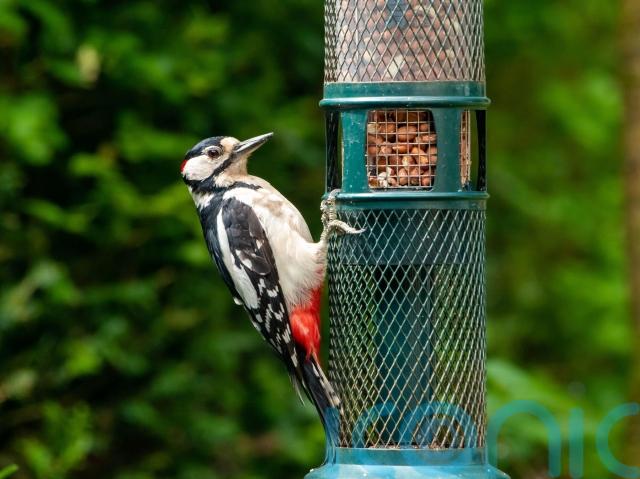
Mealworms are also a nutritious treat for birds, which can be provided in a dome feeder or on a little tray. As with the other types of feed, only provide small amounts of mealworms that will be eaten quickly.
Be hygiene aware
Don’t let uneaten feed build up in a feeder, to reduce any chance of it becoming wet and contaminated. Only fill yours with as much feed as you would expect to be eaten within 48 hours.
Rotate the position of your feeders regularly, as this can avoid any build-up of debris or droppings underneath. It’s critical that dropped seed is cleared up regularly and disposed of, because the chances of it being contaminated are high.
Place feeders carefully
Make sure your feeders are spread out around the garden to help prevent birds congregating in a small area and that the feeders are placed high enough off the ground to be safe from ground predators and ideally a couple of metres away from some dense cover (like bushes), so that birds have a safe place to retreat to from aerial predators.
Keep them clean
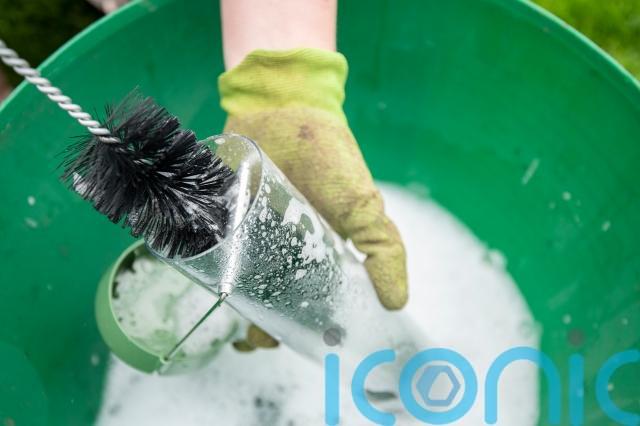
Regular cleaning is essential. All feeders should be cleaned out and scrubbed (with a 5% bleach solution) at least every week – and if you’re also providing water for birds, this needs to be replaced with fresh water on a daily basis.
Registration is now open for Big Garden Birdwatch, which takes place from Jan 23-25.

Subscribe or register today to discover more from DonegalLive.ie
Buy the e-paper of the Donegal Democrat, Donegal People's Press, Donegal Post and Inish Times here for instant access to Donegal's premier news titles.
Keep up with the latest news from Donegal with our daily newsletter featuring the most important stories of the day delivered to your inbox every evening at 5pm.

This publication supports the work of the Press Council of Ireland and Office of the Press Ombudsman, and our staff operate within the Code of Practice of the Press Council. You can obtain a copy of the Code, or contact the Council, at www.presscouncil.ie, Lo-call 1800 208 080 or email: info@presscouncil.ie.