
A photo of Scarlett Faulkner surrounded by candles in a church I PICTURE: Facebook
Search


03 Apr 2026

Please allow ads as they help fund our trusted local news content.
Kindly add us to your ad blocker whitelist.
If you want further access to Ireland's best local journalism, consider contributing and/or subscribing to our free daily Newsletter .
Support our mission and join our community now.
To continue reading this article, you can subscribe for as little as €0.50 per week which will also give you access to all of our premium content and archived articles!
Alternatively, you can pay €0.50 per article, capped at €1 per day.
Thank you for supporting Ireland's best local journalism!


A few decades ago, if your child left the house you didn’t know where they were until they returned. Now you can track them with an app every step of the way.
But is that really a good thing?
While there’s no reliable recent data on how many UK parents use tracking apps like Life360 and FindMyKids on younger children, Life360 has 6.5M monthly active users in the UK (although it’s not known how many of these are parents).
And a recent Unite Students poll of more than a thousand parents of first-year UK university students found 67% use an app to track their child’s location.
Clearly, using tracking apps (which use GPS, Wi-Fi and mobile phone masts to pinpoint where a child’s mobile phone is) to monitor children and young people’s whereabouts is a popular parenting aid. But is such tech a valuable addition to the parenting armoury, or a Big Brother-style tool that could erode children’s independence and trust?
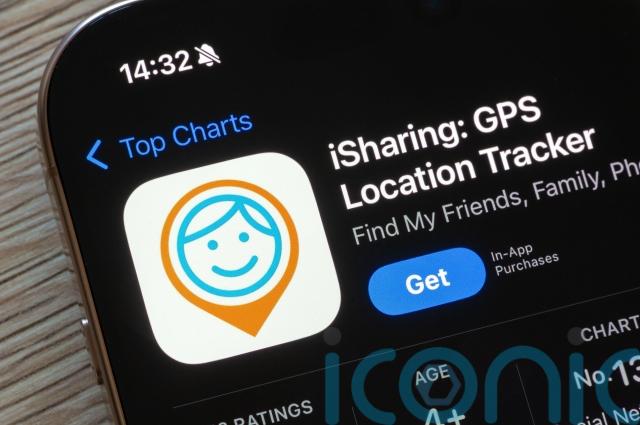
Not surprisingly Life360, which is based in the US, insists the apps are a tool that deliver important peace of mind for parents.
Lauren Antonoff, CEO at Life360, says: “Location tracking apps such as Life360 can ease parents’ anxieties and create peace of mind by simplifying communication and connection. Parents can access their kids’ locations in real time on a private map, meaning less worrying, wondering, and fewer check-ins with children who want to gain more independence.
“We’ve noticed that families across all ages and stages of life use Life360 as a tracking app to increase family coordination and create peace of mind across generations. Apps like ours can be a helpful safety net for youngsters as they gain more independence, teens as their social lives develop, and for new drivers who take their first independent journeys.”
But the other side of the technology is that, ironically, there may be a chance that using it could actually raise parental stress, suggests Dr Gavin Morgan, an educational psychologist from University College London.
“It’s totally understandable that parents feel comfort and assurance from tracking their children,” he says. “I think it’s a bit of a safety net for them – they’re always concerned, of course, about their child’s safety and wellbeing, and the tech exists and is there to help them.
“It hasn’t long been that way – I remember my mum gave me 10p to call her from a phonebox if I was in trouble or needed some help.
“But my concern is that this could actually lead to more parental stress rather than less, and fundamentally, that’s because of trust. In any relationship, whether that’s parent, child, or a partner in the workplace, trust is massive. It’s a really crucial part of any relationship, and I think ultimately, tracking and checking in on people undermines that basic level of trust.”
Morgan, a chartered member of the British Psychological Society division of Education and Child Psychology, warns that parents also need to think about how their child perceives being tracked all the time, pointing out: “As a child gets older, tracking also suggests a lack of confidence in their ability to make decisions, and the young person themselves might feel a bit intruded upon, controlled and distrusted. That’s my concern.
“The flip-side is it might also lead a child to lose that developing independence and self-reliance, which are crucial skills as a young person gets older and moves into adulthood.”

“I think that’s a good point,” Morgan admits. “Having a tracking app on your phone gives an illusion of safety – parents will think ‘OK, that’s fine, I can trust them to do more’.
“Initially they might figure it’s OK, I know the dot’s moving between buildings or schools, they’re travelling or whatever, so the parent sees their child is safe, that gives them relief, and psychologically that’s a bit of a reward.
“So if a parent worries, they think they’ll check the app, and they’ll feel calmer, and that just repeats itself. Ultimately, it’s a misplaced feeling of control – but that’s reassuring to parents.”
However, Morgan suggests the best idea is for parents to improve communication with their children so they develop a good level of mutual trust that they can rely on, instead of needing to track them.
“The key thing is to get that communication between your child and yourself, and to establish a level of trust, rather than relying on an app to do that for you,” he says. “Moving into the sphere of surveillance could undermine that level of trust and the child’s skill set for developing independence and self-reliance.
One suggested benefit of using a tracking app is that it may give more nervous parents the confidence to allow their children to go further afield – almost as if they can see them wherever they are, and that means they’re safer.
“So what children and parents need to do, rather than just relying on an app to do the job, is to have open conversations in person about safety and boundaries, how to manage that, and how to contact a parent or trusted adult if they need help, rather than relying on tech to do it.”
And he stresses that as children get older, parents should begin to accept that they need to be able to do some things on their own – after all, when they’re adults they’ll have to live their lives without their parents breathing down their necks.
“As a child gets older, the parent needs to respect the young person’s privacy and right not to be looked on all the time. Ultimately, that will lead to a more healthy and trustworthy relationship,” he explains.
Of course, many parents will point out that they wouldn’t need to use a tracking app if their child bothered to answer their phone or respond to texts.
“If you’re safe, you’re having fun and there’s no risk, there’s no danger, if your mum pops up on your phone, the last thing you’re going to do is answer it,” stresses Morgan.
“Whereas if they’re coming home they might just send a quick text saying so. Just establish those boundaries and what’s appropriate – if there’s an emergency, yes, of course, mum should leave a message and the child should get back to her.
“Likewise, they should contact their parents if they need help and support, or if they’re in trouble or need some advice. So I think it’s about having those conversations, rather than just relying on an app.”

Subscribe or register today to discover more from DonegalLive.ie
Buy the e-paper of the Donegal Democrat, Donegal People's Press, Donegal Post and Inish Times here for instant access to Donegal's premier news titles.
Keep up with the latest news from Donegal with our daily newsletter featuring the most important stories of the day delivered to your inbox every evening at 5pm.

This publication supports the work of the Press Council of Ireland and Office of the Press Ombudsman, and our staff operate within the Code of Practice of the Press Council. You can obtain a copy of the Code, or contact the Council, at www.presscouncil.ie, Lo-call 1800 208 080 or email: info@presscouncil.ie.