
A photo of Scarlett Faulkner surrounded by candles in a church I PICTURE: Facebook
Search


03 Apr 2026

Please allow ads as they help fund our trusted local news content.
Kindly add us to your ad blocker whitelist.
If you want further access to Ireland's best local journalism, consider contributing and/or subscribing to our free daily Newsletter .
Support our mission and join our community now.
To continue reading this article, you can subscribe for as little as €0.50 per week which will also give you access to all of our premium content and archived articles!
Alternatively, you can pay €0.50 per article, capped at €1 per day.
Thank you for supporting Ireland's best local journalism!


New government research indicates that increased screen time may be linked to poorer vocabulary development in toddlers.
Findings came from The Children of the 2020s (COT20s) study where primary caregivers were asked to complete an online survey when their child was around two years old (between 24 and 28 months), between October 2023 and February 2024. In total, 4,758 surveys were completed.
Results from the surveys found that children in the highest screen time group – averaging around five hours a day – were able to say, on average, 53% of the 34 test words, compared with 65% among children in the lowest screen time group, who averaged just 44 minutes per day.
In response to the findings, the government has announced it will release the first official guidance on screen time for under-fives in April.
Here are five ways that screen time could affect your child’s brain…
Are children more vulnerable to the effects of screen time than adults?
“Children’s brains are like sponges that are soaking up experiences at an incredible rate,” says Dr Samir Shah, consultant psychiatrist and medical director at Priory Hospital Altrincham. “Key developmental periods particularly before the age of five and during the pre-teen years are when the brain undergoes the most rapid growth.
“Too much screen time during these stages could have longer-lasting effects compared to adults.”
Torkel Klingberg, professor of cognitive neuroscience at the Karolinska Institutet and founding scientist at memory training app Nuroe, agrees and adds: “The development of cognitive abilities during childhood and adolescence is absolutely crucial. It’s a time of neuroplasticity, and it’s crucial for education and adult performance.”
1. Impacts attention span and focus

“We [at the Karolinska Institutet] recently published results from a large study following more than 8,000 children between the ages of 10 and 14 and mapped the amount of time they either spent on social media or gaming or TV, and we found that it was specifically social media time that was associated with increased symptoms of inattention,” says Klingberg. “For example, they reported problems focusing for a longer period of time, getting easily distracted and had problems completing homework.”
2. Negative impact on mood and mental health
“Research has shown us that teenagers and children who spend more than four hours per day on screens are more likely to experience higher levels of anxiety and depression,” highlights Shah. “The constant and persistent stimulation of digital screens can leave young minds feeling overstimulated with higher dopamine levels but emotionally unfulfilled.
“Children who spend a lot of time on screens can also sometimes find it harder to manage frustration and irritation.”
It could also impact their ability to pick up on social cues.
“Less face-to-face and direct interaction means fewer opportunities and chances to practise important social and executive skills like empathy and resolving conflicts,” explains Shah.
3. Sleep deprivation
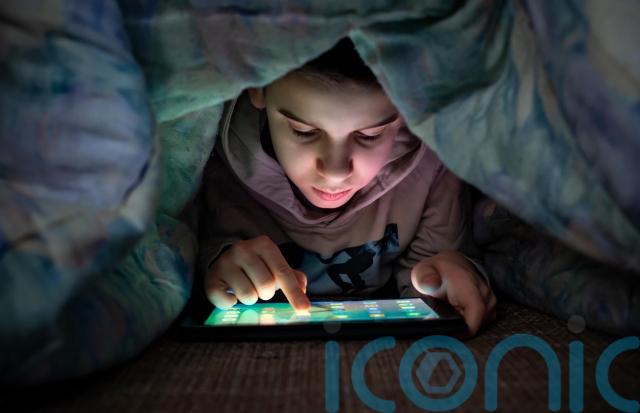
“Another big aspect of this is that screen time and social media is crowding out time for other things such as sport, in-person interactions and importantly sleep,” highlights Klingberg. “There’s so much research showing the importance of sleep for both psychological wellbeing and cognitive performance, and this is especially important in young growing brains.
“Lack of sleep can affect long-term memory, attention memory and working memory.”
4. Impacts problem-solving skills and memory
“Constant distractions online means that children are often deprived of the ability to focus for a longer time and are missing out on the cognitive challenges that drive and benefit cognitive development, which includes both attention and working memory,” says Klingberg.
“We know that working memory is something that can be developed by training, so I think part of it is trying to reduce children’s use of social media and to instead spend time on more focus-demanding activities, such as reading or homework, for example.”
5. Disrupts reward systems
“Regular screens trigger the release of dopamine which is the brain’s ‘feel-good’ chemical. This then creates a cycle of craving more screen time to get that same buzz or effect,” explains Shah.
“It’s a bit like checking the door repeatedly and hoping for an exciting visitor. Over time, real world and realistic activities can start to feel less rewarding by comparison. This is why children and teenagers who use screens regularly struggle to maintain or build meaningful social connections.”

Subscribe or register today to discover more from DonegalLive.ie
Buy the e-paper of the Donegal Democrat, Donegal People's Press, Donegal Post and Inish Times here for instant access to Donegal's premier news titles.
Keep up with the latest news from Donegal with our daily newsletter featuring the most important stories of the day delivered to your inbox every evening at 5pm.

This publication supports the work of the Press Council of Ireland and Office of the Press Ombudsman, and our staff operate within the Code of Practice of the Press Council. You can obtain a copy of the Code, or contact the Council, at www.presscouncil.ie, Lo-call 1800 208 080 or email: info@presscouncil.ie.