Search


21 Apr 2026
Search
21 Apr 2026

Please allow ads as they help fund our trusted local news content.
Kindly add us to your ad blocker whitelist.
If you want further access to Ireland's best local journalism, consider contributing and/or subscribing to our free daily Newsletter .
Support our mission and join our community now.
To continue reading this article, you can subscribe for as little as €0.50 per week which will also give you access to all of our premium content and archived articles!
Alternatively, you can pay €0.50 per article, capped at €1 per day.
Thank you for supporting Ireland's best local journalism!


Mental health campaigner, former A&E doctor and one-time Love Island contestant Dr Alex George has had enough neurodevelopmental conditions of his own to be able to talk with authority.
He can count ADHD and OCD among them and is currently undergoing assessment for autism. In addition, alcohol misuse, grief, work addiction, poor self-image and loneliness have featured in his raft of experiences.
“It sound’s like I’m a b***** walking list, doesn’t it?” the genial health educator muses, chuckling, but is not afraid to recount the episodes which led him to stop drinking alcohol, take control of his diet, get therapy and medication, in his new book, Am I Normal?
His own diagnoses have brought him some peace and answered questions as to why he struggled from childhood, the facial tics he had at 11, his inability to focus, juxtaposed by obsessions, worries about ‘what if’, anxieties in social situations and huge rejection sensitivity.
The Welsh doctor and broadcaster, who appeared in Love Island in 2018 but chooses not to discuss his private life, has appeared on shows including Good Morning Britain and Loose Women to speak about mental health, and until 2025 was the government’s UK Youth Mental Health Ambassador (a role which has now been dropped).
“One of the things that I did, which I probably would do differently now, was I ended up kind of withdrawing. I felt like I needed to fix myself.
“I spent too too little time with people and too much time thinking that I could solve all my own things. Actually one of the things I realised is that the antidote to a lot of your experience is human connection.”
In the book he recalls struggling with isolation after leaving Love Island, that fame didn’t sit easily with him and that he became lonely. He returned to A&E for a while to regain a sense of normality and some respite from the loneliness he was experiencing.
“There is some element that we have to accept within ourselves that you can’t just sit in the house and expect other people to come to you. No one’s coming to save you. There’s no cavalry that’s going to come into your house and change your life for you.”
Things have changed for him. While he remains tight-lipped about his private life, he says: “I don’t think I am lonely. I have periods of feeling lost among some of the challenges but I’m not lonely. I feel I do belong and I have connection.”
He observes that the loneliness epidemic is intensified by digital technology – he says he was desperately lonely when he didn’t prioritise his social relationships in the post-pandemic years, sacrificing the relationships he had for social media connections.
“It dawned on me one day last year as I walked around [London’s] Battersea Park that I had 100,000 people who might respond to an Instagram post, but not one person to meet with in the park,” he writes.
As a hugely popular content creator, with an ‘Alcohol-Free Living’ YouTube channel, impressive social media following and Stompcast podcast, as well as numerous TV engagements – how does he manage that?
“You’ve got to have screen-time controls to prevent how much you’re using it, because you’ll never beat the power of technology. The only way to win is tech against tech.
“In the evenings I don’t want to be on my phone. I want to be able to do other things.”
He quotes figures about the average 25-year-old being on their phone for six hours a day.
“If you’ve got eight hours in bed, eight hours at work, eight hours left and six hours a day on your phone and you don’t feel good, it’s (screen time controls) a good place to start.”
This aspect of his life is a work in progress, he admits, and says he has to prioritise finding time for old friends and making new ones over some of the work he does.
He still practices as a doctor, but has moved into health education and public health, rather than pursuing the clinical route.
The book explores what it is we call ‘normal’ and how true wellness is ultimately about self-acceptance and he says writing it is the most difficult thing he’s done professionally.
“I was trying to make sense in my own mind of how much of it is me and how much of it is the world. My feeling was, ‘Am I not normal?’ or ‘Is the world not normal?’ or is it both? I tried to work that out, because I guess since I was young, I felt different.
“I’ve had a lot of friction in my life and have tried to work it out. I was at rock bottom just over three years ago, struggling hugely with grief, drinking quite a lot of alcohol, working 24/7 and when I wasn’t working I was drinking.
“I was completely physically, emotionally, mentally burnt out and I started writing the book because I just wanted to make sense of it all. It’s been very painful.”
“The best thing that has ever happened to me in terms of change in my life has been being diagnosed with ADHD.”
In the book, he challenges some of the things society sees as normal, including the way alcohol is ingrained in our lives, gambling advertising on TV and the way grief is addressed.
“I remember when my brother Llŷr died, the next day there were 50, 60, 70 bouquets of flowers arriving to commiserate him dying. When the funeral was over, the flowers stopped. People stopped texting. No one mentioned it, everyone went quiet.
“Actually, the goal of grief is to learn to live with it, not to get over it. Yet in this country we’ve pushed this normality of ‘Ignore death, pretend it doesn’t happen’ and when someone dies we take this Victorian approach to get over it as quickly as physically possible, get the funeral done and on with life.
“It’s madness. Everyone’s walking around with suppressed grief that filters out into their life and erodes their relationships and lives – and it’s just seen as normal. People chronically suffer and have sickness and early death even, because of grief, because we pretend it doesn’t exist.”
Since his ADHD diagnosis he has focused on knowing and loving himself.
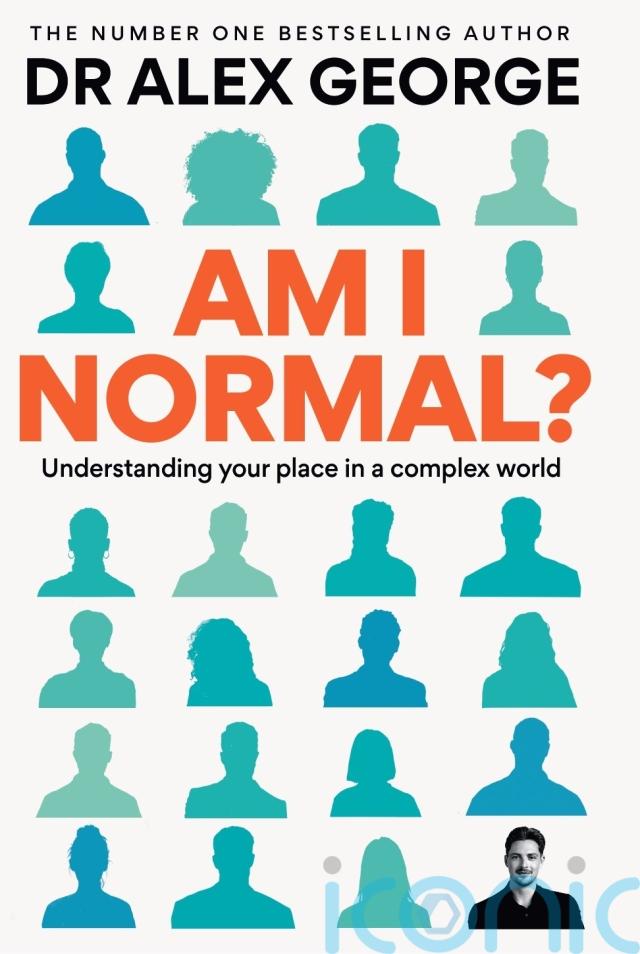
Am I Normal? By Dr Alex George is published by Octopus Books on January 15, priced £22.

Subscribe or register today to discover more from DonegalLive.ie
Buy the e-paper of the Donegal Democrat, Donegal People's Press, Donegal Post and Inish Times here for instant access to Donegal's premier news titles.
Keep up with the latest news from Donegal with our daily newsletter featuring the most important stories of the day delivered to your inbox every evening at 5pm.

This publication supports the work of the Press Council of Ireland and Office of the Press Ombudsman, and our staff operate within the Code of Practice of the Press Council. You can obtain a copy of the Code, or contact the Council, at www.presscouncil.ie, Lo-call 1800 208 080 or email: info@presscouncil.ie.