Search


19 Mar 2026
Search
19 Mar 2026

Please allow ads as they help fund our trusted local news content.
Kindly add us to your ad blocker whitelist.
If you want further access to Ireland's best local journalism, consider contributing and/or subscribing to our free daily Newsletter .
Support our mission and join our community now.
To continue reading this article, you can subscribe for as little as €0.50 per week which will also give you access to all of our premium content and archived articles!
Alternatively, you can pay €0.50 per article, capped at €1 per day.
Thank you for supporting Ireland's best local journalism!


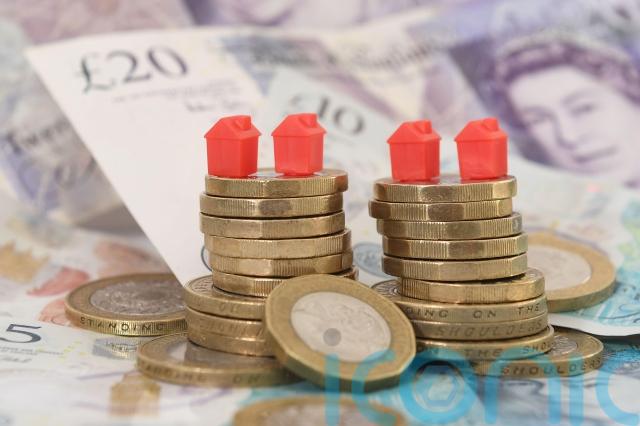
Finding a way on to the property ladder can feel borderline impossible for many, and the pressure to start climbing the rungs can lead others to buy before they are really financially ready.
The average house price in the UK is around £269k – in London it’s more like £600k – making buying a property possibly the biggest financial commitment you’ll make in a lifetime. Filling out a mortgage or stamp duty calculator online can give you some idea of what kind of buying position you’re in, but, warns Emily Boxall, co-founder of financial education company MicroFact.co.uk: “One generic calculator won’t paint the picture of your personal situation.”
And there’s more to being ready to buy a home than hitting a target savings goal, or nabbing a specific salary amount. “If you can think about buying a home without feeling panicked, confused or overwhelmed, that’s often a really good indicator of readiness,” says Boxall.
For knowing you’ve got a good grasp of the financials, these signs can help too…
1. You still have money left after the deposit
“If buying a home wipes out everything you’ve saved, that’s not really being ready, that’s being vulnerable,” says Boxall. “People need to recognise that homes are expensive after you buy them.” From discovering you need to rewire and put in double glazing, or something breaks, “it’s amazing what can come up”, says Boxall. “You want to be prepared.”
She says it’s a good sign if you’ve got enough for your deposit and then “an emergency buffer covering three to six months of essential expenses”. “That will place you in good stead,” she says, and means if something unexpected happens, you’ll be in a better position to handle it.
2. You understand the full cost of buying
“Buying a home can feel really complicated, and there are so many elements to it,” warns Boxall. “It’s important to build your knowledge around what’s exactly required, whether it’s what the stamp duty is, or if you’re exempt from that, the legal fees, the surveys and the actual moving and set-up costs.” Handily, there are lots of online guides and you can talk to family and friends who have been through the process too.
3. You are in control of your finances
“It’s really important to know what’s coming in, what’s going out, and what would happen if things change. If your finances already feel confusing, owning a house won’t make things any simpler for you,” says Boxall.
Having a handle on your budget is vital. “You don’t need to be a wizard at Excel with a perfect colour-coded spreadsheet, but certainly having a rough understanding of your monthly incomings and outgoings can really help,” she notes.
Understanding your credit score can be helpful too, and “not only in helping you get a good mortgage rate, it’s also quite a good assessment of your financial position”. “If you’ve got a good credit score, that indicates you’re going to be more ready to buy a property than if that’s not looking good,” notes Boxall.
And don’t stick your head in the sand about any debt you might have either – it may not rule you out of home ownership, as long as it’s under control. “A lot of people will have debt and regular credit, but if your debt is managed, that’s a good sign,” says Boxall. Speak to a debt advisor or charity, like StepChange, if you’re concerned.
4. You’ve thought about the what-ifs
“Buying a home shouldn’t rely on everything going absolutely perfectly. What if interest rates dip? What if your job changes? Going through a few scenarios like this could be a really helpful way of knowing if you’re ready,” says Boxall. “Readiness is not about how optimistic you are, it’s about how robust your plan is.”
5. You’re not sacrificing your future self to buy today
“One of the biggest mistakes first-time buyers make is putting everything into property and pausing all other planning. If buying a home means stopping your pension contributions entirely, that’s probably a sign that the timing might not be right for you,” says Boxall. “In the UK, only 20% of employees are currently on track for a comfortable retirement – 12.5 million are currently undersaving for retirement, so it’s worth checking that you’re not sacrificing your future for buying a property in a rush.”

Subscribe or register today to discover more from DonegalLive.ie
Buy the e-paper of the Donegal Democrat, Donegal People's Press, Donegal Post and Inish Times here for instant access to Donegal's premier news titles.
Keep up with the latest news from Donegal with our daily newsletter featuring the most important stories of the day delivered to your inbox every evening at 5pm.

This publication supports the work of the Press Council of Ireland and Office of the Press Ombudsman, and our staff operate within the Code of Practice of the Press Council. You can obtain a copy of the Code, or contact the Council, at www.presscouncil.ie, Lo-call 1800 208 080 or email: info@presscouncil.ie.