
A veil of sadness has fallen over County Limerick following the tragic passing of Ruth Staunton
Search


16 Mar 2026

Please allow ads as they help fund our trusted local news content.
Kindly add us to your ad blocker whitelist.
If you want further access to Ireland's best local journalism, consider contributing and/or subscribing to our free daily Newsletter .
Support our mission and join our community now.
To continue reading this article, you can subscribe for as little as €0.50 per week which will also give you access to all of our premium content and archived articles!
Alternatively, you can pay €0.50 per article, capped at €1 per day.
Thank you for supporting Ireland's best local journalism!


If you love cut flowers, you could be sowing seeds now for a riot of colour in your home later on in the year.
But what might you choose? How much time and space do you have and how long are the blooms likely to last? You may find that while favourites like peonies are beautiful, they won’t flower for long in the garden, as opposed to cosmos and dahlias, for instance.
Or you might be happy picking fragrant sweet peas all summer for heady but short-lived indoor flower displays which you’ll need to replace regularly.
There are so many plants, it’s difficult to know where to start, but award-winning broadcaster, author and cook Sarah Raven, who runs a gardening mail-order business and holds courses and workshops at her home and garden in Perch Hill, East Sussex, has whittled down some prime candidates.
What about combinations?
“I would go for two or three foliage and three flowers for a solid display,” says Raven, whose latest book, A Year Of Cut Flowers, offers a wealth of ideas and advice on flowers to grow for cutting and how to arrange them.
Here she lists five of her favourites.
1. Euphorbia oblongata
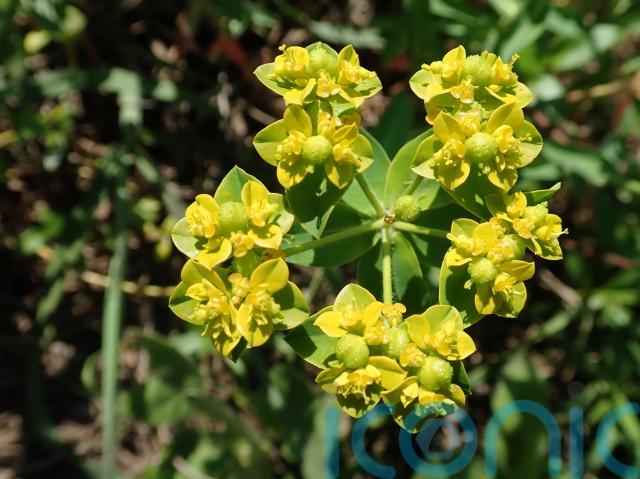
“People do worry about euphorbias because you have to pick them with gloves on, but it’s like the perfect plateau-former, which means that you can slot things in.
“It’s almost like organic oasis because it just holds everything else in place and is incredibly easy to grow. It’s a short-lived perennial which flowers about nine months of the year if you keep picking it.”
2. Salvia viridis (blue-flowered)
3. Snapdragon (antirrhinum)
Snapdragons are ideal for planting in sunny and partially shaded borders, or in pots and containers.
4. Zinnia
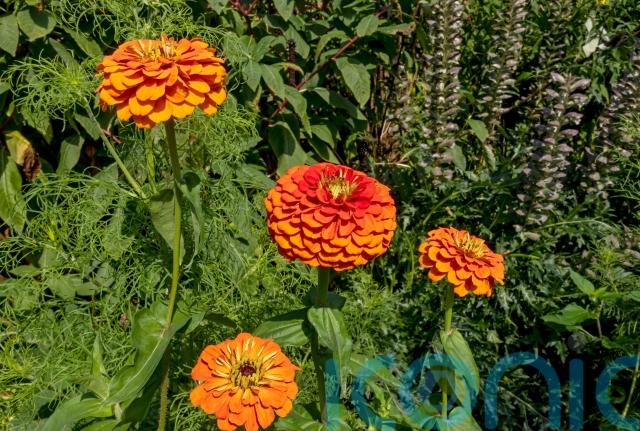
“I’d go for ‘Queeny Red Lime’, which goes from a lovely lime to a muted pink,” she suggests.
Sow zinnias under cover in modules or gutter pipes in April, planting them out in late May, or direct-sow in the garden from late May, when the soil has warmed up, she suggests, as they hate cold nights. They flower between July and October.
Zinnias prefer dry, Mediterranean conditions, so ideally grow them in a sunny, open spot which has good drainage. They will also do well in pots and are loved by pollinators.
5. Cosmos
“They give you the highest square foot productivity of any cut flower,” she enthuses, meaning more blooms for the space allotted than any other.
Sow seeds undercover in March or April in modules, or directly into the ground from May. You’ll need to stake taller varieties (anything over around 2ft/60cm) to stop them being blown over in the wind and once they are flowering you’ll need to deadhead them regularly to promote further flowers, she advises.
How to cut garden flowers
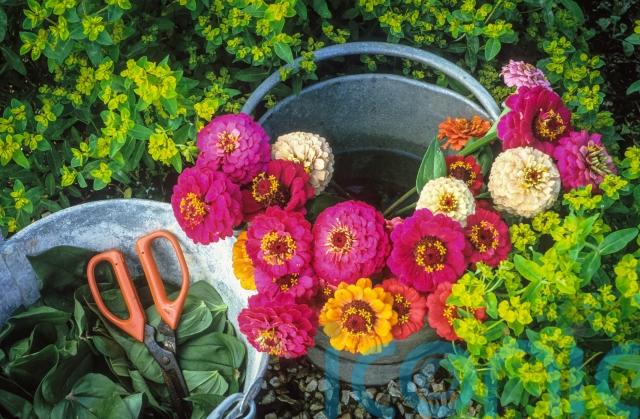
“Always pick into a bucket rather than a basket, so they’re cut straight into water, and strip two thirds of the leaves into a second bucket which can go straight on to the compost heap,” she advises.
Never cut the stems to the ground, she adds.
“Work out what vase you are going to put them in and then cut to that length. You can cut deep into the plant but always cut above a pair of leaves so you then get auxiliary bud formation, so the flowers are replaced very quickly.
“With all the plants that I’ve mentioned, as long as you do that they will grow back again. They are all cut-and-come-again.”
Euphorbia will be the slowest to grow back, she observes, so if you are growing in a container you might want to swap it for a cerinthe (honeywort) which is more prolific, she suggests.
Best time to cut
Cut your flowers first thing in the morning or last thing at night because the plants photosynthesise and transpire through the day, becoming water-depleted, particularly on a hot day when the cells will go quite floppy.
“As it cools down into the evening they also get back into a more positive water balance – but the best time to cut is first thing in the morning.”
How to make them last in a vase
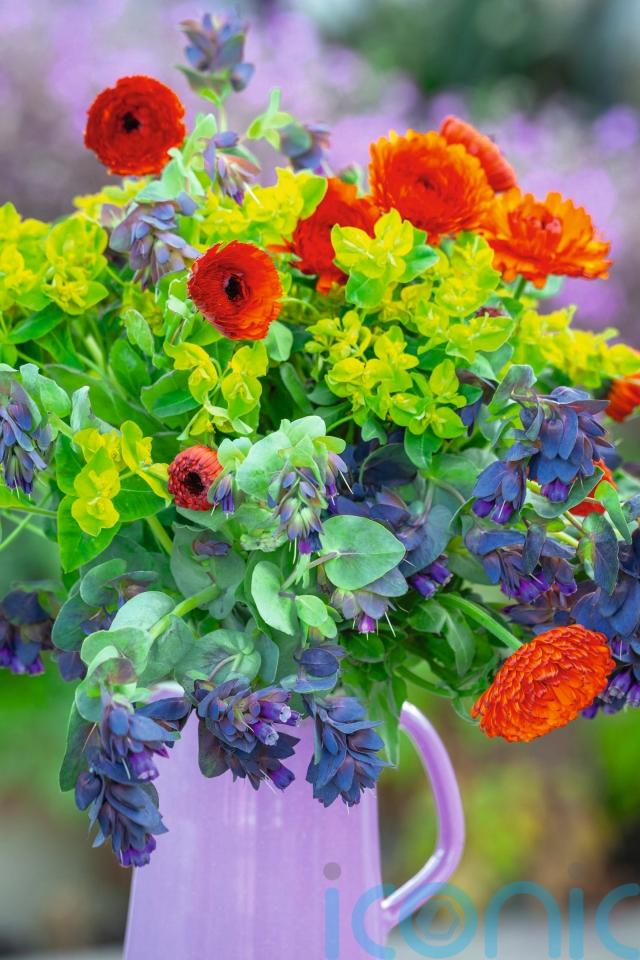
“When you bring them in and they’ve been in water, sear the stem end in boiling water for about 10 seconds, depending on the texture of the stem.
“If the stem is woody, like a rose or shrub, give it 20 seconds. If it’s really soft, like a bluebell, give it five seconds. If it’s average, give it 10 seconds. Put 10% of the stem end into boiling water and then straight into cold after that timeframe,” she advises.
You can put things in the water to reduce bacterial reproduction, like an acidifying agent such as clear vinegar, Raven suggests.
“Change the water every two to three days and cut the stems again, so you don’t get that slime forming and re-apply the vinegar,” she says.
Creating a display
Go for an uneven number of the same bloom, so, say five or seven cosmos, followed by an uneven number of the other flowers, she suggests.
“When I’m making a picking list, I would always do odd numbers. Flowers should be between two and three times the height of the vase for a more natural look,” she says.
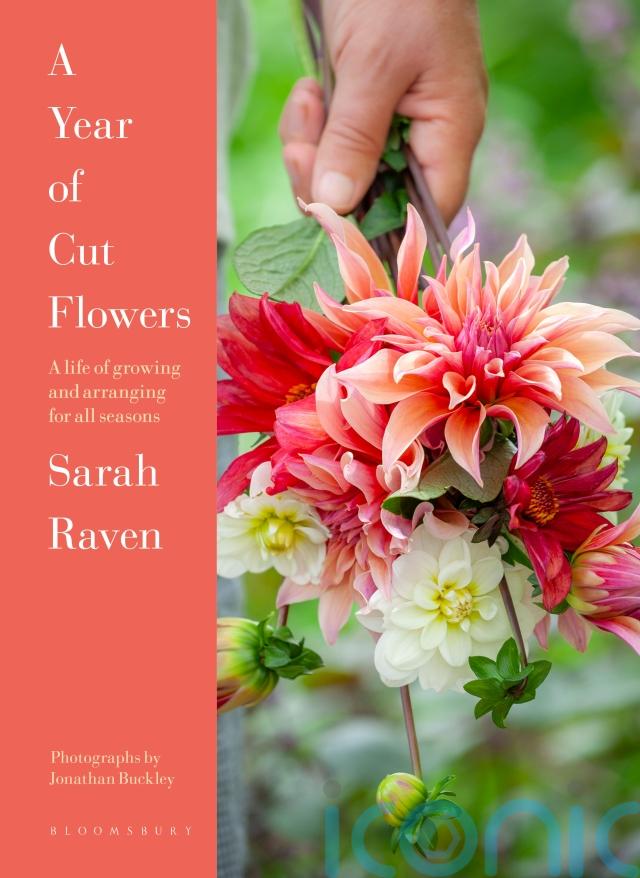
A Year Of Cut Flowers by Sarah Raven is published in hardback by Bloomsbury, priced £30. Photographs by Jonathan Buckley. Available now

Subscribe or register today to discover more from DonegalLive.ie
Buy the e-paper of the Donegal Democrat, Donegal People's Press, Donegal Post and Inish Times here for instant access to Donegal's premier news titles.
Keep up with the latest news from Donegal with our daily newsletter featuring the most important stories of the day delivered to your inbox every evening at 5pm.

This publication supports the work of the Press Council of Ireland and Office of the Press Ombudsman, and our staff operate within the Code of Practice of the Press Council. You can obtain a copy of the Code, or contact the Council, at www.presscouncil.ie, Lo-call 1800 208 080 or email: info@presscouncil.ie.