Rest in Peace James McEvoy
Search


31 Mar 2026

Please allow ads as they help fund our trusted local news content.
Kindly add us to your ad blocker whitelist.
If you want further access to Ireland's best local journalism, consider contributing and/or subscribing to our free daily Newsletter .
Support our mission and join our community now.
To continue reading this article, you can subscribe for as little as €0.50 per week which will also give you access to all of our premium content and archived articles!
Alternatively, you can pay €0.50 per article, capped at €1 per day.
Thank you for supporting Ireland's best local journalism!


The old image of the fast-growing leylandii hedge blocking out the light and sparking a host of neighbours’ disputes may have gone some way to giving conifers a bad reputation.
Yet there are many conifers which aren’t fast-growing, are easy to prune and fit beautifully in the urban garden, says Zoe Large, family owner of Golden Grove Nursery, which supplies garden centres nationwide.
They are great for adding structure and focal points to the garden, year-round colour and instant results.
They are also great for the planet, she adds.
“What we’ve calculated is that once they are planted in the garden, after two years they are carbon neutral, storing about the same amount of carbon that we’ve used to produce them.
“Two years after that, they are carbon positive, absorbing and storing more carbon than we used to produce them.”
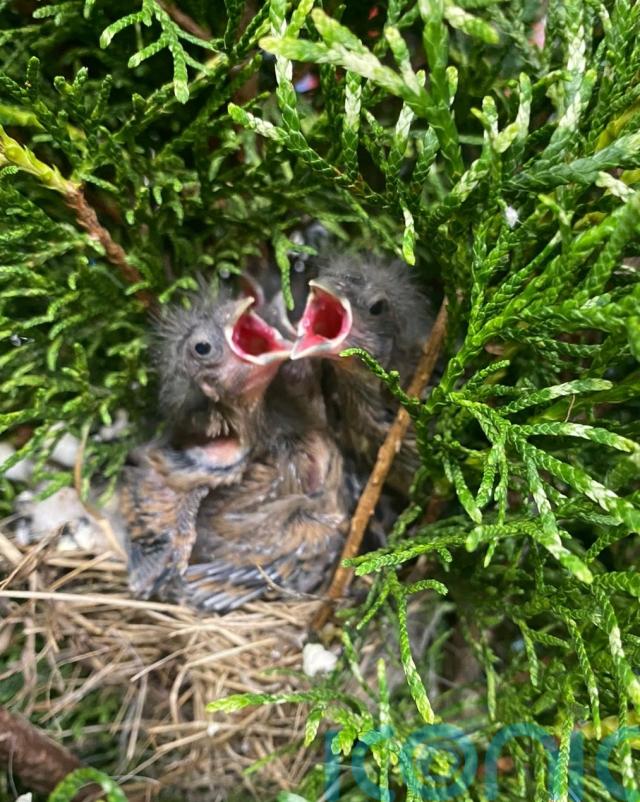
They are also wildlife-friendly, providing nesting sites for birds, hideouts for hedgehogs and food and shelter for butterflies, ladybirds and other insects.
They’re also low-maintenance, coping with virtually any type of soil except if it is really heavy clay, where drainage is a problem, says Large.
If you’re putting them in a pot up against a fence or wall, turn the pot regularly so that the conifer can get the light, otherwise you might find some of the foliage next to the wall starts to suffer.
They can thrive in a pot for two or three years before they’ll need repotting, will need watering two or three times a week in the summer, benefit from an occasional feed and are easy to trim, says Sharon Goor, the nursery’s deputy manager.
So, how can you incorporate them in a small urban garden?
Make them stand out in pots
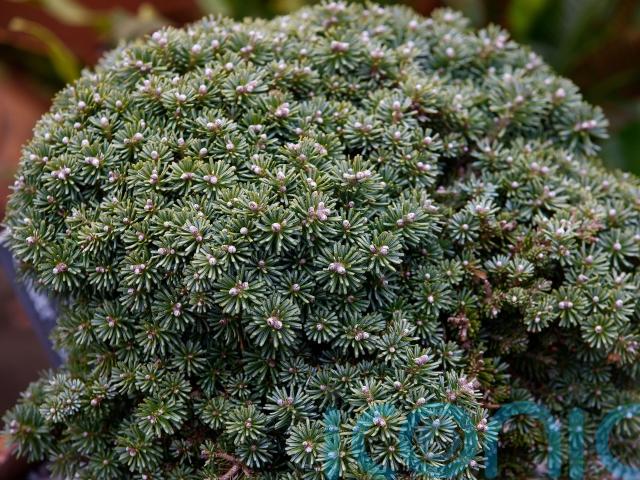
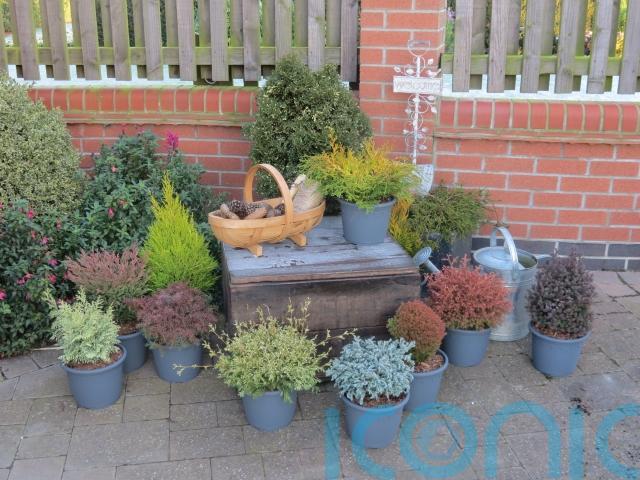
There are a wealth of conifers to add form and texture to pots, in an array of colours.
“They can be placed at the back of a trough with winter pansies or summer bedding in front, or even placed in the centre for height and structure,” says Goor.
Add architectural value
“In a small garden, you could add structure using varieties of taxus which are columnar and will give you height rather than taking up much width. Taxus standishii is a very good yellow variety,” Large suggests.
If you are planting conifers in a small border, go for varieties which form a cone shape, a column or a tight ball, rather than the shaggier types, she adds.
Suitable varieties might include a Cupressus ‘Totem’ or the Irish yew (Taxus baccata ‘Fastigiata’), a slow-growing conifer renowned for its upright, dense, and dark green foliage.
If you want to go smaller, Thuja ‘Teddy’ is a fluffy little round ball, suggests Goor.
Provide ground cover
Conifers can also be used as ground cover in borders or as trailing plants in pots, says Large.
“Juniperus procumbens ‘Nana’ will hang quite nicely over a wall or the edge of a pot,” she advises.
Pick slow-growers
The slow-growing Picea ‘Alberta Globe’ gives a good ball shape and a green backdrop to small flowering bedding plants, Large suggests.
“Anything that grows up to about 15cm a year will be perfect in a container,” she advises.
Enjoy pops of colour
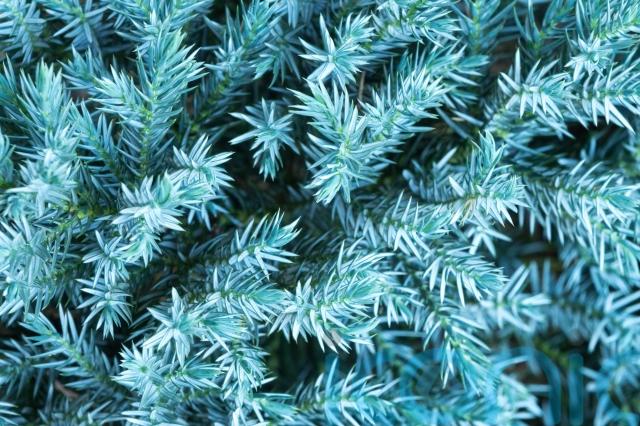
Conifers aren’t just green – they provide year-round cover in shades of blue, orange, yellow and variegated varieties.
Good blues include Juniperus ‘Blue Star’, a compact, bun-shaped evergreen conifer making a dwarf shrub of dense growth, with bright blue-grey foliage, or J. ‘Pyramidalis’, a slow-growing columnar shrub.
If you want something bolder, Thuja ‘Fire Chief’ grows into a round ball offering bright gold foliage in spring turning to sage-green with red tips in autumn.
Chamaecyparis thyoides ‘Rubicon’ goes a beautiful red in the winter, says Goor, while Thuja ‘Rheingold’ has bronze-tinged, amber-yellow foliage, becoming more richly coloured in winter.
See wildlife
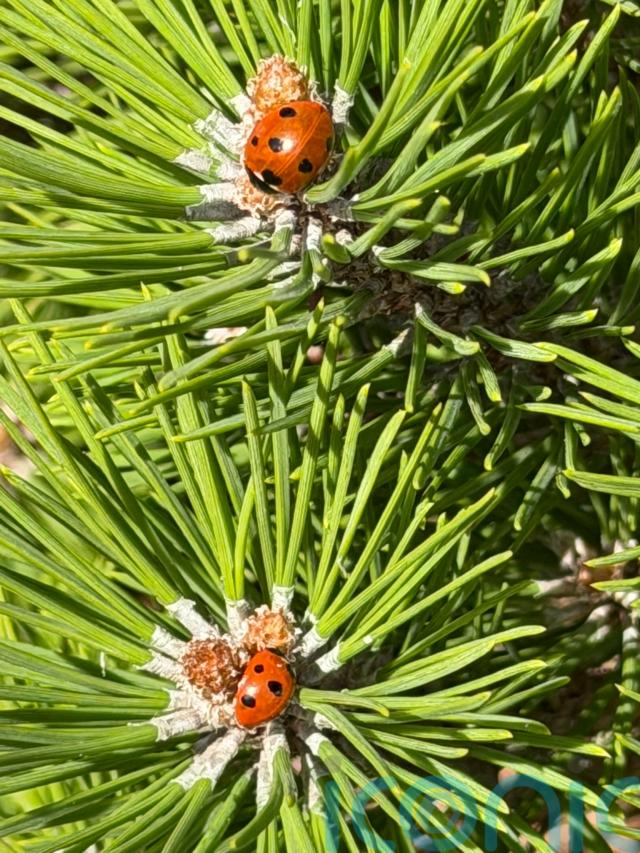
Birds can nest in them, butterflies and other insects thrive in conifers and toads and frogs love the food conifers provide. Birds also feast on the seeds found in cones, while spiders find the foliage perfect for spinning webs, Large points out.
Try topiary
If you want to shape your conifers, good types for topiary include Cupressus ‘Wilma’, a slow-growing variety featuring lemon-scented golden-green foliage, or Taxus baccata (common yew) both of which are ideal for pots or as a small specimen, Goor suggests.

Subscribe or register today to discover more from DonegalLive.ie
Buy the e-paper of the Donegal Democrat, Donegal People's Press, Donegal Post and Inish Times here for instant access to Donegal's premier news titles.
Keep up with the latest news from Donegal with our daily newsletter featuring the most important stories of the day delivered to your inbox every evening at 5pm.

This publication supports the work of the Press Council of Ireland and Office of the Press Ombudsman, and our staff operate within the Code of Practice of the Press Council. You can obtain a copy of the Code, or contact the Council, at www.presscouncil.ie, Lo-call 1800 208 080 or email: info@presscouncil.ie.