Search


14 Apr 2026
Search
14 Apr 2026

Please allow ads as they help fund our trusted local news content.
Kindly add us to your ad blocker whitelist.
If you want further access to Ireland's best local journalism, consider contributing and/or subscribing to our free daily Newsletter .
Support our mission and join our community now.
To continue reading this article, you can subscribe for as little as €0.50 per week which will also give you access to all of our premium content and archived articles!
Alternatively, you can pay €0.50 per article, capped at €1 per day.
Thank you for supporting Ireland's best local journalism!


Many allotmenteers and veg gardeners swear by companion planting – growing certain crops among others to help boost their harvest.
Things which taste good together often grow well together, such as basil and tomatoes, beetroot and onions, dill and cucumbers, and lettuce and salad rocket, says gardener, teacher, author, social media star and ‘no dig’ pioneer Charles Dowding, who runs courses from his garden at Homeacres, Somerset. His new book, Grow Together, offers 50 planting partnerships to boost your harvests.
He believes that by making the most of the space available, and timing your crops so that one will be emerging when the other has been harvested, will go some way to boosting crop production.
Multi-sowing, succession planning, overlapping plantings and interplanting are all ways to boost harvests, he says.
“For instance, growing onions in alternate rows between carrots deters the carrot fly because of the smell of the onion, and the smell of the carrot confuses the onion fly. It means they can’t scent out the plant they are looking for.
“Growing marigolds with tomatoes and cucumbers seems to work quite well in that it helps to repel or confuse things like glass house whitefly and, of course, as soon as you put any lovely open-scented flowers close to anything you’re planning on eating you’re going to bring in lots of beneficial insects like hoverflies, for instance, which would themselves be really good predators – or their larvae would – of aphids.
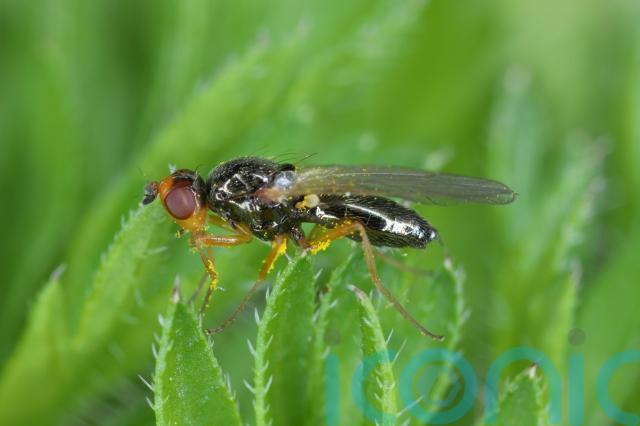
“You want pollinating insects to come into the area because they are going to pollinate your crops.”
Dowding, however, is less convinced by the theory that pests can be deterred through scent.
“I’ve tried a lot of those combinations and I’ve never found that onions keep carrot root fly off. It’s more in deciding what to plant close to something. It’s a question of working out whether there’s space and time.”
Neither does he believe that classic sacrificial crops such as nasturtiums will lure pests away from your cabbages.
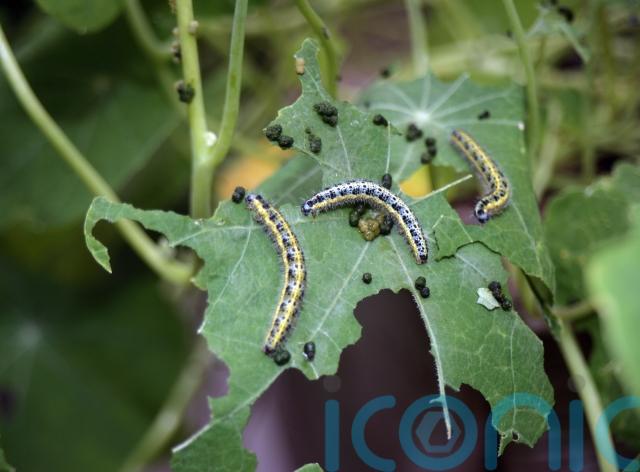
“I’ve never yet heard that anyone growing nasturtiums doesn’t have any problem with caterpillars on their brassicas.
“I have nasturtiums and they get eaten sometimes, but then I have caterpillars on the brassicas. If anything, you’re inclined to be increasing the pest numbers because you’re giving them more to eat.”
Here, he offers five planting companions which may help boost your harvests.
1. Celeriac and garlic
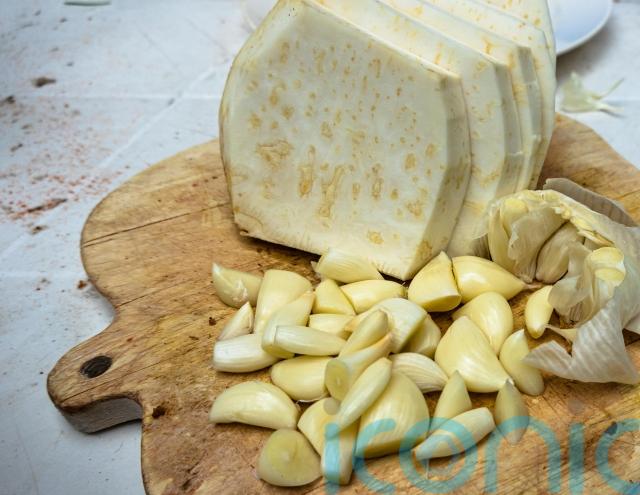
This is all about timing, he agrees. “When I plant the garlic the previous October, I plant it in lines across a bed, which makes a space for a row of something else between it, and usually during May the garlic still has a month of growing. Celeriac plants are often coming ready around early May, and you can pop them in the rows between the garlic.
“The garlic is going to finish and you’ve got time to start something close to it, which is not competing with it, because it’s only a small seedling, but that will be getting its roots down and once the nearby garlic is harvested it could grow really quickly.”
2. Spring onions and beetroot
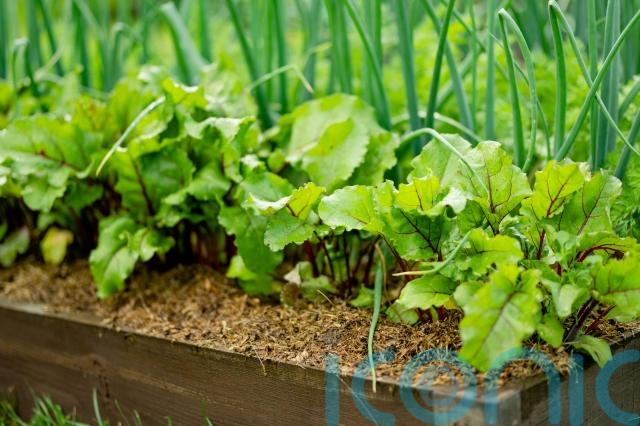
Get more produce by overlapping these veg, as spring onions will not swamp the beetroot thanks to their upright growth and leaves standing clear of the beetroot.
“I put multi-sown plants of both of them at the same time – any time in April, May or June, allowing beetroot 30cm spacing between each clump.
“In the spaces between, I pop in multi-sown clumps of spring onions at the same time, By early July, there’s a lovely harvest of spring onions. You get two harvests from one bed. Later on, you get the beetroot.”
3. Chard and dwarf French beans
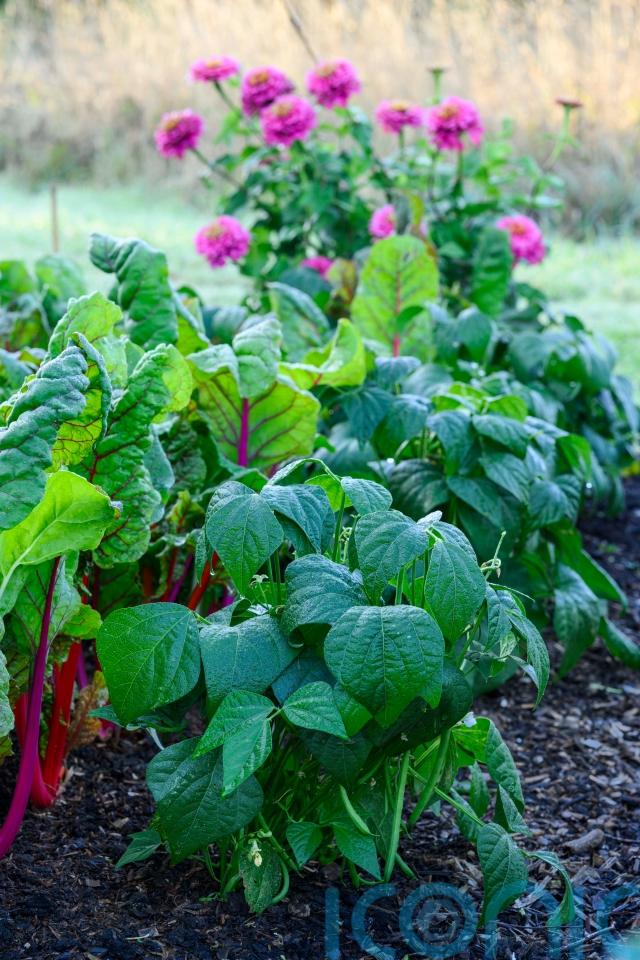
With this combination, you transplant the beans while direct sowing the chard at the same time, ideally at the beginning of July, Dowding advises.
Interplant rows of French beans with sowings of chard and when the French beans have cropped and finished, the chard will start to take over.
“When they’ve finished, we just cut the beans at ground level and put them on the compost heap and then the chard is free to really go for it. It also benefits a bit from the nitrogen nodules on the French beans.”
4. French marigolds with tomatoes
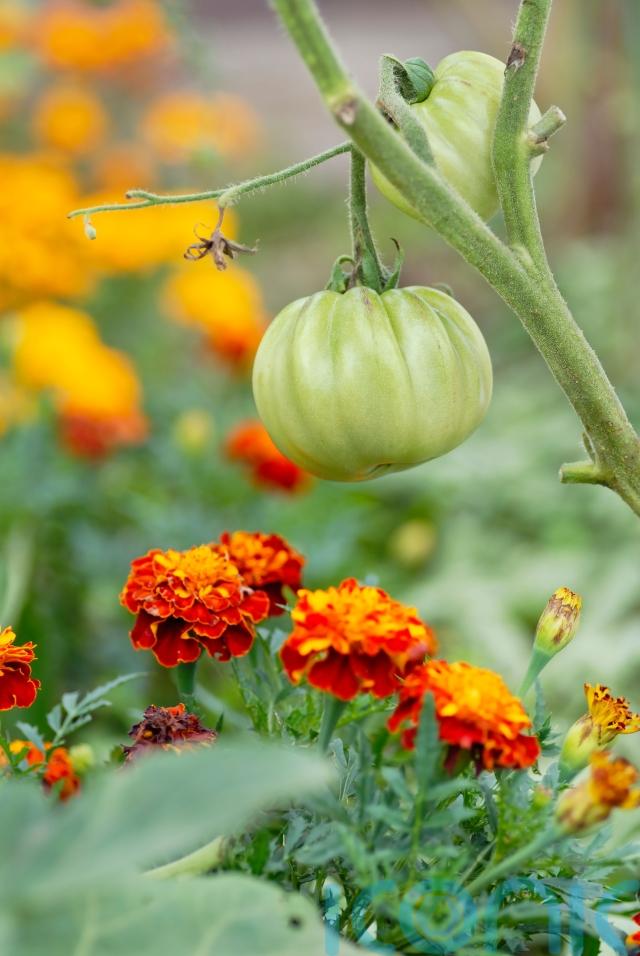
“French marigolds are great – they’re small, compact plants. I’ve got 250 of them on the go now. I just dot them around the garden, often on the ends of beds and underneath plants as well.
“I plant them around my tomatoes because they secrete something called limonene, which deters aphids.”
5. Florence fennel between ridge cucumber
He recommends a combination of fennel and ridge cucumbers for late-summer and autumn crops. The cucumbers will cover the ground through late summer, while the fennel can be harvested in autumn.
Sow fennel in late July, plant it out in mid-August – you’ll have to find space to slot in the plants amid the foliage of the cucumbers, trimming off any diseased cucumber leaves.
“It feels a bit like an act of faith sometimes because you’re doing that and you think, how can they possibly grow? But I just give them a dribble of water every now and then and within a month the cucumbers finish and you’ve already got some decent-sized fennel plants by that stage. From planting mid-August, we get a nice fennel harvest in October.”
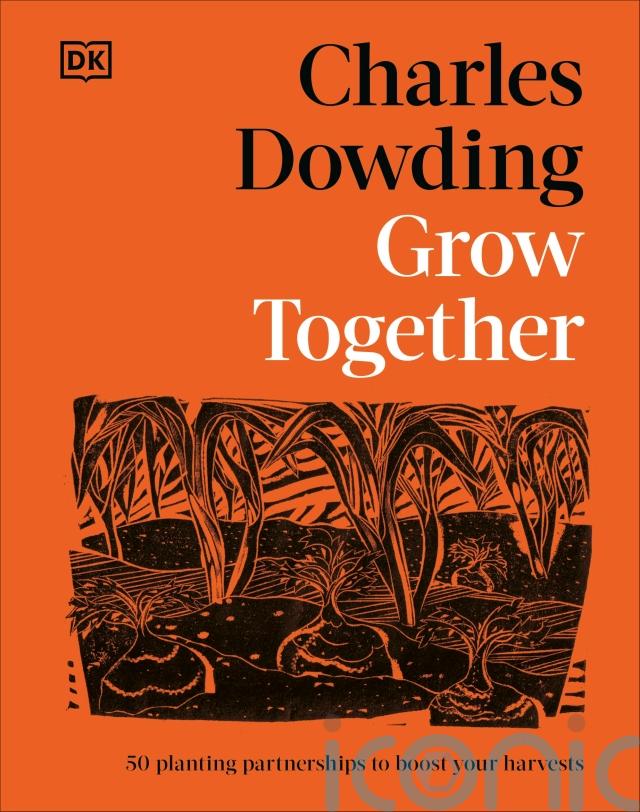
Grow Together by Charles Dowding is published by DK, priced £14.99. Available now

Subscribe or register today to discover more from DonegalLive.ie
Buy the e-paper of the Donegal Democrat, Donegal People's Press, Donegal Post and Inish Times here for instant access to Donegal's premier news titles.
Keep up with the latest news from Donegal with our daily newsletter featuring the most important stories of the day delivered to your inbox every evening at 5pm.

This publication supports the work of the Press Council of Ireland and Office of the Press Ombudsman, and our staff operate within the Code of Practice of the Press Council. You can obtain a copy of the Code, or contact the Council, at www.presscouncil.ie, Lo-call 1800 208 080 or email: info@presscouncil.ie.