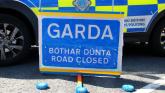
Motorists are being advised the road remains closed to facilitate a technical examination by Garda Forensic Collision Investigators
Search


01 Mar 2026

Please allow ads as they help fund our trusted local news content.
Kindly add us to your ad blocker whitelist.
If you want further access to Ireland's best local journalism, consider contributing and/or subscribing to our free daily Newsletter .
Support our mission and join our community now.
To continue reading this article, you can subscribe for as little as €0.50 per week which will also give you access to all of our premium content and archived articles!
Alternatively, you can pay €0.50 per article, capped at €1 per day.
Thank you for supporting Ireland's best local journalism!

Buff Tailed Queens feed on the early flowers of heather in the park

IT was a bitterly cold morning as we walked in through the gates of the People’s Park in Limerick city. Hands were reluctantly taken out of deep pockets and fingers were impossible to keep warm as we started to record nature found in this urban oasis.
Despite the cold there was still a feeling of spring in the air with early flowers starting to bloom and birds singing. The mature trees in the park attract lots of different bird species and they are well used to people, and you can get up close for some amazing views.
Our first bird was a chaffinch, and he looked stunning in his breeding plumage. Males have a slate blue head, pinkish breast and thick milky white wing bars. Females are a duller brown and this ensures they are well camouflaged while sitting on their eggs in the nest.
READ NEXT: Revisiting Frank McCourt's Angela's Ashes - 30 years later in Limerick
The alarm calls of a blackbird broke the silence of the park. He wasn’t giving out to us as he is well used to people but at a rival male that was trying to encroach on his territory. While we see the park as one space, birds in the spring mark out nesting boundaries that they defend throughout the summer. We watched as the young upstart was driven away over the high boundary wall surrounding the park.
Blackbirds were traditionally a woodland species but have adapted incredibly well to our gardens and parks. These are planted with lots of trees and shrubs that mimic the blackbird’s natural habitat. Later in the week as we attended a nighttime talk at the Peoples Museum, we heard a blackbird singing in the park. They have large eyes and all the artificial lights encourage them to sing even in the dead of night.
Next we heard the gentle cooing of a Woodpigeon. These are more often associated with farmland but have found relatively safety in city parks and gardens. They eat lots of greens from the leaves of dandelions to allotment grown cabbages and lettuce. Their young, called squabs, are fed on a protein rich milk, and pigeons are one of the few birds whose chicks have this diet.
A large flock of feral pigeons were dining on some food put on by an elderly lady. We got chatting and she comes here most days to feed her birds and connecting with nature helps to pass her day.
Overhead black headed gulls were shrieking and keeping an eye out for any opportunity for a meal. They circled about the high-rise flats and at least the residents have a lovely view out onto the natural world.
The tall boundary wall is a reminder that this was once a private park but has now been colonised by plants that feed bees, butterflies and moths. Ivy is called the plant that always gives. Being evergreen it provides year-round shelter for birds, insects and bats like leislers. Its flowers in late summer and is one of the last sources of pollen and nectar for insects. In spring the black berries ripen and are food for hungry birds, insects and animals like foxes.
Valerian colours the wall with sprays of pink and white and in July you can sometimes find the painted lady butterfly all the way from Africa feeding on the flowers. If you are very lucky you may find the migrant hummingbird hawkmoth. This moth hovers in front of the valerian flowers and uses its very long tongue to sip nectar. Nettles are the food plants for the caterpillars of many species of moths and butterflies and heathers are packed full of pollen and nectar for early queen bumblebee bees.
The last few birds were robins and wrens, and no park would be complete with these birds. Both species sing throughout the year but are most active during the spring months.
High up in the branches of a tree a pair of rooks were displaying. They will soon start to build their nests and if they are placed near the tops of the trees, it is a sign that the summer will be fine. On our next visit we will be keeping a close eye on the progress of their nests and hoping they predict good weather for the year ahead.
-Comments/Questions to albert.nolan@rocketmail.com or 089 4230502. Albert is available to do walks/talks with schools, tidy towns, youth and community groups.

Subscribe or register today to discover more from DonegalLive.ie
Buy the e-paper of the Donegal Democrat, Donegal People's Press, Donegal Post and Inish Times here for instant access to Donegal's premier news titles.
Keep up with the latest news from Donegal with our daily newsletter featuring the most important stories of the day delivered to your inbox every evening at 5pm.

This publication supports the work of the Press Council of Ireland and Office of the Press Ombudsman, and our staff operate within the Code of Practice of the Press Council. You can obtain a copy of the Code, or contact the Council, at www.presscouncil.ie, Lo-call 1800 208 080 or email: info@presscouncil.ie.