Search


03 Apr 2026
Search
03 Apr 2026

Please allow ads as they help fund our trusted local news content.
Kindly add us to your ad blocker whitelist.
If you want further access to Ireland's best local journalism, consider contributing and/or subscribing to our free daily Newsletter .
Support our mission and join our community now.
To continue reading this article, you can subscribe for as little as €0.50 per week which will also give you access to all of our premium content and archived articles!
Alternatively, you can pay €0.50 per article, capped at €1 per day.
Thank you for supporting Ireland's best local journalism!


The Bluetongue Virus is set to potentially cause a big risk to our cattle herds and sheep flocks in 2026.
Upon listening with a degree of concern over the last month or so, to vets within the department of agriculture and vets in private practice outlining how this virus spreads and the impact it could have, it became clear that this disease is potentially a big threat to the Irish agricultural sector.
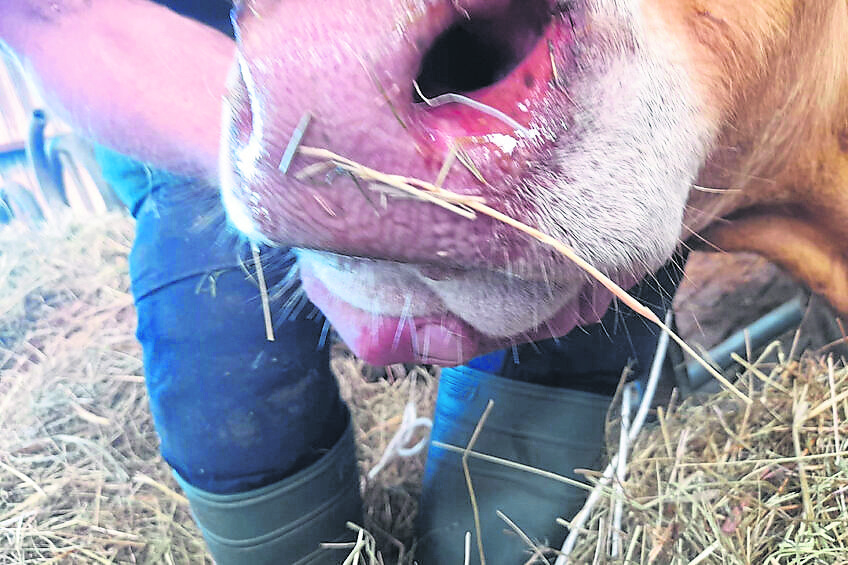 All cattle and sheep are susceptible to the disease with some of the clinical signs including fever, loss of appetite, drop in milk yield, lesions, sores and ulcerations, swelling of the face, lips and tongues, increased salivation and drooling from the mouth as well as discharge from the eyes and nose and lameness according to the department of agriculture, food and the marine.
Read: "Who's going to save the turf?" Minister shares turf tale at Longford event
Evidence from Britain and Europe would suggest that, currently, these symptoms appear to be more severe in sheep.
One of the main aspects of the disease that I took from the information I received was its threat on the reproductive performance of cattle and sheep which have become infected by the virus.
Infertility is a big risk in both infected cows and heifers and also ewes and hoggets.
When these animals become pregnant, infected animals may abort or give birth to unviable offspring that are unable to function and have to be put down.
The bluetongue virus spreads by midges. If a midge lands on and bites an animal infected with bluetongue, this midge which has become a carrier, can then fly (or be carried by the wind) and land on another animal.
When this midge bites one of these cattle or sheep, then that animal then becomes infected and the cycle continues.
Read: A one-in-a-million chance! Big surprise for Longford farmer
Midge activity is higher in warmer weather so while there is a risk of disease spread at any time of the year, the high-risk period is from May to October.
Given that bluetongue is now in the country and that it would prove very difficult to stop the spread of the disease, it would be advisable for farmers, particularly with breeding enterprises to contact their vet to seek advice on combatting this disease without delay.
Watch: Gone in 30 seconds! Rapid sale of Longford property at auction
Read: Longford farming: 'Looking after yourself is as important as looking after livestock'

Subscribe or register today to discover more from DonegalLive.ie
Buy the e-paper of the Donegal Democrat, Donegal People's Press, Donegal Post and Inish Times here for instant access to Donegal's premier news titles.
Keep up with the latest news from Donegal with our daily newsletter featuring the most important stories of the day delivered to your inbox every evening at 5pm.

This publication supports the work of the Press Council of Ireland and Office of the Press Ombudsman, and our staff operate within the Code of Practice of the Press Council. You can obtain a copy of the Code, or contact the Council, at www.presscouncil.ie, Lo-call 1800 208 080 or email: info@presscouncil.ie.