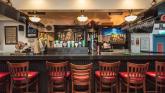
The Inn at Milltown is located on the R416, a busy regional route linking Newbridge with Rathangan, Allenwood, Carbury, Robertstown, Prosperous and Kilmeague.
Search


09 Jan 2026

Please allow ads as they help fund our trusted local news content.
Kindly add us to your ad blocker whitelist.
If you want further access to Ireland's best local journalism, consider contributing and/or subscribing to our free daily Newsletter .
Support our mission and join our community now.
To continue reading this article, you can subscribe for as little as €0.50 per week which will also give you access to all of our premium content and archived articles!
Alternatively, you can pay €0.50 per article, capped at €1 per day.
Thank you for supporting Ireland's best local journalism!

Historian Sean O’Suilleabhain, Paddy Egan of the Leo Casey Historical society, and Rónán Ó Ceallaigh at the unveiling of the plaque commemorating the Battle of Ballymahon

A pivotal moment in South Longford's military campaign during the War of Independence was market at a solemn ceremony in Ballymahon last Friday, August 19.
The day marked the 102nd anniversary of the first major War of Independence engagement to take place in the southern part of the county.
Family members of the combatants, history enthusiasts, locals and political representatives gathered for the unveiling of a commemorative plaque at the site of the Royal Irish Constabulary Barracks.
The campaign to install the plaque was instigated by Rónán Ó Ceallaigh, with assistance from the local Leo Casey Historical society. Also contributing were historian Sean O’Suilleabhain and county archivist Martin Morris. Leo Baxter and Anne Molloy, whose fathers were instrumental in the raid, performed the unveiling.

The raid came at a crucial time in the War of Independence. Following assaults on Drumlish and Ballinamuck Barracks led by Seán Connolly and Seán Mac Eoin the local resistance campaign was gaining momentum.
A daring raid by Mac Eoin's and five other on the Upper Military Barracks in Longford (now Pearse Park) on August 18 yielded 11 rifles, 550 rounds of ammunition, grenades and other equipment.
Not a man to rest on his laurels, Seán Mac Eoin met Seán Connolly and finalised arrangements for an assault on Ballymahon to take place the following night. Ballymahon Barracks, on the town's Main Street, was manned by 15-20 RIC/Tans.
The group undertaking the operation included Paddy Callaghan, Frank Davis, Jim Sheeran, Séamus Conway, Hugh Hourican and Mick Kenny. The majority of the men called into action were from the local IRA companies around Ballymahon, Ardagh, Carrickedmond, Kenagh and Legan.
This operation involved large numbers, with about 50 deployed at four locations in the town itself. Some were located at the bridge near the Athlone Road junction, others were at the Church of Ireland and the core group were based on the street and at the end of the barracks itself.
The difficult task of breaking into the barracks was given to eight men who broke through the wall of the adjacent dwelling houses.
After smashing through the roof a bomb contained sulphur, brimstone, black pepper and other ingredients was lobbed into the barracks. The bomb was thrown through the hole in the roof and exploded sending gas fumes all over the barracks. The bomb may have smelled more dangerous than it was, the result was instant surrender by the RIC.
The Ballymahon operation was a very significant step in the War of Independence in County Longford. This was the very first occasion the IRA in the county obtained a surrender and a hand-over of equipment in a barracks attack, and was achieved without any casualties on either side.
About ten rifles and five or six hundred rounds of ammunition were handed over, as well as some revolvers.
Last Friday the organisers recognised the contribution of Harry and Colette Skelly, the proprietors of the Old Barracks building for giving permission for the plaque, John Nally of Nallys Courtyard, for sponsoring this plaque and The Glenside Ceili Band for performing at the unveiling.

Subscribe or register today to discover more from DonegalLive.ie
Buy the e-paper of the Donegal Democrat, Donegal People's Press, Donegal Post and Inish Times here for instant access to Donegal's premier news titles.
Keep up with the latest news from Donegal with our daily newsletter featuring the most important stories of the day delivered to your inbox every evening at 5pm.

This publication supports the work of the Press Council of Ireland and Office of the Press Ombudsman, and our staff operate within the Code of Practice of the Press Council. You can obtain a copy of the Code, or contact the Council, at www.presscouncil.ie, Lo-call 1800 208 080 or email: info@presscouncil.ie.