Search


21 Mar 2026
Search
21 Mar 2026

Please allow ads as they help fund our trusted local news content.
Kindly add us to your ad blocker whitelist.
If you want further access to Ireland's best local journalism, consider contributing and/or subscribing to our free daily Newsletter .
Support our mission and join our community now.
To continue reading this article, you can subscribe for as little as €0.50 per week which will also give you access to all of our premium content and archived articles!
Alternatively, you can pay €0.50 per article, capped at €1 per day.
Thank you for supporting Ireland's best local journalism!


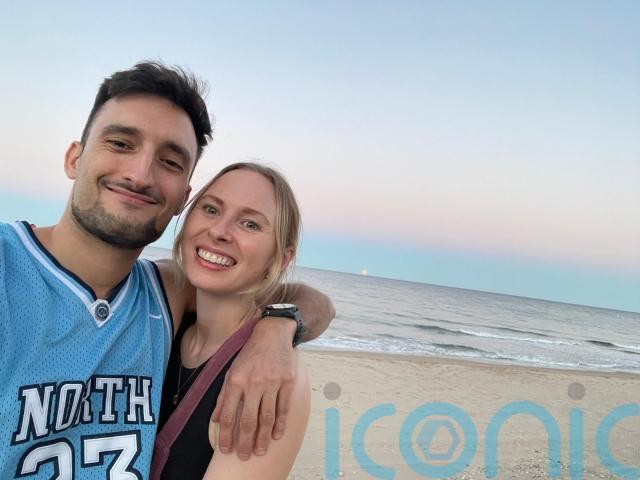
A woman from County Durham who met the love of her life on a beach in Spain has said that speaking her partner’s language fluently “makes the connection even better” and brings them “closer together”.
Sarah Holmes, 33, met her partner Juanlu Soto Caballero, 31, five years ago, when she was 29. She lived in Murcia in southern Spain, and was on holiday in Mojacar when she met Juanlu, who lived in Barcelona.
The couple “instantly got each other”, and although they lived hundreds of miles apart, they committed to their relationship long-distance until Sarah moved to Barcelona in 2022 to be with him.
Now, they are expecting their first child in February 2026, and they credit their bond in part to their commitment to each other’s native languages, which has allowed them to form a deeper connection to their respective cultures, families and friends.
When Sarah moved to Spain in 2014 after graduating from the University of Leeds with a degree in French and Spanish, she was already fluent in the country’s national language. For the first six months of her and Juanlu’s relationship, they “exclusively spoke in Spanish – just because at that point, my Spanish was probably better from living in Spain, and his English was a bit weaker”, Sarah explained.
Sarah said that any barriers in communication were neutralised by the fact that they “instantly got each other, even though we speak different languages, and we grew up in different countries and everything”.
“It was kind of easy with him, actually,” Sarah told PA Real Life.
“Even when I was trying to be funny in Spanish, and being funny in your second language is not easy!
“I don’t know whether it was just because he liked me, but he’d be like: ‘Oh, I think you’re funny in Spanish!’. I’m like, ‘I don’t think I am!’.

“But he would make me feel as if I was doing a good job when I expressed myself in Spanish, which I think is so important, because if the other person doesn’t make you feel like that, then you’re not going to be able to build that relationship.”
Sarah’s interest in learning languages started from a young age, as her mum had “always encouraged” her to study languages. However, she found that she wasn’t “a natural language learner”: she struggled with the speaking elements of her studies at school, and had “no confidence in speaking out loud” which persisted through her university course in French and Spanish.
“If you’d asked me, in the middle of my degree, would I see myself living in Spain and speaking Spanish fluently? I’d have said: ‘Absolutely not’,” Sarah laughed.
Now, however, Spanish is an integral part of Sarah’s life. Sarah and Juanlu exclusively speak Spanish at home, though Sarah revealed she occasionally dips into English, “since Juanlu’s level of English is now on par with my Spanish, meaning I can practise and maintain a good level of fluency but also relax”.
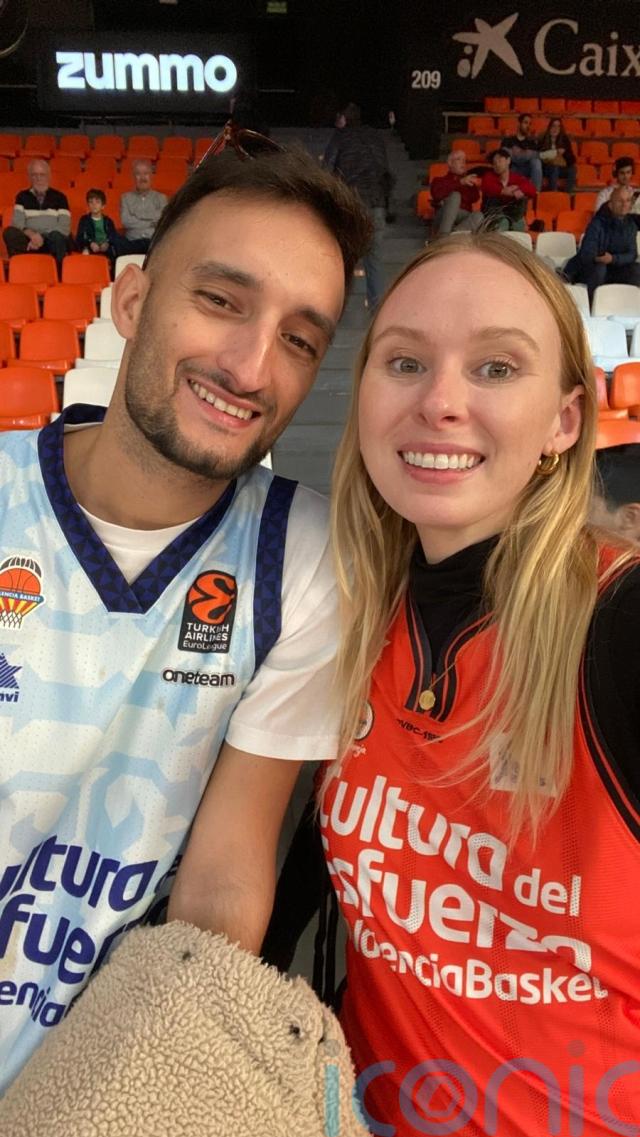
She has also been learning Catalan, the official language of Catalonia, where Barcelona is located. Catalan has a rich and storied history and is quite different to Spanish, but is widely spoken among Barcelonans.
After living in Barcelona for five years, Sarah began to “feel embarrassed that I don’t speak Catalan”.
“It got to that point where (even though) Spanish is spoken here, I think to be really integrated and get to know the culture better, you should learn Catalan, if you’re planning on staying here long term,” she said.
“About a year and a half ago, Juanlu and I started doing little dates after work once a week – we would go to a cafe and he would help me practise.
“They do a free course through the government here, in basic Catalan. So I did that for about three months to get a bit of a basis, and then I would practise with him.

“But now, this year – well, I’m pregnant, so I kind of gave up the studying for now temporarily, but my partner’s plan is to speak to our son in Valenciano, so I think that that’s going to kick me into gear again, to pick it back up, because I’m going to hear it every day at home.”
As the couple are about to welcome their first child into their home, they’ve been thinking about how they can integrate their respective languages into the baby’s life from the earliest moment. They want to raise their child trilingual, speaking English, Spanish and Catalan – which is widely spoken not only in Barcelona, but in Juanlu’s hometown of Valencia as Valenciano.
“The idea is that my boyfriend wants to speak to him in Catalan, I’ll speak to him in English, and then with his grandparents, and out in the street and whatever other influences he has around him, he’ll pick up Spanish,” Sarah said of their baby.
“I think if you have that ability to give it to your kids, why wouldn’t you?
“I want to do everything that I can to make sure that he can speak all of them.”
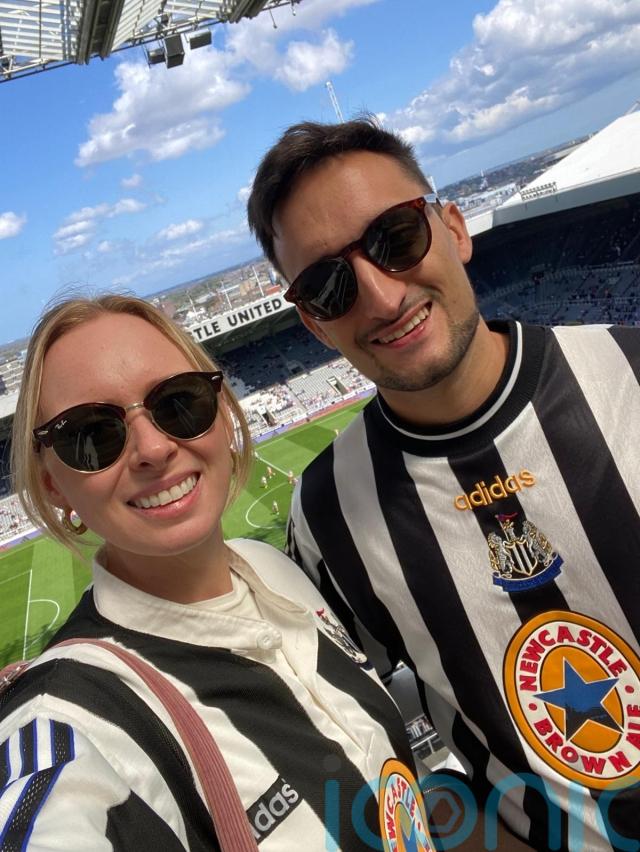
Reflecting on their love language – literally, the language they share in their relationship – Sarah said that she feels if they didn’t share each other’s mother tongues, their bond would not be as strong. This sentiment is shared by many who learned a language for love, according to new research from FindTutors, a platform that connects learners with tutors.
According to the survey of 2,639 people, one in four of whom had learned a language specifically for a romantic relationship, 32% said it deepened their ability to express their feelings more accurately, and 18% stated it made long-term plans possible, such as moving countries or building a life together.
“It would have been harder for each of us to feel integrated with each other’s friends and family,” Sarah reflected, echoing 27% of the survey’s respondents who said sharing a language allowed them to speak directly with their partner’s parents or family.

“I think that it’s not even about communication. I feel like it’s about understanding things about their culture that if you don’t speak the language, it’s hard to really get.
“For instance, my boyfriend, he’s very proud to be from Valencia. There’s a lot of things from Valencia, like certain festivals, certain foods, and I find that for those things that are very specific from his region, if I didn’t understand the language, maybe I wouldn’t get them as deeply as I do. Or different traditions that he has with his family, things like that.
“I think having that language, so that you can talk to his friends and family about it, understand it, makes the connection even better… I think it brings you closer together.”

Subscribe or register today to discover more from DonegalLive.ie
Buy the e-paper of the Donegal Democrat, Donegal People's Press, Donegal Post and Inish Times here for instant access to Donegal's premier news titles.
Keep up with the latest news from Donegal with our daily newsletter featuring the most important stories of the day delivered to your inbox every evening at 5pm.

This publication supports the work of the Press Council of Ireland and Office of the Press Ombudsman, and our staff operate within the Code of Practice of the Press Council. You can obtain a copy of the Code, or contact the Council, at www.presscouncil.ie, Lo-call 1800 208 080 or email: info@presscouncil.ie.