A photo of Scarlett Faulkner surrounded by candles in a church I PICTURE: Facebook
Search


03 Apr 2026

Please allow ads as they help fund our trusted local news content.
Kindly add us to your ad blocker whitelist.
If you want further access to Ireland's best local journalism, consider contributing and/or subscribing to our free daily Newsletter .
Support our mission and join our community now.
To continue reading this article, you can subscribe for as little as €0.50 per week which will also give you access to all of our premium content and archived articles!
Alternatively, you can pay €0.50 per article, capped at €1 per day.
Thank you for supporting Ireland's best local journalism!


David Bowie’s former childhood home where he wrote one of his best known songs, Space Oddity, is to open to the public as an “immersive experience”.
The house at 4 Plaistow Grove in Bromley, south-east London, where Bowie lived from the age of eight to 20, has been acquired by Heritage Of London Trust, which also plans to host creative and skills workshops at the venue.
The home will be returned to its early 1960s appearance and a never-before-seen archive will help to recreate the interior layout as it was when Bowie lived there, with help from Geoffrey Marsh, co-curator of the Victoria And Albert Museum’s David Bowie Is exhibition.

He said: “It was in this small house, particularly in his tiny bedroom, that Bowie evolved from an ordinary suburban schoolboy to the beginnings of an extraordinary international stardom.
“As he said, ‘I spent so much time in my bedroom, it really was my entire world, I had books up there, my music up there, my record player, going from my world upstairs out on to the street, I had to pass through this no-man’s-land of the living room’.”
The work will be backed by a £500,000 grant from the Jones Day Foundation, a non-profit group funded by lawyers and staff with the Jones Day law firm, along with a public fundraising campaign launching this month.
Nicola Stacey, director of Heritage Of London Trust, said: “David Bowie was a proud Londoner. Even though his career took him all over the world, he always remembered where he came from and the community that supported him as he grew up.
“It’s wonderful to have this opportunity to tell his story and inspire a new generation of young people and it’s really important for the heritage of London to preserve this site.
“We are thrilled to have already secured a major grant of £500,000 from the Jones Day Foundation towards the project, and hope that people everywhere will want to be involved.”
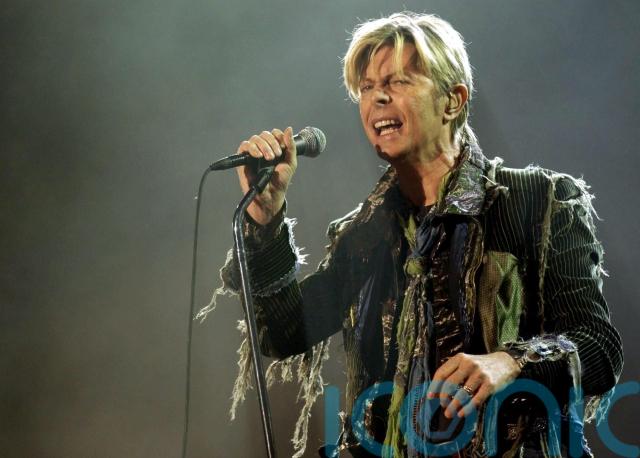
The announcement of the acquisition comes on what would have been David Bowie’s birthday on January 8, two days before the 10-year anniversary of his death on January 10.
It also comes on the 10th anniversary of the release of Bowie’s final album Blackstar, which has been lauded as one of the singer’s best works, incorporating jazz and hip-hop influences in songs which reference his impending death from liver cancer aged 69.
George Underwood, Bowie’s lifelong friend, who is also an artist and musician, said: “We spent so much time together, listening to and playing music. I’ve heard a lot of people say David’s music saved them or changed their life.
“It’s amazing that he could do that and even more amazing that it all started here, from such small beginnings, in this house. We were dreamers, and look what he became.”
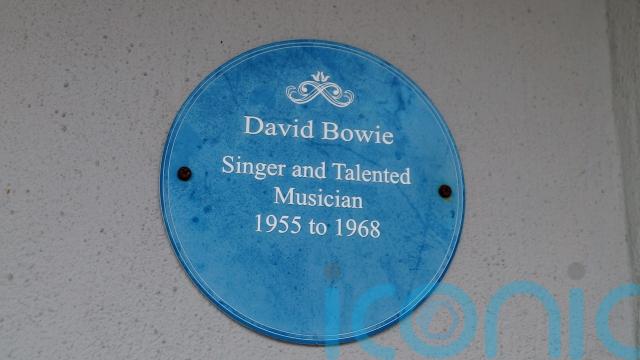
Heritage Of London Trust says it wants the house to be a continuation of Bowie’s legacy of “free creative experimentation” inspired by Beckenham Arts Lab where he worked in the 1960s, which offered opportunities “for everybody”.
Workshops will be provided through the trust’s Proud Places and Proud Prospects initiatives.
The house is near the Edwardian “Bowie bandstand”, where the late musician performed in 1969, which was restored by Bromley Council and Heritage Of London Trust in 2024.
Widely considered as one of the greatest artists of all time, Bowie had five UK number one singles and 11 UK number one albums during his lifetime, and is best known for songs such as Starman, Ashes To Ashes and Sound And Vision.
Bowie was known for his drastic changes in sound and appearance during his career, beginning as a pop singer in the 1960s, before rising to major fame in the 1970s with glam rock albums The Rise And Fall Of Ziggy Stardust And The Spiders From Mars (1972) and Aladdin Sane (1973).
He embraced soul on the albums Young Americans (1975) and Station To Station (1976), and was among the first white artists to appear on US TV show Soul Train, before plunging into krautrock influences on Low (1977), Heroes (1977) and Lodger (1979).

Subscribe or register today to discover more from DonegalLive.ie
Buy the e-paper of the Donegal Democrat, Donegal People's Press, Donegal Post and Inish Times here for instant access to Donegal's premier news titles.
Keep up with the latest news from Donegal with our daily newsletter featuring the most important stories of the day delivered to your inbox every evening at 5pm.

This publication supports the work of the Press Council of Ireland and Office of the Press Ombudsman, and our staff operate within the Code of Practice of the Press Council. You can obtain a copy of the Code, or contact the Council, at www.presscouncil.ie, Lo-call 1800 208 080 or email: info@presscouncil.ie.