The man was sentenced at the Central Criminal Court in Dublin
Search


21 Apr 2026

Please allow ads as they help fund our trusted local news content.
Kindly add us to your ad blocker whitelist.
If you want further access to Ireland's best local journalism, consider contributing and/or subscribing to our free daily Newsletter .
Support our mission and join our community now.
To continue reading this article, you can subscribe for as little as €0.50 per week which will also give you access to all of our premium content and archived articles!
Alternatively, you can pay €0.50 per article, capped at €1 per day.
Thank you for supporting Ireland's best local journalism!


From bringing evergreens into the home to cheer the darkest part of the year to the modern feast of presents and food, Christmas traditions have evolved over centuries.
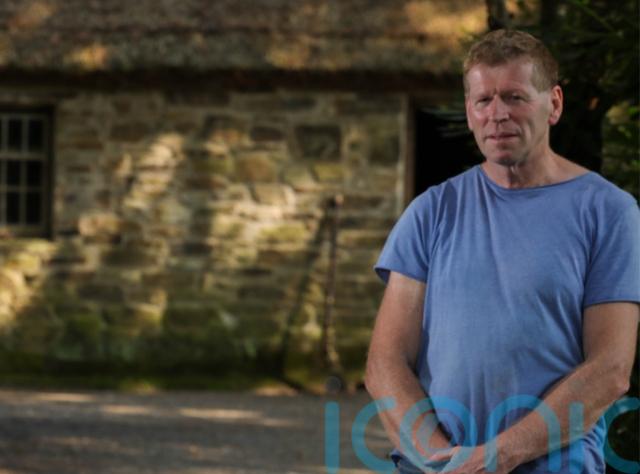
Liam Corry, curator of emigration at the Ulster American Folk Park, said simple Irish traditions have since been influenced by others across the globe to blend ancient pagan customs with Christian beliefs and recent American influence.
Mr Corry said that long before Santa Claus and Christmas cards, midwinter was marked by pagan festivals celebrating light, life and renewal.
Evergreen plants such as holly and ivy were brought indoors to symbolise hope through the darkest months, while yule logs were burned to mark the turning of the year.
As Christianity arrived in Ireland, these traditions merged with those older customs as Christmas Day was established by the early Church as the date to celebrate the birth of Christ.
However even 200 years ago, Christmas in Ireland was relatively low key, with Ordnance Survey notes from 1830 recording the giving out of food and clothing to the poor by rich landowners and Church of Ireland clergy.
Mr Corry said: “People, even the poorest, would try to have better provisions put by for the Christmas meal.
“There does seem to be a tradition of a good cleaning of the home and the farmyard.
“It is described as such in the 1820s by William Charlton.
“He also talks of holly and ivy wreaths being hung up and dances being organised.”
Mr Corry said most of what we recognise today was shaped in America during the 1800s, influenced by German, Dutch and British settlers – including thousands from Ulster.
“The modern Christmas tree, Santa Claus, gift-giving to children and even the idea of a cosy, family-centred Christmas were all popularised in the United States before returning across the Atlantic,” he said.
“These were traditions carried by emigrants, reshaped in a new land, and later embraced back home.”
Turning to Santa Claus, Mr Corry described an “unmistakably American figure with deep European roots”.
Derived from Saint Nicholas, living during the 4th century in what is now the modern-day country Turkey, and shaped by Dutch settlers in New York, Mr Corry said Santa’s image was refined in 19th-century America through poetry, illustration and popular culture.
His sleigh, reindeer and North Pole home became fixed in the imagination before travelling back across the Atlantic.
“Santa is perhaps the best example of how Christmas traditions crossed borders,” Mr Corry added.
“He is a global figure, but one whose story reflects migration, imagination and shared heritage.”
Meanwhile our modern Christmas dinner, especially the roasted turkey, has American origins, having replaced goose as the festive centrepiece in Britain and Ireland.
However Mr Corry said turkey for Christmas dinner only became widespread in the mid-20th century.
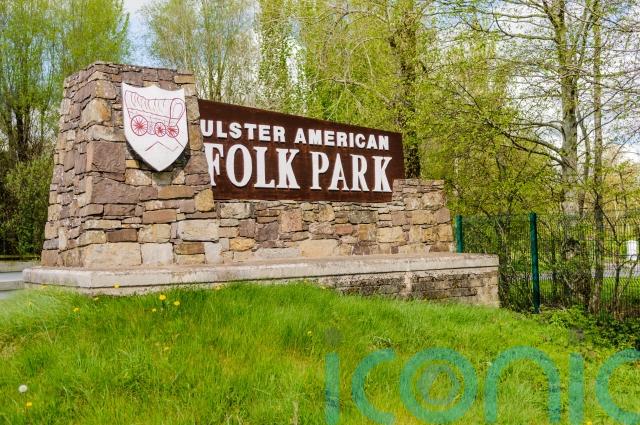
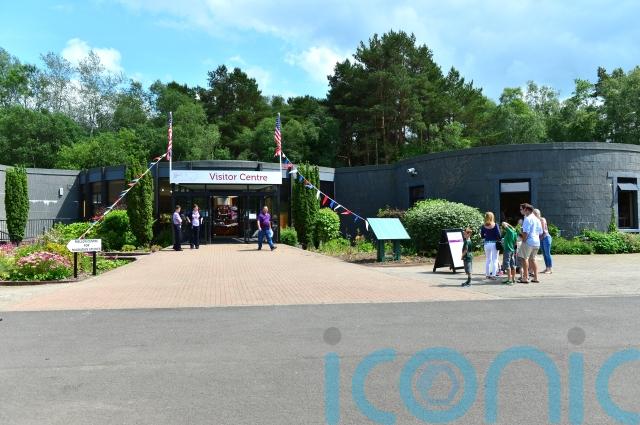
It is a theme which, along with celebrations throughout the year, is explored by the Ulster American Folk Park on the outskirts of Omagh, Co Tyrone.
As the United States marks 250 years since the Declaration of Independent, the Ulster American Folk Park will mark its 50th anniversary.
Mr Corry said: “Christmas reminds us that the relationship between Ulster and America is not just political or historical.
“It’s deeply cultural, rooted in shared traditions, family memories and seasonal rituals that continue to shape who we are.
“At Ulster American Folk Park, we preserve these traditions not as relics, but as living expressions of shared history.
“By celebrating Christmas here, visitors can see how Ulster helped shape American culture, and how America, in turn, reshaped Christmas for us all.”

Subscribe or register today to discover more from DonegalLive.ie
Buy the e-paper of the Donegal Democrat, Donegal People's Press, Donegal Post and Inish Times here for instant access to Donegal's premier news titles.
Keep up with the latest news from Donegal with our daily newsletter featuring the most important stories of the day delivered to your inbox every evening at 5pm.

This publication supports the work of the Press Council of Ireland and Office of the Press Ombudsman, and our staff operate within the Code of Practice of the Press Council. You can obtain a copy of the Code, or contact the Council, at www.presscouncil.ie, Lo-call 1800 208 080 or email: info@presscouncil.ie.