The man was sentenced at the Central Criminal Court in Dublin
Search


21 Apr 2026

Please allow ads as they help fund our trusted local news content.
Kindly add us to your ad blocker whitelist.
If you want further access to Ireland's best local journalism, consider contributing and/or subscribing to our free daily Newsletter .
Support our mission and join our community now.
To continue reading this article, you can subscribe for as little as €0.50 per week which will also give you access to all of our premium content and archived articles!
Alternatively, you can pay €0.50 per article, capped at €1 per day.
Thank you for supporting Ireland's best local journalism!


Academic selection is “negatively impacting children”, the Northern Ireland Assembly has heard.
Sinn Fein MLA Cathy Mason urged Education Minister Paul Givan to phase out its use during a motion debated at Stormont on Tuesday.
A previous state-run transfer test was scrapped by then education minister Caitriona Ruane in 2007.
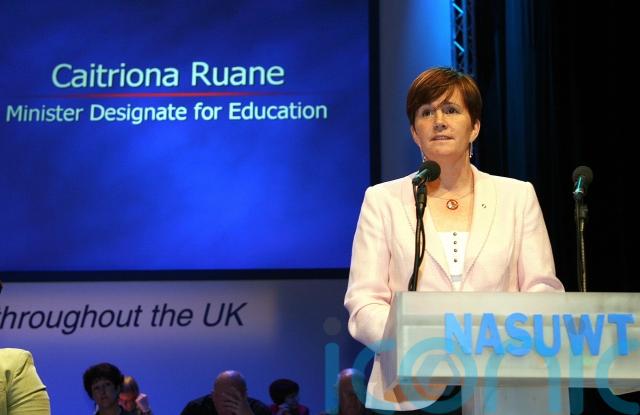
However, most grammar schools in Northern Ireland use a privately run transfer test to select their Year 8 intake each year.
Ms Mason described a “high-stake exam” for 10 and 11-year-olds as they are already preparing for the “daunting transition to post-primary school”.
In a motion supported by her party colleagues Pat Sheehan and Danny Baker, Ms Mason described a “brutal system”.
She said there is an “extensive body of evidence”, including from the United Nations Committee on the Rights of the Child, the Equality Commission for Northern Ireland, and the Organisation for Economic Co-operation and Development, of the negative impact of academic selection on children’s well-being, educational outcomes, and social mobility.
Her motion called on Mr Givan to “take steps to phase out the use of academic selection and transfer tests in post-primary admissions”, and instead develop and implement a fair, inclusive and non-selective system.
SDLP MLA Cara Hunter proposed an amendment to the motion which called on Mr Givan to introduce a “clear timeline for ending academic selection”.
She said her party, throughout its existence, has called for an end to academic selection to “ensure equality of opportunity for young people”.
She added: “It’s welcome that the Assembly is discussing this important issue, but today’s motion is non-binding and will not deliver the change needed.
“It has been brought forward by Sinn Fein, the party who failed to end this practice when they held the education portfolio and actually made the system worse, privatising the transfer test system and creating chaos and confusion for schools in the process.”
“Talking about academic selection will not make it disappear. This cannot be a one-day debate.
“The Executive and the Education Minister must act and use all of the tools at their disposal.
“The current system continues to fail young people, forcing children into an unfair and anxiety-driven ranking process at 10 or 11 years of age, with consequences that follow them throughout their education and beyond.”
However some unionist MLAs spoke in favour of academic selection, including DUP MLA David Brooks who said the transfer test allowed him personally the opportunity to attend a grammar school.
“This issue has strong opinions, and raises passions, on which views can be polarised … but let us be honest about what academic selection is, and what it is not, it is not a judgment on a child’s worth,” he said.
“At best academic selection is about matching children to the education environment where they are most likely to thrive, of course it can be stressful, such is the nature of exams.
“For generations, children from working class families, many without an academic tradition at home, have used grammar schools as a ladder of opportunity.
“I, as the son of a fitter in Shorts and an entry grade civil servant, was able to attend one of the best academic schools in the country, and that was by academic ability, not whether my parents could afford to pay private fees or buy a house in the right catchment area.”
Responding, Education Minister Paul Givan said it is a choice for schools as to whether they use academic selection.
“There is no agreement on the best path forward, not among schools, principals, teachers, parents or indeed young people themselves,” he said.
“Schools choose to include academic selection as their criteria, they can abolish it. How many advocates here have went into those schools and said ‘you’re wrong, change your process?’.
“Every year thousands of parents choose to enter their children in the transfer procedure. It is not of course now a state test, and entry is a matter of individual choice.
“In the absence of consensus, we face a choice. We can continue to expend time and energy on a debate that polarises parents, divides schools and entrenches public disagreement or we can focus our collective efforts where they can have the greatest impact, improving outcomes for children.”
MLAs passed the motion with the SDLP amendment by 47 votes to 30.

Subscribe or register today to discover more from DonegalLive.ie
Buy the e-paper of the Donegal Democrat, Donegal People's Press, Donegal Post and Inish Times here for instant access to Donegal's premier news titles.
Keep up with the latest news from Donegal with our daily newsletter featuring the most important stories of the day delivered to your inbox every evening at 5pm.

This publication supports the work of the Press Council of Ireland and Office of the Press Ombudsman, and our staff operate within the Code of Practice of the Press Council. You can obtain a copy of the Code, or contact the Council, at www.presscouncil.ie, Lo-call 1800 208 080 or email: info@presscouncil.ie.