The man was sentenced at the Central Criminal Court in Dublin
Search


21 Apr 2026

Please allow ads as they help fund our trusted local news content.
Kindly add us to your ad blocker whitelist.
If you want further access to Ireland's best local journalism, consider contributing and/or subscribing to our free daily Newsletter .
Support our mission and join our community now.
To continue reading this article, you can subscribe for as little as €0.50 per week which will also give you access to all of our premium content and archived articles!
Alternatively, you can pay €0.50 per article, capped at €1 per day.
Thank you for supporting Ireland's best local journalism!


“Serious financial mismanagement” is being “normalised” at Stormont because of payouts from the UK Government, the head of a fiscal watchdog has said.
Sir Robert Chote, chairman of the NI Fiscal Council, said continued short term support from the Treasury reduces pressure on the Executive “to deal with some of the big choices that confront it.”
The Council has published its assessment of Finance Minister John O’Dowd’s multi-year budget, and warns the Executive needs to “address the underlying causes of overspending”.
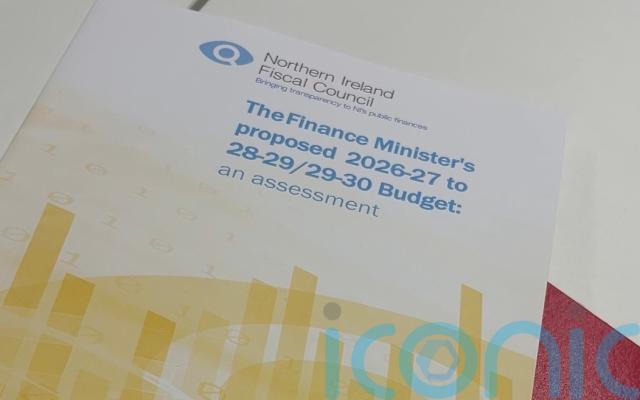
Stormont departments are on course to overspend their budgets again this year by almost £460 million, but the UK Treasury has agreed to provide a loan of £400 million from its reserve, to be repaid over three years.
The Fiscal Council has said this support “reduces, but does not remove, the cliff-edge reduction in real funding for public services in 2026-27”.
The council further found that public sector pay remains the dominant structural pressure, and predicted that rising pay settlements, overspend recovery and restricted flexibility caused by earmarked funding are heightening the likelihood of renewed overspending in the next budget period.
Speaking on Monday Sir Robert said Stormont departments continuing to overspend was creating a “a particularly difficult environment in which to be setting out a budget for the next three years”.
“The departments have been essentially overspending, on average, the amounts of money that they’ve been allocated for the last four years or so,” he said.
“And under each of those circumstances, the Treasury, the UK Government has essentially come in and said, ‘well, okay, we’ll provide you with some short term supports to help you deal with that, and then we’ll ask you to repay that later’.
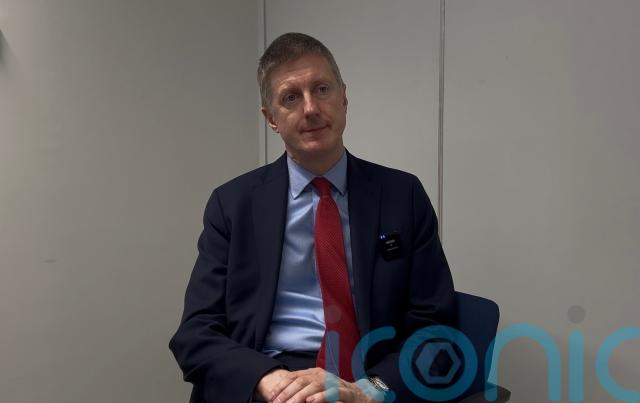
He added: “So the positive of that for Northern Ireland departments is it makes the squeeze on spending that much less severe next year, but also the danger is that it affects the behaviour.
“People think that there’s going to be more money available in the future, they know that there’s an election coming up here in a year’s time, which will mean that it’s a more difficult time for the UK Government to take tough decisions.
“So there is this danger that you end up essentially taking, what the Treasury would define as serious financial mismanagement, which is not sticking within your budget in a particular year, but almost normalising that by having essentially offered bailouts over recent years, and that means that the Executive is under less pressure to deal with some of the big choices that confront it.
“Do we want to match parity with the pay levels elsewhere? Do we want to continue to have as large a public sector workforce as we have relative to elsewhere? Do we feel the need to raise more revenue, the old favourite, of course, of domestic water charging? Are there savings you can make elsewhere?”
The draft budget has not been accepted by the Executive, with DUP leader Gavin Robinson having said there is no point agreeing to a budget which “doesn’t work” just because it lasts for three years.
Asked about the possibility of achieving political consensus on the budget, Sir Robert said: “It wasn’t possible to get the Executive to agree around even that relatively neutral sort of package.
“So given that any alternative package would involve making some departments and parties better off relative to others, you have to ask whether that’s going to make it any more likely that you can reach an agreement under those circumstances.”
Health and education are two departments set to enter 2026-27 with lower budget allocations than the amount expected to spend this year despite these departments being responsible for this year’s overspend.
The fiscal council has concluded there is a significant risk that no budget will be agreed before the new financial year.
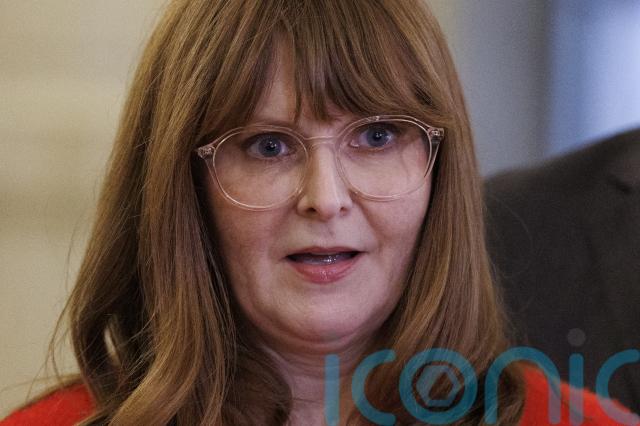
Economy Minister Caoimhe Archibald said not securing a three-year budget would be a “huge missed opportunity, it would be a dereliction of duty on ministers around the Executive table”.
Asked how the Executive would deal with the financial pressures caused by commitments to pay parity, Ms Archibald said: “Clearly there is a challenge here in terms of our budget and our public services and being able to deliver the type of public services that people rightly expect and deserve.
“But our public sector workers also need to be paid for the jobs that they are doing. They are critical in terms of the delivery of public services.
“So we need to be properly funded. The Executive has been very clear too that we are up for transformation of our public services, but that requires investment as well.”

Subscribe or register today to discover more from DonegalLive.ie
Buy the e-paper of the Donegal Democrat, Donegal People's Press, Donegal Post and Inish Times here for instant access to Donegal's premier news titles.
Keep up with the latest news from Donegal with our daily newsletter featuring the most important stories of the day delivered to your inbox every evening at 5pm.

This publication supports the work of the Press Council of Ireland and Office of the Press Ombudsman, and our staff operate within the Code of Practice of the Press Council. You can obtain a copy of the Code, or contact the Council, at www.presscouncil.ie, Lo-call 1800 208 080 or email: info@presscouncil.ie.