Search


22 Apr 2026
Search
22 Apr 2026

Please allow ads as they help fund our trusted local news content.
Kindly add us to your ad blocker whitelist.
If you want further access to Ireland's best local journalism, consider contributing and/or subscribing to our free daily Newsletter .
Support our mission and join our community now.
To continue reading this article, you can subscribe for as little as €0.50 per week which will also give you access to all of our premium content and archived articles!
Alternatively, you can pay €0.50 per article, capped at €1 per day.
Thank you for supporting Ireland's best local journalism!


The needs of victims of historical sexual abuse in Northern Ireland “are only going to increase as survivors age”, MLAs have been told.
Fiona Ryan, the commissioner for survivors of institutional childhood abuse, expressed survivors’ concerns about being placed in the care of the state as they grow older, and warned the intergenerational aspect of abuse “hasn’t even been looked at”.
In 2017, the Historical Institutional Abuse Inquiry (HIAI) revealed sexual, physical and emotional abuse in religious and secular institutions from 1922 to 1995.
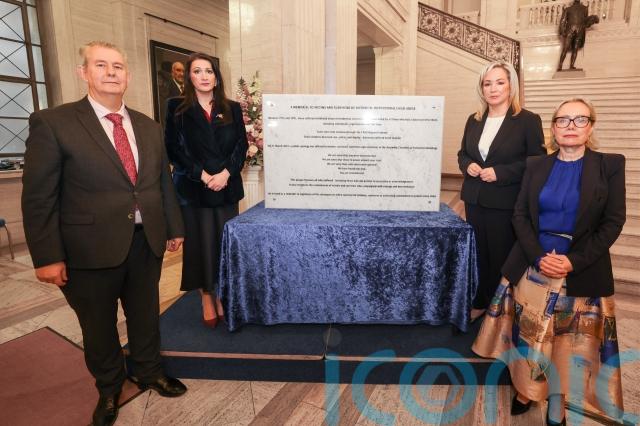
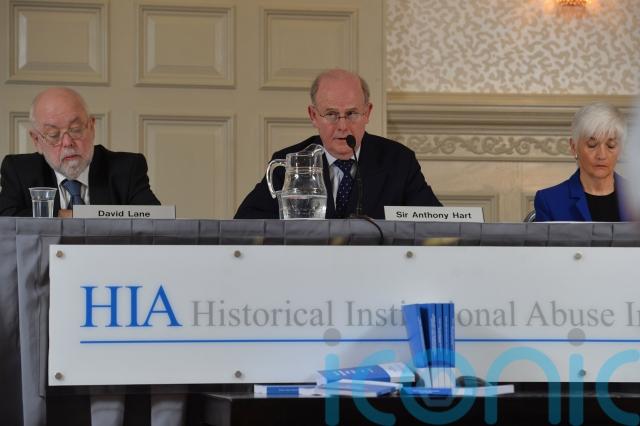
Sir Anthony Hart, who chaired the inquiry which revealed shocking levels of abuse in that period, recommended a permanent memorial, compensation and an official apology to the victims.
Ms Ryan appeared before the Executive Office Committee at Stormont on Wednesday to discuss a report her office compiled which included input from more than 100 victims and survivors.
“Chronic physical and mental health conditions are widespread. Victims and survivors tell us that almost every facet of their lives has been affected,” she said.
“We also know there’s an increased risk of further retraumatisation for survivors as adults from domestic and sexual abuse.
“Victims and survivors are highly reliant on general health supports, especially GPs, yet at the same time, they’ve told us they’re often reluctant to seek medical help.”
Ms Ryan highlighted that the report makes reference to “the often neglected dimension of the impacts of abuse and intergenerational trauma, which is known to exist but is very under-researched, especially in the Northern Ireland context”.
“I would offer that our findings demonstrate that survivor support needs are only going to increase as survivors age, and that survivors will need general and specialist supports throughout the course of their lives,” she said.
Ms Ryan later added: “I’d like to highlight for you the fact that survivors are telling us that they have real concerns about going into residential care as they age and these are very, very real.
“You can imagine, you’ve had such negative experiences of being institutionalised as a child, what that will mean for you going forward as an older person.
“But also I think there’s a whole aspect that hasn’t even been looked at around transgenerational trauma and the impact on survivors, their families, their relationships.”
Several committee members including Sinn Fein MLA for North Belfast, Caral Ni Chuilin, and TUV MLA for North Antrim, Timothy Gaston, both raised the prospect of a “prevalence survey” to gain a better understanding of how widespread abuse was.
Ms Ni Chuilin said that the current understanding of the level of abuse could be just “the tip of the iceberg”.
“In nationalist and republican communities, very often no one contacted any authorities when anything happened because of their own suspicions or because it may have been used against them in a sinister way,” she said.
“So I know for a fact there are lots of people, I would say, maybe, over the last five years, who are probably looking for somewhere to go to try and get help.”
In her reply Ms Ryan said: “I feel like the answer I want to give you is so massive because what you’re talking about is a structural, systemic response.
“I think if we keep pursuing tactical, piecemeal solutions, we’re not going to actually give victims and survivors what they want and what they need.
She added: “I do think that a prevalence study would be useful to have, and it is about informing the system, but that doesn’t mean that we don’t actually look at what services are available to survivors.”
Mr Gaston said “we have a lack of data, a lack of information to back up where the abuse happened”.
Reiterating that she felt a prevalence study was needed, Ms Ryan said: “I think whatever would allow us to get to a point where we understand more about child abuse in Northern Ireland, historical institutional child abuse, other forms of institutional child abuse, then that has to be considered and should be actively considered.”

Subscribe or register today to discover more from DonegalLive.ie
Buy the e-paper of the Donegal Democrat, Donegal People's Press, Donegal Post and Inish Times here for instant access to Donegal's premier news titles.
Keep up with the latest news from Donegal with our daily newsletter featuring the most important stories of the day delivered to your inbox every evening at 5pm.

This publication supports the work of the Press Council of Ireland and Office of the Press Ombudsman, and our staff operate within the Code of Practice of the Press Council. You can obtain a copy of the Code, or contact the Council, at www.presscouncil.ie, Lo-call 1800 208 080 or email: info@presscouncil.ie.