Search


25 Mar 2026
Search
25 Mar 2026

Please allow ads as they help fund our trusted local news content.
Kindly add us to your ad blocker whitelist.
If you want further access to Ireland's best local journalism, consider contributing and/or subscribing to our free daily Newsletter .
Support our mission and join our community now.
To continue reading this article, you can subscribe for as little as €0.50 per week which will also give you access to all of our premium content and archived articles!
Alternatively, you can pay €0.50 per article, capped at €1 per day.
Thank you for supporting Ireland's best local journalism!


A PSNI officer has admitted to missing Noah Donohoe on two CCTV cameras he is now known to have travelled past.
In the ninth week of the inquest into Noah’s death, jurors at Belfast coroner’s court heard that an officer conducting initial searches on CCTV “fast-forwarded” footage on some cameras, leading to a suggestion from Noah’s mother’s legal team he was “not paying it the greatest level of attention”.
Noah, a pupil at St Malachy’s College, was 14 when his naked body was found in a storm drain tunnel in north Belfast in June 2020, six days after he left home on his bike to meet two friends in the Cavehill area of the city.
A post-mortem examination found the cause of death was likely to be drowning.
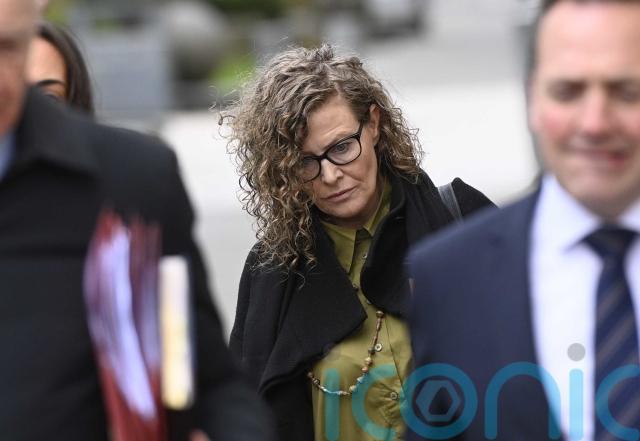
In early February, PSNI Detective Constable Keatley gave evidence to the inquest when CCTV footage was played from the Grove Leisure centre, which Brenda Campbell KC representing Fiona Donohoe, said Noah appeared on.
The constable said she had no dealings with checking CCTV footage on Monday 22 June and so could not comment on what other officers checked or what inquiries they made.
PSNI Constable Day, who was involved in searching for CCTV for several hours that Monday, told the inquest on Wednesday he was briefed that morning before going to the CCTV operating suite and then checking a number of locations.
His notebook showed he visited a shop on the Ormeau Road and on North Queen Street and got positive sightings of Noah on CCTV.
He later worked towards the Grove Leisure Centre and Melville Morgan Funeral directors, both situated on the York Road in north Belfast, around half a mile from the culvert where Noah’s body was later found on 27 June.
Nick Scott, acting counsel for the coroner, showed a police log highlighting an entry claiming CCTV was checked at the leisure centre and the funeral directors facing it, with “negative results”.
Mr Day said that meant “that I didn’t view the missing person on any footage that I viewed”, adding that police “were just trying to plot the course” to track Noah’s journey at that stage.

Asked about his investigations at the Grove, Mr Day said “the footage I viewed was what I thought was the right time for Noah going past” and that was based “on the operator showing me the correct footage and correct timings.”
On the day he was searching CCTV for Noah, Mr Day arrived at the York Road area at approximately 12pm before being redeployed on a separate emergency call at 12.38pm.
He agreed with Ms Campbell’s assessment that he was “working with a 35-minute window” to get himself and a colleague from one end of the street to the other, checking CCTV at the leisure centre and funeral directors.
Ms Campbell said it “appears you missed him on both sets of footage” and Mr Day replied “yes”.
Mr Day agreed that he knows how to check real time versus camera time because he recorded doing so when retrieving CCTV from two locations earlier in the day.
He further agreed that an “obvious question” is how far out of real time the camera is and that is of particular interest to the police.
Asked by Ms Campbell if it is “fundamental policing” to check the time difference he said “yes”.
She put it to the officer that there was a high risk missing child and the police should have been taking “all positive action” to which he agreed.
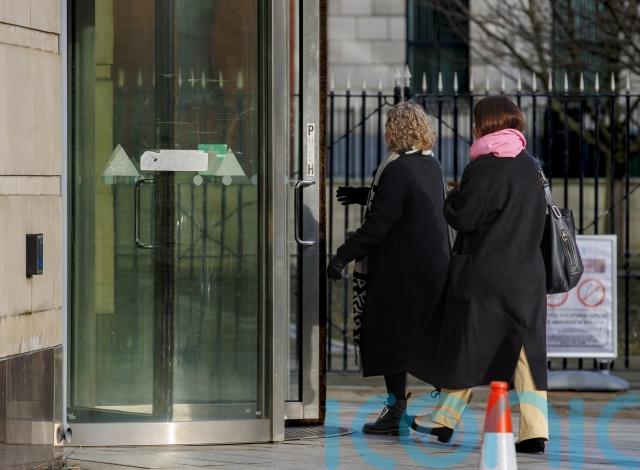
He had previously said he watched 10 minutes either side of the time he said he wanted to view, which in this case was around 6pm on the night Noah went missing.
When Ms Campbell suggested he could not have done that in the 35-minute window viewing CCTV at two locations, he said the footage “was fast-forwarded, we could have watched it faster”.
When Ms Donohoe’s counsel contended that showed the officer was “not paying it the greatest level of attention”, the officer replied, “no”.
Ms Campbell said it was not the fault of Mr Day that these searches were occurring at 12.30pm on Monday and in her team’s perspective “ought to have been significantly before that”.
Later Mr Day agreed with Donal Lunny KC, representing the PSNI, when asked if he was alive to the issue that CCTV cameras can be out of synchronisation with real time.
Mr Day also agreed that he believed the time on the CCTV at the leisure centre and funeral directors was correct as he watched it, and when it was “fast-forwarded” he was “still viewing what’s on the screen”.
He further conceded that he was not in a rush to get away and was not aware he was going to get called away on an emergency.
Mr Lunny also highlighted in police logs that another team visited the locations on the York Road later in the day and also experienced issues with the quality and time-checking of CCTV.
Ms Campbell earlier brought up the log for the PSNI’s CCTV suite where Mr Day is shown to have arrived at 9.51am on Monday.
She contested that he would appear to be the first officer to attend the suite in relation to Noah’s investigation, 12 hours after he had been reported missing, to which Mr Day said “yes”.
Mr Lunny highlighted in his questioning there are “many ways” police can communicate with the CCTV centre beyond going there in person.

Subscribe or register today to discover more from DonegalLive.ie
Buy the e-paper of the Donegal Democrat, Donegal People's Press, Donegal Post and Inish Times here for instant access to Donegal's premier news titles.
Keep up with the latest news from Donegal with our daily newsletter featuring the most important stories of the day delivered to your inbox every evening at 5pm.

This publication supports the work of the Press Council of Ireland and Office of the Press Ombudsman, and our staff operate within the Code of Practice of the Press Council. You can obtain a copy of the Code, or contact the Council, at www.presscouncil.ie, Lo-call 1800 208 080 or email: info@presscouncil.ie.