Rest in Peace James McEvoy
Search


30 Mar 2026

Please allow ads as they help fund our trusted local news content.
Kindly add us to your ad blocker whitelist.
If you want further access to Ireland's best local journalism, consider contributing and/or subscribing to our free daily Newsletter .
Support our mission and join our community now.
To continue reading this article, you can subscribe for as little as €0.50 per week which will also give you access to all of our premium content and archived articles!
Alternatively, you can pay €0.50 per article, capped at €1 per day.
Thank you for supporting Ireland's best local journalism!


Failure at Stormont to agree a multi-year budget will make a major transformation of the health service harder to deliver, a senior official has said.
The Stormont Executive has yet to agree its first multi-year budget in more than a decade despite Finance Minister John O’Dowd publishing draft proposals in January.
Mike Farrar, permanent secretary at the Department of Health, said while the health reset plan can be delivered in single-year budgets, it will be more difficult than with a three-year budget which allows for more long-term plans.
Health currently consumes more than 50% of Northern Ireland’s annual budget.
Mr Farrar has warned this is set to increase to 75% by 2025 unless the service is transformed, adding he does not believe it is feasible to keep going to the Executive asking for more money at the expense of other departments.
The health budget started the last financial year with a £600 million shortfall, which was resolved with the finding of almost £300 million in savings, as well as help from the Executive.
It is set to start the next financial year with an £800 million projected shortfall.
This includes additional demand, staff costs, tariffs on drugs and inflation.
Health Minister Mike Nesbitt published his reset plan last July.
As part of this, there will be a focus on spending more money on neighbourhood care, with the aim of keeping people out of hospitals, as well as a new public health message initiative aimed at stopping people becoming sick.
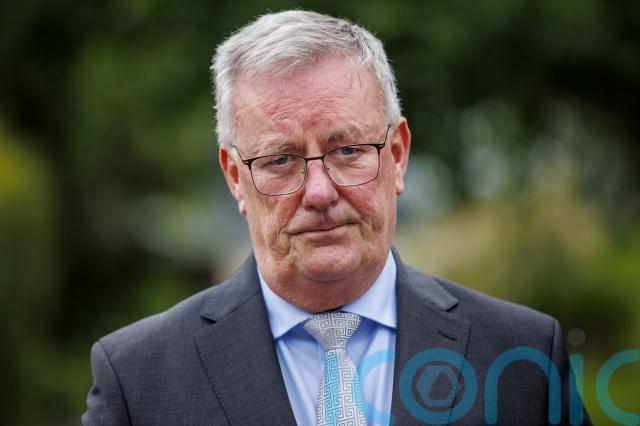
Mr Farrar said there has been some progress over the last year in terms of reducing some waiting lists, but said more progress is needed.
“It would be crazy to spend more and more on healthcare at the expense of staying well, and we are determined we can get better value out of the money that we have got by doing things like this reset of healthcare into community, preventing people getting ill in the first place,” he told the Press Association.
“I don’t believe that is the right thing to do (continue going back to the Executive to ask for more money), because you would be robbing other government departments, so we have got to work harder to use the money we do have in the health and social care system to better effect.”
But Mr Farrar said a multi-year budget is vital to make good progress with the reset plan.
“From the health service point of view, we need to implement this reset plan and it will take two to three years to really kick into full effect,” he said.
“We know because we don’t have a balanced position now and we’ve been dependent on the Executive supporting us that if we can get the reset plan in, we can reduce the reliance on that extra money.
“But it does take two to three years to change a service model and to get the public and the clinicians to begin to work in that kind of way.
“If we keep on having single-year budgets it just makes it so much harder to plan, and I think that delays our ability to reset the system, to get that value for money that the taxpayer wants and get those outcomes the public want when they use our services.”

Subscribe or register today to discover more from DonegalLive.ie
Buy the e-paper of the Donegal Democrat, Donegal People's Press, Donegal Post and Inish Times here for instant access to Donegal's premier news titles.
Keep up with the latest news from Donegal with our daily newsletter featuring the most important stories of the day delivered to your inbox every evening at 5pm.

This publication supports the work of the Press Council of Ireland and Office of the Press Ombudsman, and our staff operate within the Code of Practice of the Press Council. You can obtain a copy of the Code, or contact the Council, at www.presscouncil.ie, Lo-call 1800 208 080 or email: info@presscouncil.ie.