
'His time with us was too short' - Funeral of Tadgh Farrell hears heartbreaking tributes
Search


13 Dec 2025

Please allow ads as they help fund our trusted local news content.
Kindly add us to your ad blocker whitelist.
If you want further access to Ireland's best local journalism, consider contributing and/or subscribing to our free daily Newsletter .
Support our mission and join our community now.
To continue reading this article, you can subscribe for as little as €0.50 per week which will also give you access to all of our premium content and archived articles!
Alternatively, you can pay €0.50 per article, capped at €1 per day.
Thank you for supporting Ireland's best local journalism!

Nearly two weeks into 2025 already

Nearly two weeks have passed since the turn of the year. Some of us may have made resolutions coming into this new year. Some may be sticking to them, others may be struggling or feeling bad that they have given up already.
We know that it can be hard enough sticking to resolutions, disappointing enough when we struggle and then, in addition to all that, we often throw in a large dose of self-criticism.
So we are not only feeling that we have “failed”, but we are criticising ourselves for our “failure”.
And we know that self-criticism does not help us improve or encourage us to try again. On the contrary, self-criticism can shame and humiliate us, keep us small and prevent us from trying again or taking up new challenges.
January can be a hard enough month to endure, so we decided to look to positive psychology to see what we can do to help ourselves keep going until springtime. What lifestyle choices might be better for our mental health than resolutions that feel out of reach?
First, let’s go back to the basics. How are we sleeping? After a couple of weeks of late or later nights and sleeping in until later, we may not be feeling energetic.
Research shows that we do better if we have a consistent, routine, sleep pattern, whereby we go to bed at the same time every night.
Good sleep is important for physical regeneration. It also does a psychological type of pruning for us.
Good sleep helps us declutter the mind so that we can start off each day with psychological “space”. Good sleep keeps hormones in check.
For example, the hormones that regulate appetite and tell us when we are full are impacted by our quality of sleep. So good sleep is also important if we are trying to manage our diet and or weight.
How are we eating? Again, after days - or in some cases weeks - of indulgence in food and alcohol, have we managed to get back on track?
Replacing the sugary, 'Christmas' foods with brain food can really help our mood according to the research.
For good brain health, we need to be eating foods such as oily fish, nuts, seeds and oats; fruits such as bananas and blueberries, green leafy vegetables such as spinach and broccoli.
These foods contain vitamins and minerals such as magnesium and zinc which are important for helping our mood. Foods such as bananas and porridge contain tryptophan which is a building block for serotonin.
Serotonin is our 'happy chemical'. It helps us feel better and worry less. Most antidepressants are formulated to boost serotonin levels.
Too much alcohol can have an adverse effect on mood. While the initial effect is relaxing and a loosening of inhibitions, alcohol is a depressant and can really bring the mood down and drive anxiety up. So, getting back to reasonable, healthy consumption is really important for our mental health.
How about exercise? We always tell clients that physical exercise is the best exercise for our minds. Christmas and Twistmas (the period between Christmas and the New Year) finds many of us more sedentary than usual, curled up on couches watching movies. And that is lovely and important too.
However, too much of that and we can begin to feel our moods dip. Physical exercise produces dopamine, so that we feel more motivated. It puts a spring in our step. We need small doses of it regularly. Exercise also produces brain derived neurotropic factor (BDNF) which helps boost cognition and memory. Exercise produces endorphins, which give us that nice post-workout feeling.
So how can we make exercise more doable? Exercise should be regular and at a time that works best for you. The morning larks might prefer to get it done first thing in the day, whereas the night owls may prefer to exercise later into the day.
However, try not to engage in vigorous, high impact exercise too late in the day as exercise also boosts cortisol levels.
Cortisol is a stress hormone and designed to stimulate us. That’s good in the morning (and cortisol levels are high around the time we wake up). However, cortisol levels fall naturally over the day.
If they get a boost too late in the day, this will impact sleep. Research also tells us that just walking more is really good for us physically and mentally. So getting off the bus a stop earlier or walking to work or the shop, instead of driving. And preferably walking at a pace as if you were late for an appointment!
Another thing that can affect us winding down after our busy day is the blue light that is emitted from our electronic gadgets (laptops, tablets, phones for example). This blue light impacts the production of a chemical called melatonin.
Melatonin is our 'sleepy' chemical. We produce more of it in the dark. That is why we often feel sleepier at 6pm on a winter’s evening than 6pm on a summer’s evening. Ideally, we should try to form the habit of having an electronic sundown, whereby we get off our phones and other gadgets in the two to three hours before we want to be falling asleep.
Can we improve how we manage our stress levels day to day? Are we making time to 'rest and digest'? This is the term we use to describe what our parasympathetic nervous system does. When our parasympathetic nervous system (PNS) is activated we feel more relaxed, less 'on'.
The longest nerve in the PNS is called the vagus nerve. The vagus nerve runs from our brain to our gut. One way to activate or stimulate it is simply by breathing deeper into our bellies. This is called deep diaphragmatic breathing.
In addition to breathing deeper, we breathe slower. We lengthen the exhale in particular. For example, a simple exercise we teach our clients is to inhale for a count of four seconds, hold for a count of two, exhale for a count of between six and eight and hold again for two seconds.
And repeat this, five or six times, several times a day. Not only will this trigger the vagus nerve, but this focus on the breath anchors our busy minds and makes them focus on one thing (the breath) rather than on multiple things. Hence, literally stopping in our day to take a breath can help us calm down the overload.
Little bursts of meditation can also help our stress levels in our daily lives and hence help us emotionally regulate and feel more stable. We don’t have to stop, get into a lotus position and light candles (unless we want to!).
We can meditate just by focussing more on what we are already doing. For example, if we are chopping vegetables, we can focus just on chopping vegetables, using the senses, being mindful of touch, smell, textures.
If we are having a post workout shower, rather than just rushing to get it done, we can focus on having the shower. What does the water temperature and pressure feel like? What can we smell? The shower gel, the shampoo? What does your scalp feel like when washing your hair?
These are ordinary moments in our days that can be made more mindful, just by focussing our attention more on what we are doing in the moment.
The benefit is that we will feel calmer; meditation helps soothe the amygdala (also known as our threat sensor) and boost our prefrontal cortex, that part of the brain that figures things out and plans and problem solves.
Finally, gratitude. Can we do more of this in 2025? Our brain’s natural default is to take more notice of worry thoughts than happy ones.
And our brains can get quite lazy. So we need to make the effort to pay attention to the more happy thoughts. One way of doing this is to cultivate a practice of gratitude.
We recommend a simple exercise to our clients. At the end of each day, just sit and review what you enjoyed, what you are grateful for and what made you feel satisfied with, that day. Think of a couple of examples of each and if possible write down your thoughts in a journal or notebook.
Research says that this practice helps produce dopamine (which makes us feel good and satisfied) and that even in as little as a few weeks, this practice can make positive changes to our brain health.
So, over the coming weeks, if we can get on board with the above suggestions we will be upping our mental as well as our physical fitness. Take each day as a new day. So that if you have a bad day and don’t manage any of the above strategies, tomorrow will be another day.
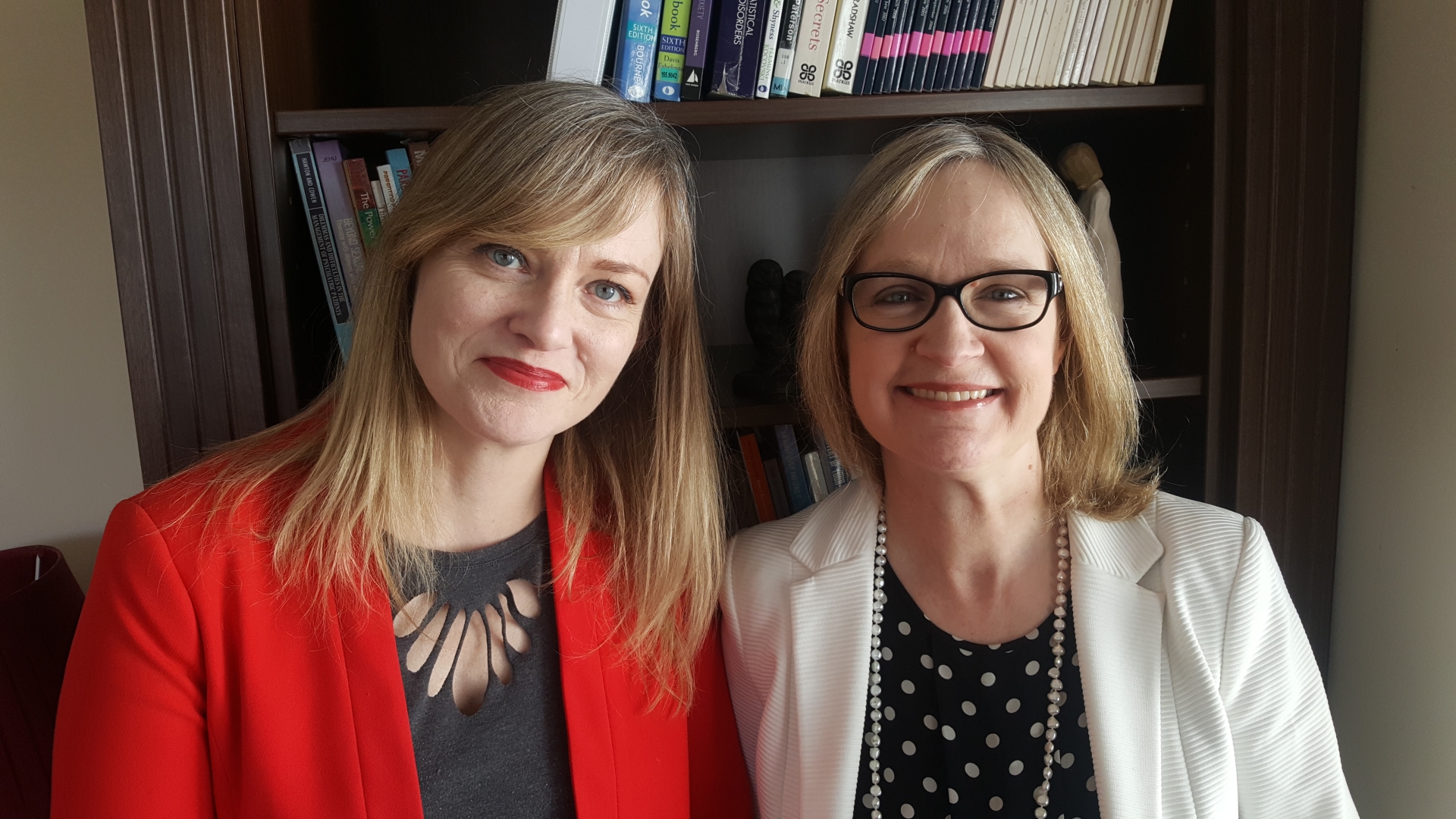
Julie O'Flaherty and Imelda Ferguson (pictured above) are chartered clinical psychologists, both based in private practice in Tullamore. Through Mind Your Self Midlands, they run courses on Positive Psychology and mindfulness throughout the year. They can be contacted through the Psychological Society of Ireland www.psychologicalsociety.ie (Find a Psychologist section) and also on their Facebook page, Mind Your Self Midlands.

Subscribe or register today to discover more from DonegalLive.ie
Buy the e-paper of the Donegal Democrat, Donegal People's Press, Donegal Post and Inish Times here for instant access to Donegal's premier news titles.
Keep up with the latest news from Donegal with our daily newsletter featuring the most important stories of the day delivered to your inbox every evening at 5pm.

This publication supports the work of the Press Council of Ireland and Office of the Press Ombudsman, and our staff operate within the Code of Practice of the Press Council. You can obtain a copy of the Code, or contact the Council, at www.presscouncil.ie, Lo-call 1800 208 080 or email: info@presscouncil.ie.