Search


19 Apr 2026
Search
19 Apr 2026

Please allow ads as they help fund our trusted local news content.
Kindly add us to your ad blocker whitelist.
If you want further access to Ireland's best local journalism, consider contributing and/or subscribing to our free daily Newsletter .
Support our mission and join our community now.
To continue reading this article, you can subscribe for as little as €0.50 per week which will also give you access to all of our premium content and archived articles!
Alternatively, you can pay €0.50 per article, capped at €1 per day.
Thank you for supporting Ireland's best local journalism!


One of the UK’s most well-known professional big wave surfers, who also stars in the hit series 100 Foot Wave, has said he “can’t believe he gets to live his passion” surfing some of the biggest waves in the world.
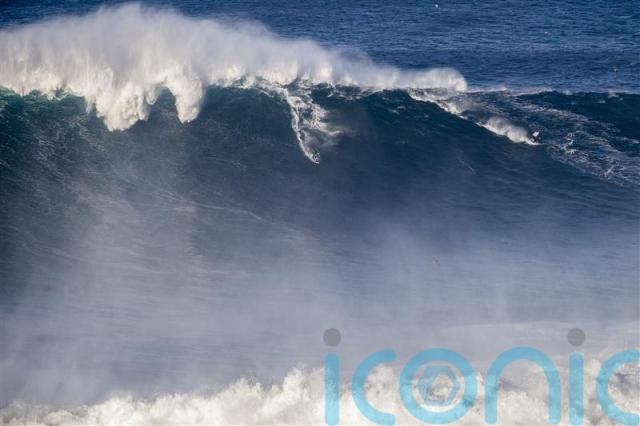
Andrew ‘Cotty’ Cotton, 45, from North Devon, trained as a plumber but made the switch to professional big wave surfing in 2013, often riding waves more than 70 feet high.
He has become a favourite in HBO documentary series 100 Foot Wave, which airs in the UK on Sky and shows Cotton alongside other household names from the surfing world like American big wave surfer Garrett McNamara.
The Emmy-winning docu-series, now in its third season, first aired in 2021, focusing then on McNamara’s quest to ride the elusive 100-foot wave in the seaside town of Nazare, Portugal, famed for its big wave break.
“I think it’s the first ever surf documentary/movie that manages to bridge that gap between the core aspect of surfing and the mainstream,” Cotton says of the popularity of 100 Foot Wave.
“I think sometimes a lot of surf films either appeal to surfers or people don’t get it and what somehow they’ve managed to do, is make it, keeping the surf action there and the understanding of what surfers are trying to do, but they’ve managed to put a very human element in that. And I think the way they’ve told the stories is really amazing.”
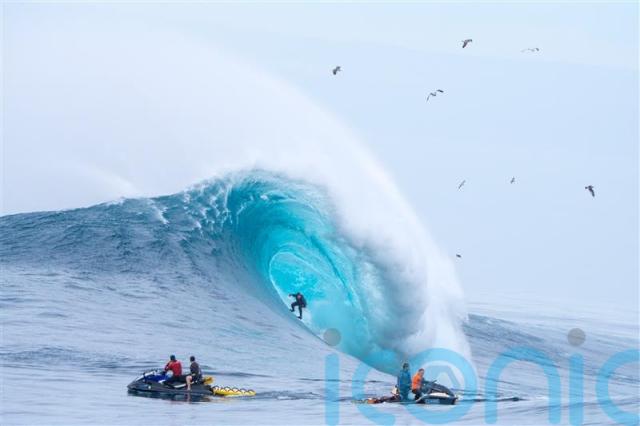
During the third season, the team head to surf the Cortes Bank, an offshore seamount located nearly 180 kilometres off the coast of San Diego.
Due to its remote location, the Cortes Bank is high risk, but Cotton says it was a once-in-a-lifetime experience.
“I think, to put it into context, I grew up in North Devon, and I saw Cortes Bank in videos, in magazines… I never actually ever believed I’d have the opportunity to go there,” he says.
“It’s so far away, and how to get there and the logistics around that, I just thought it’d be too impossible to do. So, it’s amazing.”
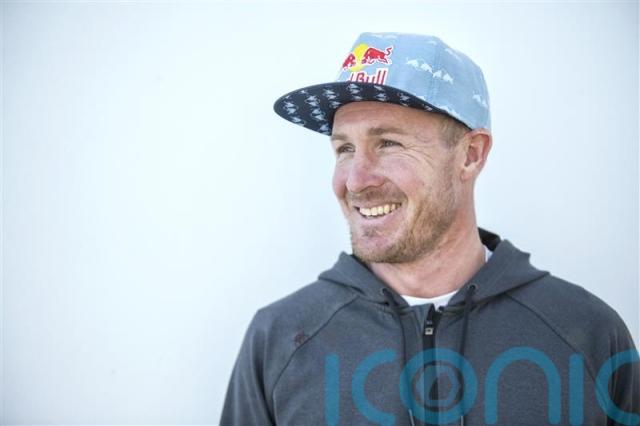
Cotton, who raced from Ireland to get to San Diego for the surf adventure, added: “I think it was quite unique, there was only really us there.
“Often when you go for a surf mission, there will be, you know, (the) people that you travel with, but there also could be sometimes hundreds of other people and it was just our crew.
“It was friends and colleagues that I’ve surfed with for a long time and obviously look up to and have a lot of respect for and I honestly thought it was going to be like the finale of the show. I thought we were going to surf, like 100-foot waves plus, I was anxious and nervous.
“It’s not only is it a new wave, but also extremely big and it’s extremely remote. So, it was a very emotional day. The waves weren’t quite as big as I thought they were going to be.
“There was still a couple of really, really good waves, but just being that far out to sea, and…there was so much wildlife, it was insane, like birds, fish, hundreds of seals, massive sharks, and the ocean was so still and so glassy.”
After leaving school, he worked at a surfboard factory in North Devon, then later trained as a plumber, and worked for a company that installed underfloor heating and solar panels.
While it meant he was earning more money he admits he was miserable at not being able to surf and later started working as a lifeguard, eventually starting to chase “bigger waves in Europe”.
Headline moments in Cotton’s career are plenty, including early on in 2011 when he towed McNamara into what was later confirmed in 2012 by the Guinness Book of World Records as the biggest wave ever surfed at the time.
The 78-foot wave in Nazare broke the previous record set by American surfer Mike Parsons at the Cortes Bank in 2008 by over a foot, according to the Guinness Book of World Records.
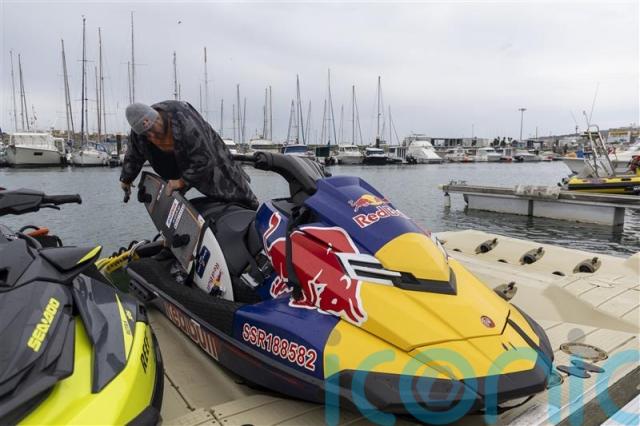
To surf big waves, from around 25 foot and upwards, surfers are towed into the wave as they hold on to a rope attached to the back of a jet ski.
A wave he surfed at Nazare in 2013 was a defining moment in his career, as he explains: “The wave I caught was said to be over 80 feet (30 meters) and was widely reported as possibly the biggest wave ever surfed at the time.”
It was a moment that made headlines not just in the UK, but globally.
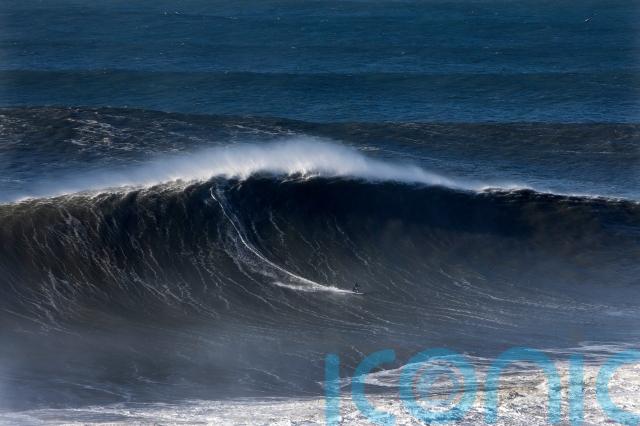
In November 2017, while surfing in Nazare, Cotton broke his back following a wipe-out from a wave that was between 50 to 60 feet, according to his official website.
Recalling the incident, in a post on his website, he says: “I knew before I took the wave that I wanted it to be as critical as possible.
“Knowing that there was the chance of getting a huge barrel I was confident to fade (head into a big bottom turn) a little more than usual so I could come right up under the lip of this wave.
“However, the line that I had chosen started to close down when the lip crumbled in front of me as I looked up.
“I knew that I couldn’t make the safe section towards the top of the wave so decided to bail and take the pounding.”
He jumped off his board to “save his legs getting crushed” and was bounced 40 feet through the air, landing on his back, which resulted in a broken L2 vertebrae.
“It’s funny, it was quite a well-publicised injury, but it definitely wasn’t my worst,” he recalls.
“Sometimes I find that funny. And don’t get me wrong, it was extremely painful, and raised a lot of questions at the time of what am I doing? Is this worth it?
“But I was very fortunate that my sponsor, Red Bull, got me some of the best treatment and helped me on the way to recovery, so I was in really good hands and that gave me a lot of confidence.
“I think maybe the main thing, which, like the body recovered probably within a year. But maybe my mind probably took three years to really be back to normal.”
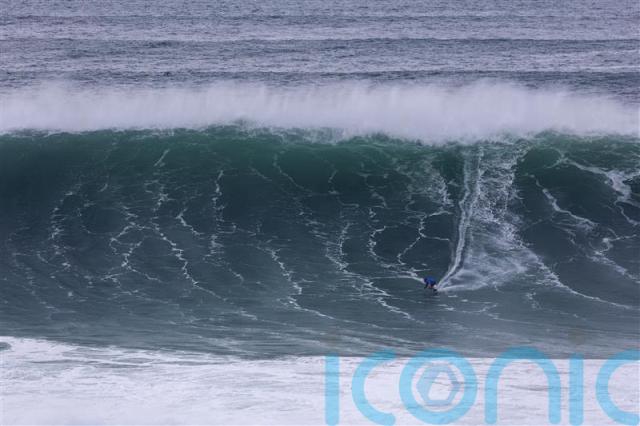
He returned to big wave surfing in autumn 2018, and when it comes to fitness, Cotton says: “I suppose I’ve been training my whole life to be capable of surfing these waves. I (also) love dry land training. I love cycling, which I put quite a few hours a week in doing, like, cardio fitness.
“I do a strength and conditioning workout. And, during the season, or as the season starts, I work more on my breath hold. But I think you also just need to be surfing in itself.”
Asked how long he needs to be able to hold his breath for, he says: “Well, for as long as you need? You don’t know. Every wipe-out, every time you are held underwater, it can be different.
“I personally on a static breath hold, can hold my breath for over five minutes.”
“But it’s very different, because often with these wipe-outs, you have a high heart rate. The biggest skill is being able to surrender underwater.
“Because the mind is the thing that holds you back.
“The mind is what puts you into panic, which then uses oxygen, which then can put you in a situation which can be dangerous, where you might drown or you might have a bad experience.
“But if you can let go of that and you can surrender the brain, or surrender the mind, that’s the sort of training that we do in the pool, where it’s a controlled environment.
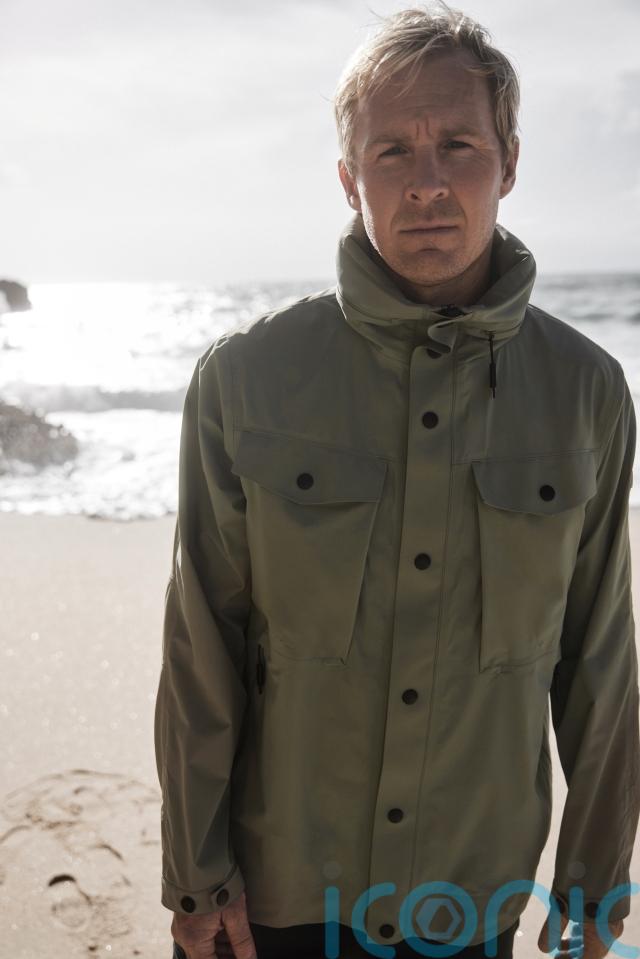
“It’s funny because the first thing people ask is about drowning… And for me, it’s like, I’ve never been in a situation where I thought I can’t hold my breath any longer, but I have been hit so hard that I thought my arms have been ripped off or (I thought) I’ve lost a leg.
“That’s what scares me, being hit so hard that you get knocked unconscious or get slammed into the bottom of the ocean or the reef.
“I have never been in a car accident or been hit by a truck, but that’s how I imagine it, like it is full body impact.”
He has pioneered big wave surfing locations like Mullaghmore in Ireland, and says he feels fortunate to be able to live his dream as a big wave surfer.
“I can’t believe I get the opportunity to earn some money and live my passion and that comes with some risks and some sacrifices, but so does everything,” he says.
“So, when people look at my legacy, there was a lot of sacrifice and exploring, and I hope that inspires people to not just focus on being first, but maybe going first, explore, and see what’s around the corner…
“Anything’s possible if you want something, I think you can make it happen.”

Subscribe or register today to discover more from DonegalLive.ie
Buy the e-paper of the Donegal Democrat, Donegal People's Press, Donegal Post and Inish Times here for instant access to Donegal's premier news titles.
Keep up with the latest news from Donegal with our daily newsletter featuring the most important stories of the day delivered to your inbox every evening at 5pm.

This publication supports the work of the Press Council of Ireland and Office of the Press Ombudsman, and our staff operate within the Code of Practice of the Press Council. You can obtain a copy of the Code, or contact the Council, at www.presscouncil.ie, Lo-call 1800 208 080 or email: info@presscouncil.ie.