RIP: Body found in search for missing man (63) as heartbreaking statement is issued
Search


09 Mar 2026

Please allow ads as they help fund our trusted local news content.
Kindly add us to your ad blocker whitelist.
If you want further access to Ireland's best local journalism, consider contributing and/or subscribing to our free daily Newsletter .
Support our mission and join our community now.
To continue reading this article, you can subscribe for as little as €0.50 per week which will also give you access to all of our premium content and archived articles!
Alternatively, you can pay €0.50 per article, capped at €1 per day.
Thank you for supporting Ireland's best local journalism!


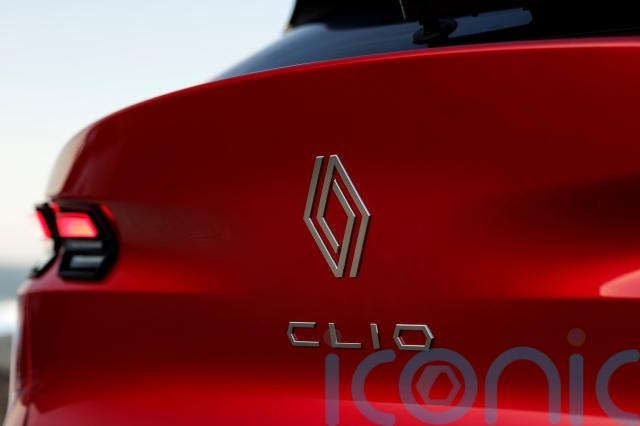
Renault has spent very little time out of the spotlight this year, and it’s all thanks to the revival of the 4 and 5 – two EVs that have made the French carmaker the coolest brand in town. Alongside those two retro reincarnations, it’s also found time to revive the spirit of the 1990s by reinventing the original Twingo as a city car with electric power.
This would be enough for most car manufacturers to be busy with, but not Renault, for it has also developed a brand new version of one of its more recent icons – the Clio. However, it doesn’t come as an EV, but in petrol and hybrid guises.
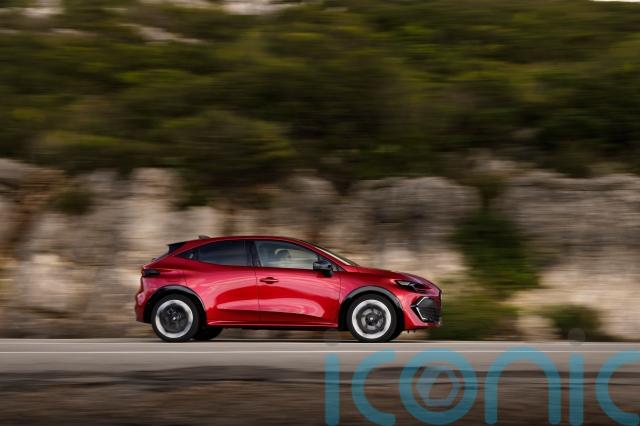
While this sixth-generation Clio shares its platform with the outgoing car, it’s all new elsewhere – new interior, technology, and engines, and completely overhauled styling. With many manufacturers electing to continue revising older superminis because of ever-tightening budgets, the arrival of a brand new Clio is unusual.
It’s for this reason that Renault thinks it’s going to sell a load of them, and just continue the Clio’s history as a best-seller in Europe. The trouble for us Brits is that the car coming won’t be heading to these shores before early 2027.
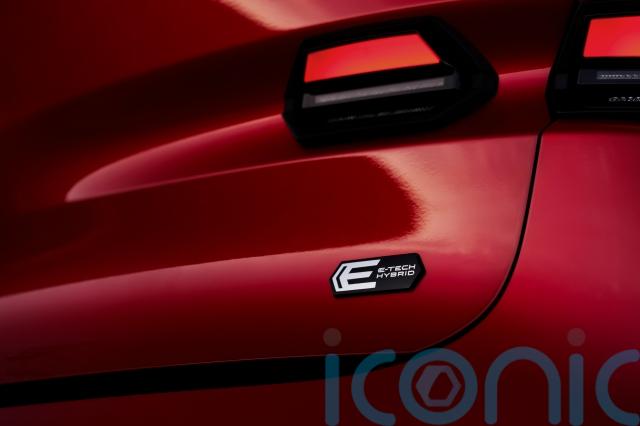
While the Renault 5 and sister 4 are pure-electric, the Clio and its Captur sibling are more traditionally powered as Renault aims to offer solutions for all customers. Headlining the engine selection is a new 158bhp 1.8-litre full-hybrid, which can run on electric power for short distances thanks to a 1.4kWh battery pack.
Renault claims that 80 per cent of city driving can be in EV mode – and in our testing, that seems entirely plausible – and a total driving range of over 600 miles between fill-ups. It’s efficient with a claimed combined fuel consumption of 72mpg, and it’s pretty pokey with 0-60mph taking around eight seconds. For those who like their Clios to be simpler, there’s a pure-petrol 1.2-litre variant with 113bhp and a six-speed manual gearbox.
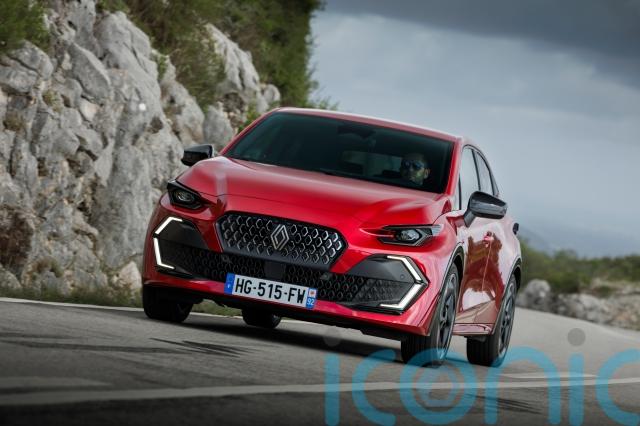
Within the first few metres of driving the new Clio, it’s clear that the car has grown up over the current car. Despite it being classed as a supermini, from behind the wheel it feels like a car from the class above – not large and unwieldy, but mature and very composed. Fling the car around on quick, twisty roads, and the Clio just grips and grips, while around town it feels light and manoeuvrable. At a motorway cruise, it’s hushed, and again, feels like a bigger car than it actually is.
The only choice of Clio on the car’s international press launch was the hybrid. While the engine does get a bit too vocal under hard acceleration and there’s the occasional ‘shunt’ as the hybrid system transitions from one power source to another, it’s a generally smooth driving experience. The engine and electric motor work well to prioritise electric power as much as possible, and this is especially evident around town.
A new driving mode called ‘Smart’ takes control of all the modes. So, when you’re cruising Eco is engaged, but press the throttle harder when overtaking and Sport automatically takes over. It works very well.
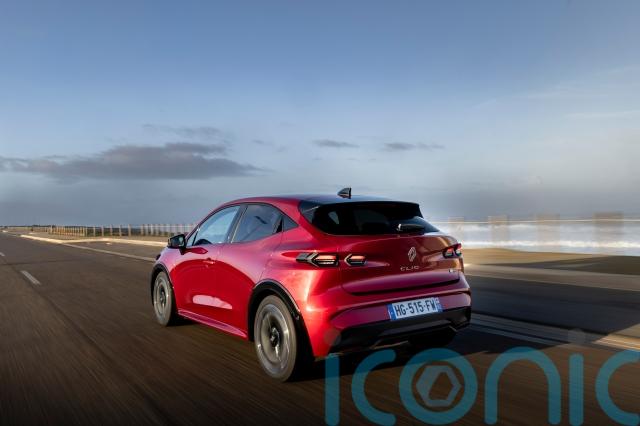
Renault has pretty much ditched every styling cue of previous Clios, with the new model getting a whole new look of its own. Importantly, the new Clio is deliberately different from the 4 and 5 that make a point of looking back to the past – here, Renault wants to give the Clio a modern and aggressive look.
It’s one of those designs where pictures don’t do it justice – it can look a tad too bloated with overly fussy detailing. But in the metal, it’s terrific, with the coupe-like sloping roof and muscular rear haunches giving it plenty of road presence.
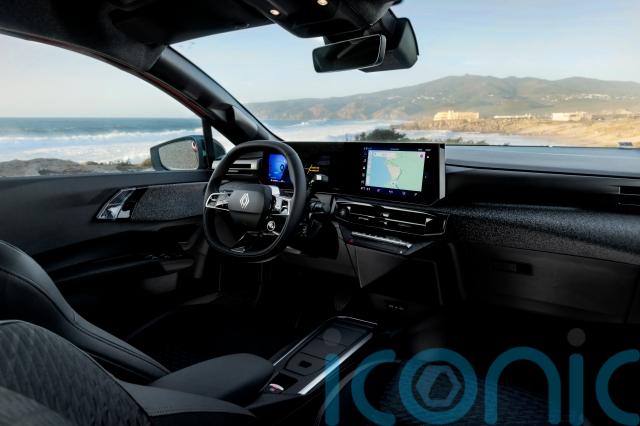
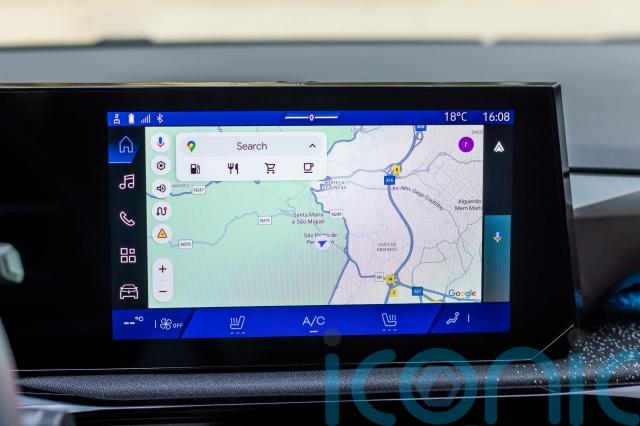
The interior design follows other recent Renaults like the Scenic with a strong focus on design and quality. The ambient lighting gives a real premium touch – especially in the doors, as this can flash red if it senses something in your blind spot. All cars get a twin-screen set-up, with Google functionality – comprising Google Maps, Google Assistant, and Gemini AI – on mid-level Techno versions. Esprit Alpine adds a few extra touches, including Alcantara trim, Tricolour stitching, and a distinctive dash panel that looks like burnt metal – it looks better than it sounds.
There’s plenty of room in the back for taller adults, and the 1.2-litre petrol gets the largest boot at a massive 391 litres – that’s more than the Volkswagen Golf. In the hybrid, this falls to 309 litres.
As the Clio won’t be arriving in the UK for at least another year, details are thin on the ground, but it’s likely that the newcomer will mirror the current Clio’s line-up of Evolution, Techno, and Esprit Alpine trims.
That means the basic level of specification will include LED front and rear lights, climate control, the twin screens, alloy wheels, and smartphone connectivity. Although not confirmed, prices will probably see a small uplift on the current Clio, so expect a starting price of around £20,000 rising to £27,000.
With so much effort having been put into the Renault 4 and 5 EVs, you might expect the Clio to feel a bit half-hearted and underdeveloped – there is only so much time and resources available, even for a big carmaker like Renault, after all.
But the Clio feels a quality product – refined, mature and grown up, plus it is good to drive and sit in. This could be the new B-segment hatchback benchmark; it’s just a shame we Brits have to wait so long for it.

Subscribe or register today to discover more from DonegalLive.ie
Buy the e-paper of the Donegal Democrat, Donegal People's Press, Donegal Post and Inish Times here for instant access to Donegal's premier news titles.
Keep up with the latest news from Donegal with our daily newsletter featuring the most important stories of the day delivered to your inbox every evening at 5pm.

This publication supports the work of the Press Council of Ireland and Office of the Press Ombudsman, and our staff operate within the Code of Practice of the Press Council. You can obtain a copy of the Code, or contact the Council, at www.presscouncil.ie, Lo-call 1800 208 080 or email: info@presscouncil.ie.