A photo of Scarlett Faulkner surrounded by candles in a church I PICTURE: Facebook
Search


02 Apr 2026

Please allow ads as they help fund our trusted local news content.
Kindly add us to your ad blocker whitelist.
If you want further access to Ireland's best local journalism, consider contributing and/or subscribing to our free daily Newsletter .
Support our mission and join our community now.
To continue reading this article, you can subscribe for as little as €0.50 per week which will also give you access to all of our premium content and archived articles!
Alternatively, you can pay €0.50 per article, capped at €1 per day.
Thank you for supporting Ireland's best local journalism!


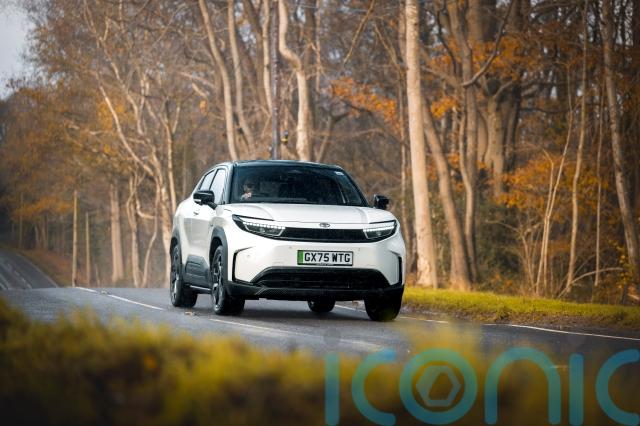
Toyota is best known for producing hybrids, but even it knows that it has to spin its electrification web further these days. Its pure-electric exploits started with the bZ4X in 2022, and now it has launched a new entry-level model called Urban Cruiser.
It’s a name last seen in the UK in 2012, and the latest version is aiming squarely for the Ford Puma Gen-E, Renault 4 and Kia EV3 – let’s see if it’s a winner.
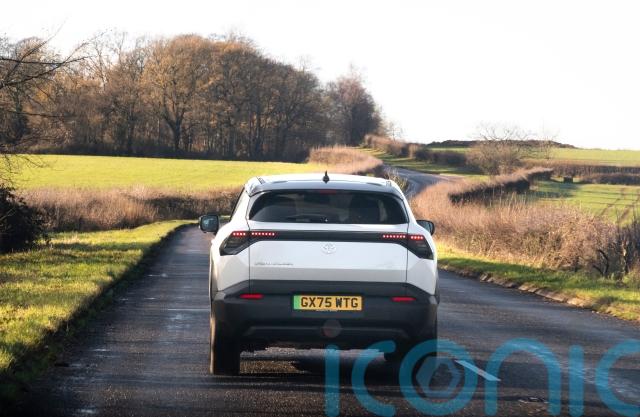
While Toyota worked with Subaru on the bZ4X, it has leant on its other automotive partnership for the Urban Cruiser. The newcomer is effectively a Toyota version of the new Suzuki e Vitara, with Suzuki handling most of the chassis tuning, design… well, everything, really. There are a few Toyota touches inside and out, but not many.
Power comes from one of two LFP battery packs – 49kWh or 61kWh. Toyota says the smaller battery should manage a pretty sub-par 214 miles, while the larger one’s 264-mile range is more in line with rivals, but not outstanding.
You can only get front-wheel drive as Suzuki has kept the dual-motor four-wheel drive powertrain for itself, and DC rapid charging tops out at a pretty abysmal 53kW for the 41kWh battery and just 67kW for the larger battery. All of this means that a 10 to 80-per-cent top-up will take at least 45 minutes, while rivals can complete this in less than half an hour.
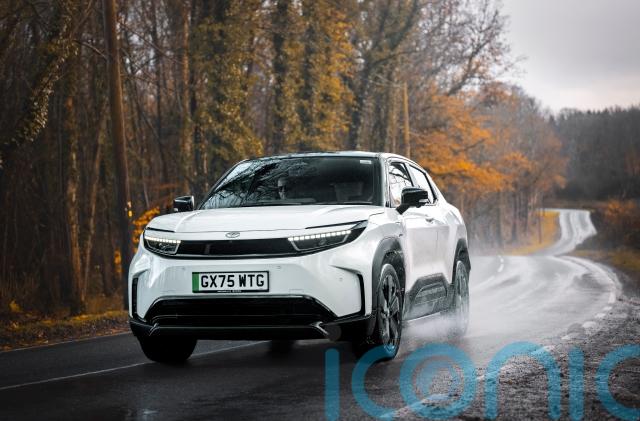
The smaller-batteried Urban Cruiser gets a 142bhp electric motor, while the 61kWh battery gets 172bhp. The Urban Cruiser feels best in the city, which is just as well, judging by its name. The driving position is unusually high for a small SUV, giving great visibility, the steering is light, and the car is darty enough to zip through traffic, but the car crashes into potholes and speed humps. On quicker roads, the ride improves, but there’s a lot of wind and tyre noise, and this gets tiresome very quickly.
The Urban Cruiser really falls down when it comes to efficiency. Over 500 miles in the 61kWh car, we couldn’t better 2.3 miles per kWh, which equates to a real-world range of 140 miles.
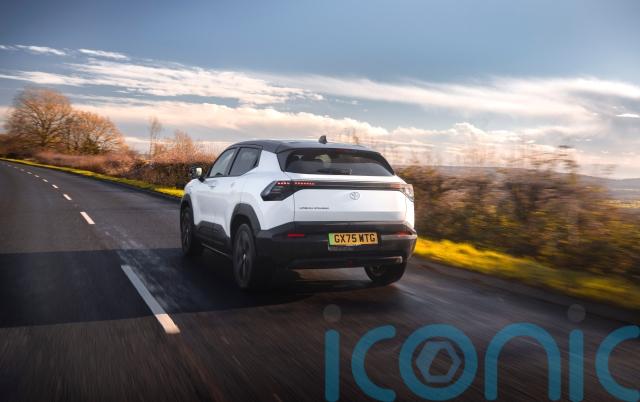
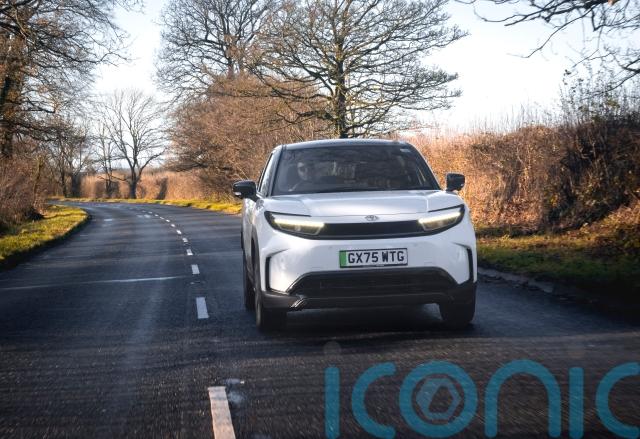
To make it more Toyota-ry over the Suzuki e Vitara, the Urban Cruiser wears a similar face to that of the newly updated bZ4X, and the rear lights are slightly different to those used on the e Vitara – and that’s it.
It’s a reasonably inoffensive design, though, and looks chunkier than many other small SUVs. There’s also a pretty high ride height for some off-road exploits – it’s just a shame that Suzuki has kept the four-wheel drive powertrain for itself.
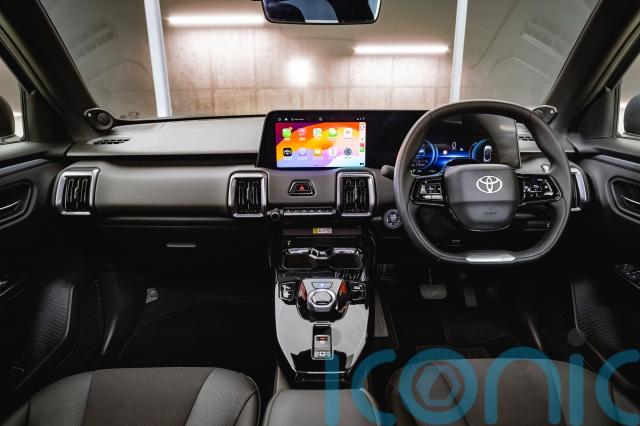
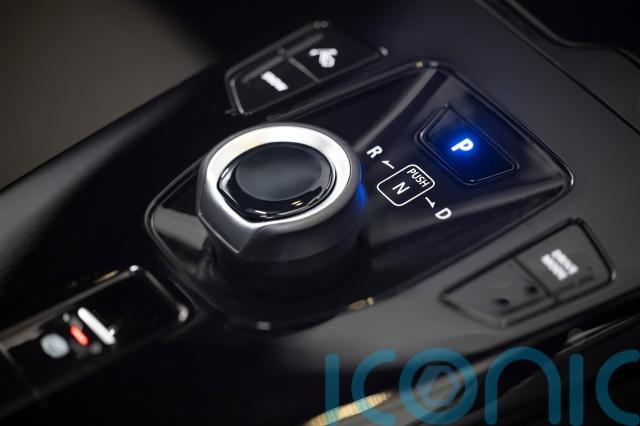
Let’s start with the touchscreen. It has a desperately slow operating system that requires at least two presses of the screen to make anything work. The brake regeneration is needlessly hidden away in a menu, and if you want to turn off the driver assistance systems, you have to watch a short animation of the system in action before you can actually switch it off. It’s clunky and ill-thought-out.
Other annoyances include a slow 360-degree camera-pan around the car on the touchscreen when you switch on the ignition, and how most of the twin screens’ real estate isn’t used – it’s just black, so it doesn’t get in the way of the steering wheel. Build quality is just okay – there are a few too many scratchy plastics dotted around for a car of this price.
Space is average, too. There’s loads of rear legroom, headroom is pretty good, and the rear seats helpfully slide backwards and forwards. But the boot is only 244 litres with the seats slid backwards – that’s less than a Dacia Spring’s boot, and even with the seats pushed forwards, this only liberates 306 litres. A Ford Puma Gen-E has 523 litres by comparison.
The Urban Cruiser starts at £29,995 for the Icon, but this only comes with the smaller battery. Equipment-wise, it’s pretty good, with 18-inch alloys, blind-spot monitor, a heat pump and rear parking sensors, all coming as standard. The £34,460 Design adds some seat and steering wheel heating, plus the bigger battery, while the range-topping Excel, at £36,425, gets a JBL stereo system, an electric driver’s seat, and wireless phone charging.
Ultimately, the Urban Cruiser looks expensive, particularly as rivals like the Puma Gen-E and Renault 4+ get the full £3,750 price cut through the Government’s Electric Car Grant. That’s not forgetting that at the time of writing, Suzuki is offering its own £3,750 price cut on all e-Vitaras through its own electric car grant.
The small electric SUV class is a highly competitive place right now, and it’s only going to get busier. With so-so driving dynamics, chunky pricing, and sub-par range and charging credentials, the Urban Cruiser enters this small SUV battleground looking a little lost.

Subscribe or register today to discover more from DonegalLive.ie
Buy the e-paper of the Donegal Democrat, Donegal People's Press, Donegal Post and Inish Times here for instant access to Donegal's premier news titles.
Keep up with the latest news from Donegal with our daily newsletter featuring the most important stories of the day delivered to your inbox every evening at 5pm.

This publication supports the work of the Press Council of Ireland and Office of the Press Ombudsman, and our staff operate within the Code of Practice of the Press Council. You can obtain a copy of the Code, or contact the Council, at www.presscouncil.ie, Lo-call 1800 208 080 or email: info@presscouncil.ie.