Search


19 Apr 2026
Search
19 Apr 2026

Please allow ads as they help fund our trusted local news content.
Kindly add us to your ad blocker whitelist.
If you want further access to Ireland's best local journalism, consider contributing and/or subscribing to our free daily Newsletter .
Support our mission and join our community now.
To continue reading this article, you can subscribe for as little as €0.50 per week which will also give you access to all of our premium content and archived articles!
Alternatively, you can pay €0.50 per article, capped at €1 per day.
Thank you for supporting Ireland's best local journalism!


As the days start to get a little brighter, it feels like the time of year for a little break. For me, that meant a jaunt over the border into East Sussex and to Rye, not far from Hastings.
My wife and I aren’t big fans of packing light, either. With one very large dog coming along for the journey, it means that whatever car we’re in is usually jam-packed with kit, be it blankets, coats or a fair few pairs of shoes.
Skoda has always been proud of the practicality that it offers in its cars and it felt like this trip would be a good test of the Elroq’s spaciousness. This vRS model has a 470-litre boot and it’s quite square, too, so it was easy to push overnight bags right to the corners to free up more space.
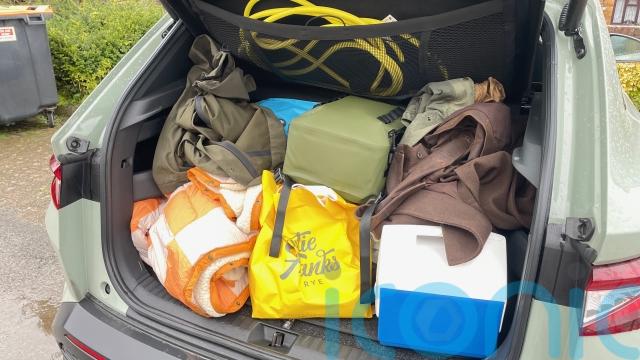
Plus, one of the Elroq’s ‘Simply Clever’ features is a hammock for the charging cables underneath the parcel shelf, which suspends them above the boot. Though I’d rather a dedicated ‘frunk’ – something the Elroq misses out on – this is still a good alternative. You just need to watch out if the cables are wet, or you can get your gear damp underneath.
Our dog rides in the back seats and with a full cover in place, there’s little worry about getting the Alcantara-trimmed seats grubby. She even gets to enjoy heated rear seats thanks to the optional Winter Pack fitted to this Elroq – I think ‘spoilt’ might be the right word.
The journey from Chichester to Rye is just shy of 80 miles, but it’s a trip which favours electric cars. There’s not too much high-speed driving and, for the most part, you’re simply wiggling your way along 30 and 40mph roads via Arundel and Brighton. For electric cars, this kind of driving is the best, as they don’t tend to produce their best efficiency when driving at high speeds for extended periods of time. It was probably why I set off with around 50 per cent charge and little concern about needing to charge on the way there.
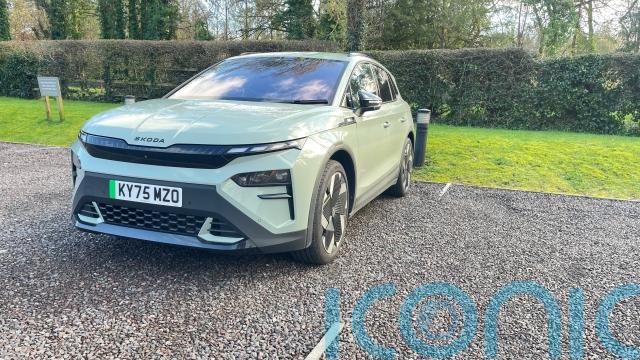
The Elroq is a happy medium in terms of size. It’s got a slight bump in seat height over your typical hatchback, so you do get an elevated view of the road ahead. A square shape makes it easy to place on the road, too, which helped as the roads got narrower. One thing to mention is how the Elroq deals with the frankly atrocious roads out there; we encountered some potholes that would give a Mars rover cause for concern, but the Elroq managed to shrug them off.
It’s not an overly soft car, but with the adjustable dampers, you can soften things off to take away some of the sharpness that you get from these craters. Thankfully, we didn’t suffer any damage to tyres or alloys, either – but how mad is it that you breathe a sigh of relief from simply making a journey without any pothole-related mechanical issues?
In fact, we arrived in Rye with around 60 miles remaining – annoyingly shy of the return leg. For the weekend, the Elroq remained at the hotel but, but before long, it was time to pack everything back inside to head home. As I’ve mentioned in previous reports, the main cupholders for the Elroq are frustratingly small and can’t handle even a standard water bottle. You do get door pockets, but again, these aren’t the largest. However, a completely flat floor in the back meant that we did have some extra space for soft bags, given that the dog was unlikely to stretch out into the footwells.
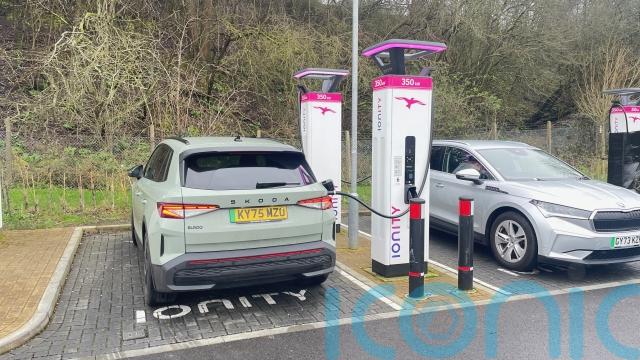
The Elroq has a maximum charging speed of 175kW, so I was on the lookout for the fastest-possible chargers for our return leg. Thankfully, on the way over, I’d spotted a bank of IONITY units just outside Lewes, so I aimed for these when we were heading home. With a maximum speed of 350kW, these chargers are some of the speediest in the UK at the moment, so are a good shout for those in a hurry.
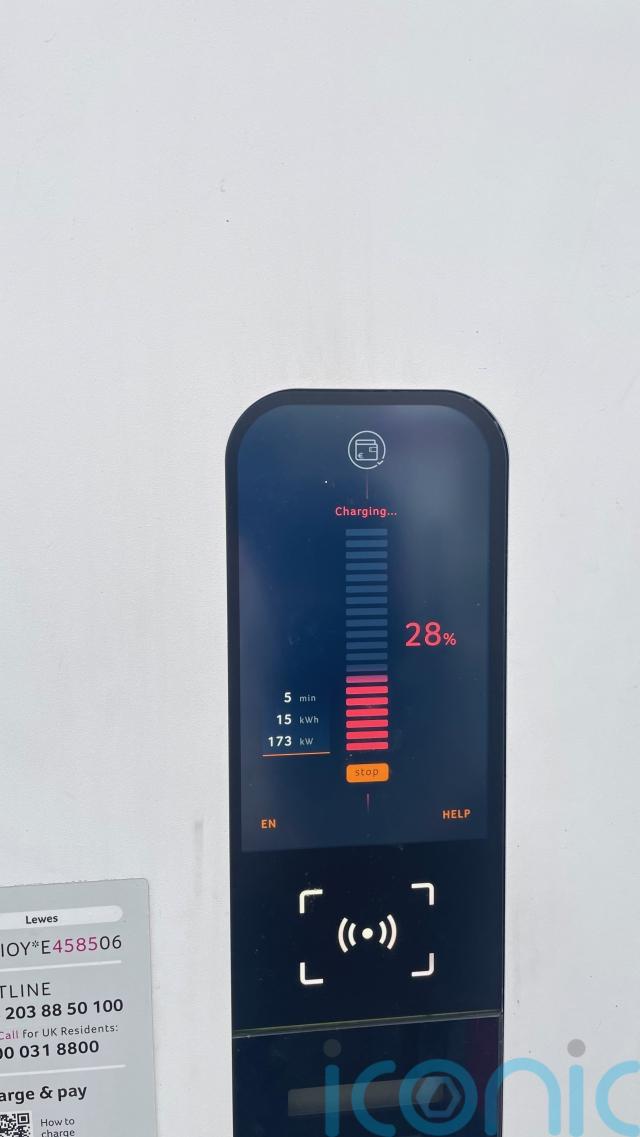
Hooked up, the charging process was just as it should be. I connected the car, tapped my contactless card via my phone and the charge started. As with other chargers, IONITY continues to hammer EV owners with pre-authorisation fees – £40 for this one! Why this is required, I still cannot work out and though it’ll come out in an instant, many experiences I’ve had previously have seen it take a few days to return to my account.
The chargers did zip the Elroq straight to its maximum charging speed and, in the end, we only needed to wait for 10 minutes to get enough charge to get home. However, this stop cost £21. At 89p/kWh, IONITY units are some of the most expensive about. Something needs to be done because at this price, you’d be better off driving a V8-powered petrol car. Compared with domestic energy, it’s completely over-the-top and something that I consider to be a big hurdle towards EV ownership, far more than the infrastructure in general.
From there, it was a breeze back home. The Elroq is designed as a through-and-through family car and, over the weekend, it certainly proved itself. I think it deserves a good clean now, mind you.

Subscribe or register today to discover more from DonegalLive.ie
Buy the e-paper of the Donegal Democrat, Donegal People's Press, Donegal Post and Inish Times here for instant access to Donegal's premier news titles.
Keep up with the latest news from Donegal with our daily newsletter featuring the most important stories of the day delivered to your inbox every evening at 5pm.

This publication supports the work of the Press Council of Ireland and Office of the Press Ombudsman, and our staff operate within the Code of Practice of the Press Council. You can obtain a copy of the Code, or contact the Council, at www.presscouncil.ie, Lo-call 1800 208 080 or email: info@presscouncil.ie.