'His light was so bright' - Irish man's body brought to grandad's pub after sudden death
Search


27 Mar 2026

Please allow ads as they help fund our trusted local news content.
Kindly add us to your ad blocker whitelist.
If you want further access to Ireland's best local journalism, consider contributing and/or subscribing to our free daily Newsletter .
Support our mission and join our community now.
To continue reading this article, you can subscribe for as little as €0.50 per week which will also give you access to all of our premium content and archived articles!
Alternatively, you can pay €0.50 per article, capped at €1 per day.
Thank you for supporting Ireland's best local journalism!


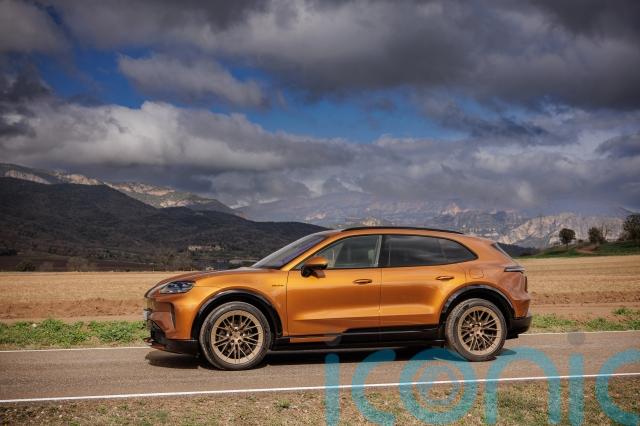
More than 20 years ago, Porsche shocked the world by releasing a car which, at the time, seemed controversial. The original Cayenne was one of the very first road-focused SUVs that we’d ever seen and, given that it came from a brand which has such a link to sports cars, seemed like a huge departure from what you’d expect from Porsche.
Fast-forward to 2026, and while SUVs are now the norm, electric powertrains continue to be something just out of the mainstream. It brings us to this – the new Cayenne Electric. It’s a battery-powered version of one of Porsche’s most successful models, so can this still bring the Cayenne experience you’d expect or has something been lost along the way? We’ve been trying it out in Spain to see.
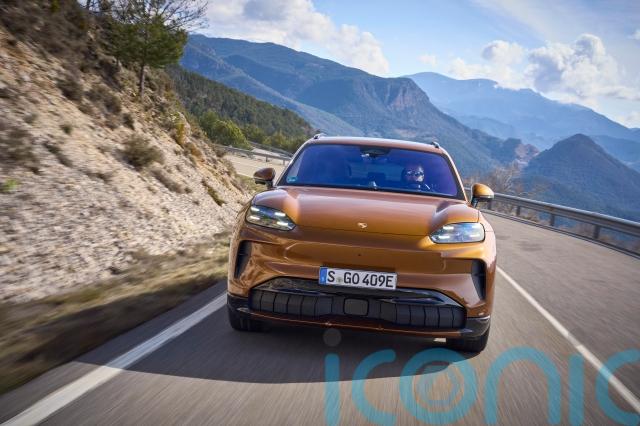
There’s an awful lot of brand-new bits for this electric Cayenne. For starters, it uses a completely new platform which isn’t shared with the combustion-engined model. That car continues to remain on sale, too, meaning that the Cayenne Electric is very much an addition, rather than a replacement of the petrol and hybrid range.
We’ve got super-fast charging speeds of up to 400kW, while the Cayenne Electric arrives as one of the first production cars to offer inductive charging. Simply drive the car over an electric ‘pad’ mounted on the floor, and it can start topping up wirelessly, just like a smartphone.
The Cayenne Electric range will follow a similar theme to that of the standard petrol car, with more regular models being contrasted by high-performance Turbo cars right at the top. All models, for now, use a dual-motor setup with one placed on each axle. Standard cars manage 0-60mph in 4.5 seconds, while mad-hat Turbo cars see that time drop to just 2.2 seconds. In fact, the Cayenne Electric Turbo lays claim to being the most powerful production Porsche of all time.
All models will automatically deactivate the front motor when it isn’t needed to help boost efficiency. Porsche has also announced a new ‘S’ model which sits between base and range-topping Turbo cars and, as usual, it’s likely that this will prove to be the best ‘goldilocks’ model to choose from.
A range of 399 miles is respectable for a car of this size. Plus, if you can find a charger this quick, you could charge the Cayenne Electric from 10 to 80 per cent in 16 minutes.
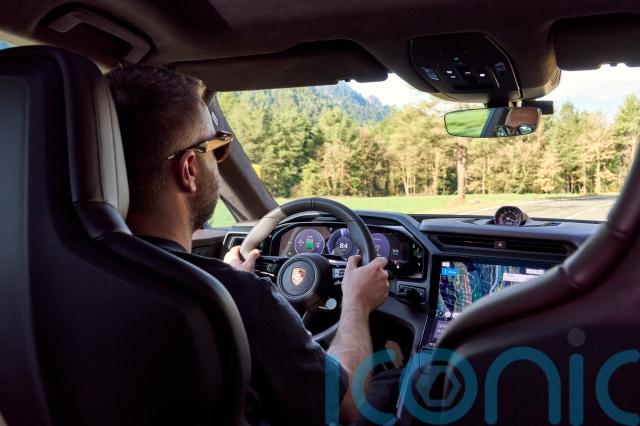
The Cayenne has, through its many iterations, always been able to deliver a driving experience which lies on the sportier end of things and this electric model is no different. The control weights are what shine through here; the brakes feel well-judged despite the inclusion of regenerative braking systems, and the steering helps to give the whole car an accurate, intuitive feeling.
We got time to spend in both regular Cayenne Electric and Turbo models, and while the latter might bring those Top Trump-winning performance stats, it’s the standard car which feels more natural. All models get adaptive air suspension as standard, which gives the car a pleasant amount of ‘float’ over lumps and bumps, while Porsche’s Active Ride active suspension helps to take this one stage further. It essentially isolates any road imperfections from entering the cabin and helps to make the Cayenne extremely comfortable, regardless of the surface.
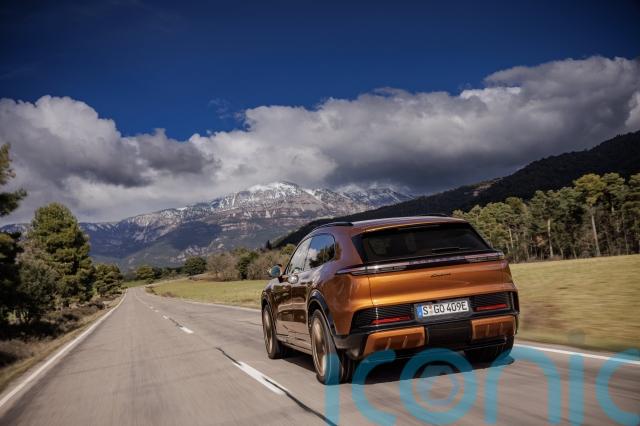
There’s a smoothed-off look to the Cayenne Electric, with a design that plays closely to the recently introduced Macan Electric. Sure, it’s quite different to the ‘regular’ petrol model and those that came before it, but we’d argue that it’s still recognisable as Porsche’s famous four-wheel-drive. Much of that rounded design has been included to aid aerodynamics and help to contribute to the car’s low drag.
At the rear of range-topping Turbo models, you’ll also find active aeroblades, which help to direct air around the back of the car. You’ve also got 13 standard exterior colours and nine wheel designs to help customise the car to your tastes.
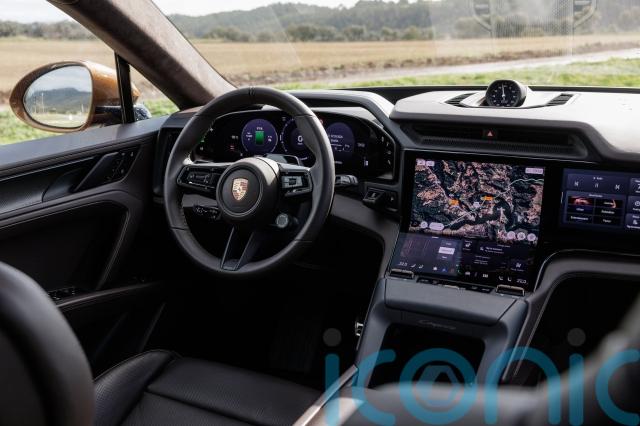
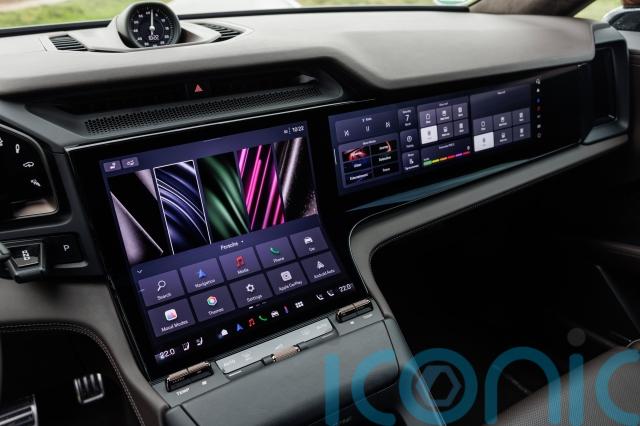
There’s plenty to prod and investigate inside the Cayenne’s interior. The most noticeable feature, of course, is the huge curved ‘flow’ central display, which keeps all of those must-have apps and features right to hand. Thankfully, Porsche has also included physical controls for volume and fan speed, which are much easier to use than alternatives which are kept simply within the screen. Plus, there’s an integrated hand rest at the base of the screen which makes it much easier to use. The whole system might look like a gimmick, but in action, it’s a breeze to use, and that curved effect gives you easier control.
Space is good, too, showing the Porsche hasn’t forgotten about practicality with the Cayenne, either. There’s more than enough space for two adults to sit in the back comfortably, in fact. The rear seats slide forward and back, allowing you to choose between more rear-seat legroom or improved boot space. In their most forward position, you get 781 litres, or 553 litres with them slid back. A large 90-litre ‘frunk’ under the bonnet is a handy spot for keeping the charge cables
Prices for the new Cayenne Electric start at £83,200 for the standard car, rising to £130,900 for the Turbo model. The former gets the longest range, while the latter gets a slight penalty and drops back to a still-respectable 383 miles. Where things get interesting, however, is when you compare these prices to those of the petrol Cayenne. The standard petrol Cayenne comes in at £77,500 – making the electric equivalent slightly more expensive – but if you opt for the plug-in hybrid Cayenne Turbo E-Hybrid, you’ll have to pay £140,600. Considering the level of performance on offer, we can only see the electric model as an option here – and it’ll cost a whole lot less to run, too.
All models come bristling with equipment too, including the 12.25-inch curved ‘flow’ display and a 14.25-inch driver display. All cars get air suspension to help keep a controlled feel, while Porsche’s clever Active Ride system is an option for Turbo versions.
Porsche entered new territory with the original Cayenne and it feels like it has done it again with this new Electric model. While this brand already has a good background in EVs with the likes of the Taycan and Macan, the Cayenne feels like its most complete battery-powered model to date and one which will fit in with many driver lifestyles.
It is expensive, but so are nearly all new Porsche models. Plus, given the rising cost of fuel, this Electric version could make a lot more sense as an overall ownership prospect than a combustion-engined Cayenne.

Subscribe or register today to discover more from DonegalLive.ie
Buy the e-paper of the Donegal Democrat, Donegal People's Press, Donegal Post and Inish Times here for instant access to Donegal's premier news titles.
Keep up with the latest news from Donegal with our daily newsletter featuring the most important stories of the day delivered to your inbox every evening at 5pm.

This publication supports the work of the Press Council of Ireland and Office of the Press Ombudsman, and our staff operate within the Code of Practice of the Press Council. You can obtain a copy of the Code, or contact the Council, at www.presscouncil.ie, Lo-call 1800 208 080 or email: info@presscouncil.ie.