RIP: Body found in search for missing man (63) as heartbreaking statement is issued
Search


10 Mar 2026

Please allow ads as they help fund our trusted local news content.
Kindly add us to your ad blocker whitelist.
If you want further access to Ireland's best local journalism, consider contributing and/or subscribing to our free daily Newsletter .
Support our mission and join our community now.
To continue reading this article, you can subscribe for as little as €0.50 per week which will also give you access to all of our premium content and archived articles!
Alternatively, you can pay €0.50 per article, capped at €1 per day.
Thank you for supporting Ireland's best local journalism!


Economics experts are warning of a “really challenging period” for the Scottish Government, as the bill for social security spending is projected to top £9 billion by the start of the next decade.
Spending on social security in Scotland totalled just over £6.1 billion in 2024-25 but is forecast to grow to more than £9.4 billion by 2030-31.
With the rise coming at a time when the UK Government is trying to cut its own welfare bill, economist Professor Graeme Roy, chairman of the Scottish Fiscal Commission (SFC) said that would leave Holyrood ministers increasingly having to fund more of the spending for this from its own budget.
The SFC revealed the amount the Scottish Government spends on social security, above what it receives from Westminster towards the cost of benefits, is “expected to increase from £0.9 billion in 2023-24 to £2.2 billion by 2030-31”.
Prof Roy said: “In other words the government have to find £2 billion either from taxation or other areas of spending to make the budget balance.”
We have published our latest economic and fiscal forecasts for Scotland. You can find them here: https://t.co/0bNKgysuB5
A quick thread on some of the headline messages below 🧵 1/6 pic.twitter.com/ByR8BEurRB
— Scottish Fiscal Commission (@scotfisccomm) May 29, 2025
He highlighted this “widening gap on social security” as one of the financial pressures the Scottish Government will have to face.
Prof Roy also said ministers will likely “have to find additional resources” to pay for public sector pay, with awards being made to workers already higher than the level set in the Government’s public sector pay policy.
He stated: “That means essentially money is going to have to be found from elsewhere in the budget in order to pay for pay awards coming in above the pay policy.”
Meanwhile, an “economic performance gap” means the Government is raising less from income tax than it would if Scotland’s economic performance matched that of the UK.
The SFC found that Scotland’s different policies on income tax should raise just over £1.67 billion this year, but its report said the “actual projected income tax net position in 2025-26 is £616 million”.
As a result, Prof Roy noted there was a “performance gap of about £1 billion”.
He added: “That is an additional £1 billion that is being foregone within the overall funding of the Scottish budget because of that relatively weaker economic performance.”
📺 Our Chair, @ProfGraemeRoy, summarises our latest set of economic and fiscal forecasts for Scotland published earlier today. You can find the full report on our website here: https://t.co/0bNKgysuB5 pic.twitter.com/VxD67IAaNr
— Scottish Fiscal Commission (@scotfisccomm) May 29, 2025
Prof Roy noted that overall the funding to the Scottish Government “continues to increase”.
But he said: “Once you take into consideration things like social security commitments, when you take into consideration pay awards running ahead of the pay policy, when you take into consideration things like the national insurance increase, and the general pressure we are seeing on public service delivery, while funding is going up the spending pressures are continuing to go up at the same time.
“So the Government is continuing to work in a situation where they have really quite limited fiscal headroom to manage the pressures that they face.”
He added: “Funding is going up, but once you start to look at some of the commitments the Government have made it is going to be a really challenging period for the short and medium term.”
Scottish Conservative finance spokesman Craig Hoy said: “This damning report shows an eye-watering £1 billion gap between what Scotland’s higher income tax rates might have added to the Scottish budget, and what they are actually projected to deliver.
“The ‘economic performance gap’ identified is entirely the result of SNP decisions on tax, business support and welfare spending.”
He added: “Scottish workers are being hammered by the highest taxes in the UK, but the SNP’s financial incompetence and anti-business policies mean we’re lagging behind.
“The SNP’s inability to get a grip on public spending, and their ballooning welfare bill, which experts warned is unsustainable and unaffordable, means that while Scots are paying more, they are getting less, as services are cut to fill the financial hole.”
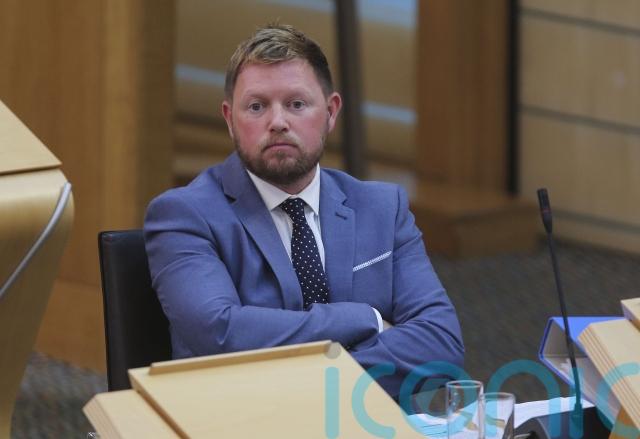
Liberal Democrat finance spokesman Jamie Greene stated: “The picture this paints of the state of the Scottish public finances is not a pretty one.
“Scots have paid more tax but only a fraction of that is available to spend on public services.
“The welfare bill is rising fast, and of course we need a compassionate system but more needs to be done to create good jobs and get those who are economically inactive back to work through skills, training and fast access to proper NHS care.”
Finance Secretary Shona Robison said the report “recognises the challenging financial environment that Scotland continues to face as a result of global uncertainty and higher inflation”.
She added that the Scottish Government’s position was made worse by the “failure” of UK ministers to fully fund the increase in employers’ national insurance contributions in the public sector, as well as by the welfare reforms being pursued by Labour at Westminster.
Ms Robison demanded the UK Government “must change course on these welfare cuts, as well as removing the two-child limit and reinstating the winter fuel payment”.
Speaking for the Scottish Government, she added: “By contrast, our social security policies are providing vital assistance to enable older people to heat their homes, help disabled people to live independent lives and keep thousands of children out of poverty.”
The Finance Secretary added: “Our investment in this area over and above the money we get from the UK Government is projected to be less than 3.5% of the total Scottish Government Resource Budget by 2029-30.”

Subscribe or register today to discover more from DonegalLive.ie
Buy the e-paper of the Donegal Democrat, Donegal People's Press, Donegal Post and Inish Times here for instant access to Donegal's premier news titles.
Keep up with the latest news from Donegal with our daily newsletter featuring the most important stories of the day delivered to your inbox every evening at 5pm.

This publication supports the work of the Press Council of Ireland and Office of the Press Ombudsman, and our staff operate within the Code of Practice of the Press Council. You can obtain a copy of the Code, or contact the Council, at www.presscouncil.ie, Lo-call 1800 208 080 or email: info@presscouncil.ie.