RIP: Body found in search for missing man (63) as heartbreaking statement is issued
Search


09 Mar 2026

Please allow ads as they help fund our trusted local news content.
Kindly add us to your ad blocker whitelist.
If you want further access to Ireland's best local journalism, consider contributing and/or subscribing to our free daily Newsletter .
Support our mission and join our community now.
To continue reading this article, you can subscribe for as little as €0.50 per week which will also give you access to all of our premium content and archived articles!
Alternatively, you can pay €0.50 per article, capped at €1 per day.
Thank you for supporting Ireland's best local journalism!


Speed limits for motorists will not be cut in the wake of a review, the Scottish Government has confirmed.
Ministers had been considering whether the national speed limit on single carriageway roads should be cut from 60mph to 50mph for cars.
Following a consultation which attracted more than 19,500 responses, it was announced on Monday that “ministers will not be taking forward changes”.
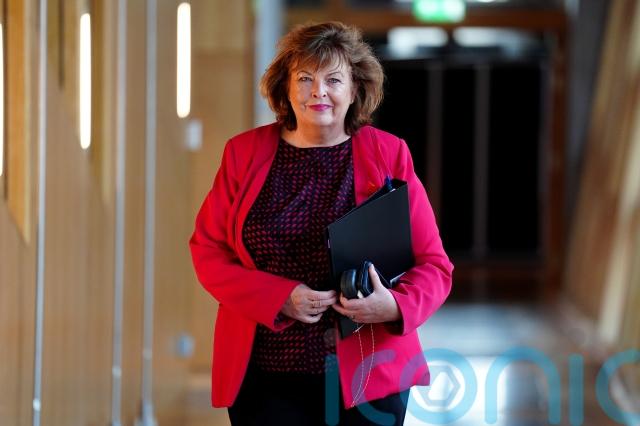
However, Transport Secretary Fiona Hyslop said that work would begin on the “steps needed to increase HGV speed limits”.
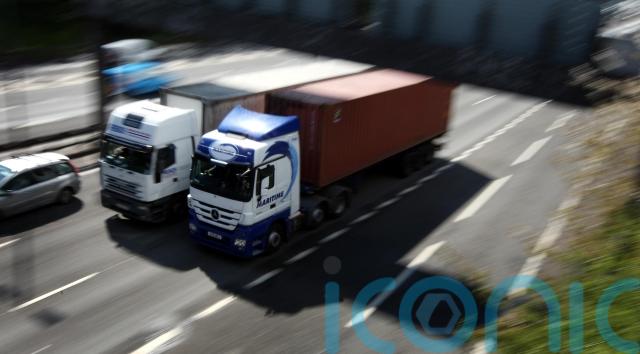
The consultation also considered upping the speed limit for HGVs weighing 7.5 tonnes and over from 40pmh to 50mph on single carriageways, and from 50mph to 60mph on dual-carriageways.
Ms Hyslop said that this change is “expected to enhance road safety by reducing driver frustration” by reducing the difference in speed between HGVs and other vehicles.
Higher speed limits for HGVs will also improve journey time reliability, the Transport Secretary added.
She said that the National Speed Management Review provided “important evidence on how speed limits can help reduce road deaths and serious injuries”, with the work helping towards the Government’s goal of “making Scotland’s roads the safest in the world by 2030”.
We have now published the findings from over 19,500 responses to the National Speed Management Review public consultation.
The next steps in plans to reduce death and injuries on Scotland’s roads have been outlined.
Read more ➡️ https://t.co/7zOCVKtd7v pic.twitter.com/D1whRtpqPJ
— Transport Scotland (@transcotland) December 15, 2025
While national speed limits will not be cut for cars on single carriageways, the Scottish Government plans further work to analyse the impact on road casualties and journey times of a speed limit change on different standards of single carriageway roads.
Ms Hyslop said that this would “inform any future transport policies”.
Adding that work will start now on “the steps needed to increase HGV speed limits”, Ms Hyslop said this was was based on consultation responses and “the positive results of similar changes” on the A9 road between Perth and Inverness, and in other parts of the UK.
She stressed: “We must never lose sight of the fact that one death on our roads is one too many. These proposals represent a vital step towards making Scotland’s roads safer.”
The Scottish Conservatives welcomed confirmation that the speed limit would not be cut for cars, with transport spokesperson Sue Webber stating: “Scrapping these unwanted plans is the right decision, but the SNP Government must now focus on fixing Scotland’s roads rather than wasting time and money on punishing motorists.”
The Tory MSP added: “Taxpayers will be rightly furious that hundreds of thousands of pounds have been squandered on this senseless idea, which would have penalised ordinary drivers without tackling either dangerous behaviour or the dangerous state of Scotland’s roads.
“The Scottish Conservatives campaigned from the start against these unevidenced proposals. The fact that the overwhelming majority of consultation respondents rejected the 50mph limit shows just how out of touch SNP ministers were.”
Ms Webber added that rather than “waging a war on motorists” the Scottish Government should instead deliver “long-overdue upgrades” to a series of “vital routes”, including the A9, the A75 and the A77, in the south west of Scotland A96 and A90 in the east of Scotland.
The Road Haulage Association (RHA), meanwhile, welcomed the Scottish Government’s announcement on speed limits for HGVs.
Martin Reid, RHA policy director for Scotland, Wales and Northern Ireland, said: “This is tremendous news for Scotland’s road haulage industry. We believe it will make these roads safer, reduce emissions and help regional and national economic growth.
“We know through the trial on the A9 that when the speed differential between cars and trucks is reduced it also reduces the likelihood of risky overtaking.
“We also know that lorries use less fuel and create fewer emissions when they can drive at 50mph.
“This change will also rebalance the competitive disadvantage faced by hauliers in Scotland, compared to those in England and Wales, because of the current 40mph trunk road speed limit.
“When journeys take less time, they create savings which can be passed on to customers, creating a positive ripple effect throughout the Scottish economy.”
But Scottish Greens accused the government of being “in reverse” on road safety, with MSP Mark Ruskell saying: “Our priority has to be preventing accidents and saving lives. Lower speeds have been shown to reduce the number and severity of incidents, with limited impact on journey times.”
He insisted: “When it comes to road safety, the Scottish Government is in reverse. Reducing speed on single-use carriageways could make for safer rural roads, in particular.
“There is a role for average speed cameras and other safety measures, but if we are to bring down fatalities we need to be bringing down speeds.”

Subscribe or register today to discover more from DonegalLive.ie
Buy the e-paper of the Donegal Democrat, Donegal People's Press, Donegal Post and Inish Times here for instant access to Donegal's premier news titles.
Keep up with the latest news from Donegal with our daily newsletter featuring the most important stories of the day delivered to your inbox every evening at 5pm.

This publication supports the work of the Press Council of Ireland and Office of the Press Ombudsman, and our staff operate within the Code of Practice of the Press Council. You can obtain a copy of the Code, or contact the Council, at www.presscouncil.ie, Lo-call 1800 208 080 or email: info@presscouncil.ie.