Search


30 Dec 2025
Search
30 Dec 2025

Please allow ads as they help fund our trusted local news content.
Kindly add us to your ad blocker whitelist.
If you want further access to Ireland's best local journalism, consider contributing and/or subscribing to our free daily Newsletter .
Support our mission and join our community now.
To continue reading this article, you can subscribe for as little as €0.50 per week which will also give you access to all of our premium content and archived articles!
Alternatively, you can pay €0.50 per article, capped at €1 per day.
Thank you for supporting Ireland's best local journalism!


The founder of a charity which rehabilitates ex-offenders has said prison overcrowding could be solved with increased training opportunities.
Pat Clark, 76, who founded Open Gates, based in Glasgow, trains prisoners and former inmates to carry out renovation projects, upcycle furniture, and learn vital skills to gain future employment.
The charity aims to “stop the revolving door back into prison” by providing vocational training.
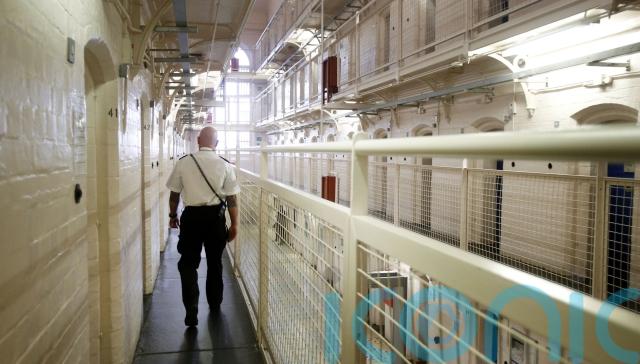
Mr Clark was imprisoned from the age of nine to 33, including being sent to Scotland’s largest prison, HMP Barlinnie, aged 16, but he broke his pattern of offending after converting to Christianity in the 1980s.
He founded the charity in 2010 and is working with the Scottish Government to take in five people on community payback orders per day.
The charity has two shops selling antique furniture, a cafe, and provides house-clearance services, and is planning to open a garden centre.
As well as a factory shop in Springburn, another shop opened last year in Maryhill, and so far Open Gates staff have completed more than 90 renovation projects, and have provided training in food hygiene, PAT testing for electrical goods, and the re-offending rate is just 15%.
The charity helps rehabilitate “lifers” through the National Top End (NTE) scheme focused on reintegration to the community, and has provided employment after release.
Mr Clark said the current situation in Scotland’s prisons, which began another “emergency release” programme in November, is unsustainable.
He said the governor of HMP Barlinnie has visited the charity on numerous occasions, and currently the charity has got about 22 people on a community payback order, including working in the cafe, the shop, and the delivery van, while others learn skills such as French polishing, or health and safety.
In total, more than 800 people on a community payback order have come through the charity, along with around 21 “lifers”, and Mr Clark said mandatory training schemes could help reduce the prison population.
Mr Clark said: “I couldn’t stay out of trouble, not once did I ever get out of prison without thinking I was going to go back again.
“We have been working with the Scottish Government’s justice department since 2013, with people on community payback orders.
“They need to be a convicted offender for us to employ them.”
The Maryhill shop is currently selling a Versace dining table set which Mr Clark says is worth around £20,000, and the charity is known around Scotland for its high-quality antique furniture, some of which is donated by auction houses to be resold.
Mr Clark said: “Ex-service users are the only people who get wages.
“Every day I thank them for what they have done.
“This is all done through community payback schemes and NTE.
“We have restored old buildings and have approached a heritage body about restoring a Victorian staircase.”
He said many young offenders are “halfway through a criminal life, there’s a lot of them and they need looking after, as they are so confused and mixed up with violence”, and he feels mandatory six-week training courses could help reduce the prison population.
Mr Clark said: “I think there should be early release with full training schemes, and that there needs to be government training schemes.”
He said prison environments often help to harden criminality, and added: “While inside I planned to do an armed robbery, you get involved in it because you don’t want anybody to think you’re scared.
“But sometimes prison isn’t such a bad thing, sometimes people need to go to prison.”
Mr Clark said violence in pubs when he was younger was ultimately reduced when breweries hired gangsters to manage the venues, and this inspired the model which the charity operates.
“There was a lot of violence in Glasgow in the pubs, my family were involved in violence,” he recalled.
“I remember the breweries were so fed up with violence in the pubs, that they hired gangsters to be managers.
“Overnight the violence stopped.
“We all hated the police and social work.
“We know that, but we can’t be without them.”

Subscribe or register today to discover more from DonegalLive.ie
Buy the e-paper of the Donegal Democrat, Donegal People's Press, Donegal Post and Inish Times here for instant access to Donegal's premier news titles.
Keep up with the latest news from Donegal with our daily newsletter featuring the most important stories of the day delivered to your inbox every evening at 5pm.

This publication supports the work of the Press Council of Ireland and Office of the Press Ombudsman, and our staff operate within the Code of Practice of the Press Council. You can obtain a copy of the Code, or contact the Council, at www.presscouncil.ie, Lo-call 1800 208 080 or email: info@presscouncil.ie.