Search


01 Jan 2026
Search
01 Jan 2026

Please allow ads as they help fund our trusted local news content.
Kindly add us to your ad blocker whitelist.
If you want further access to Ireland's best local journalism, consider contributing and/or subscribing to our free daily Newsletter .
Support our mission and join our community now.
To continue reading this article, you can subscribe for as little as €0.50 per week which will also give you access to all of our premium content and archived articles!
Alternatively, you can pay €0.50 per article, capped at €1 per day.
Thank you for supporting Ireland's best local journalism!


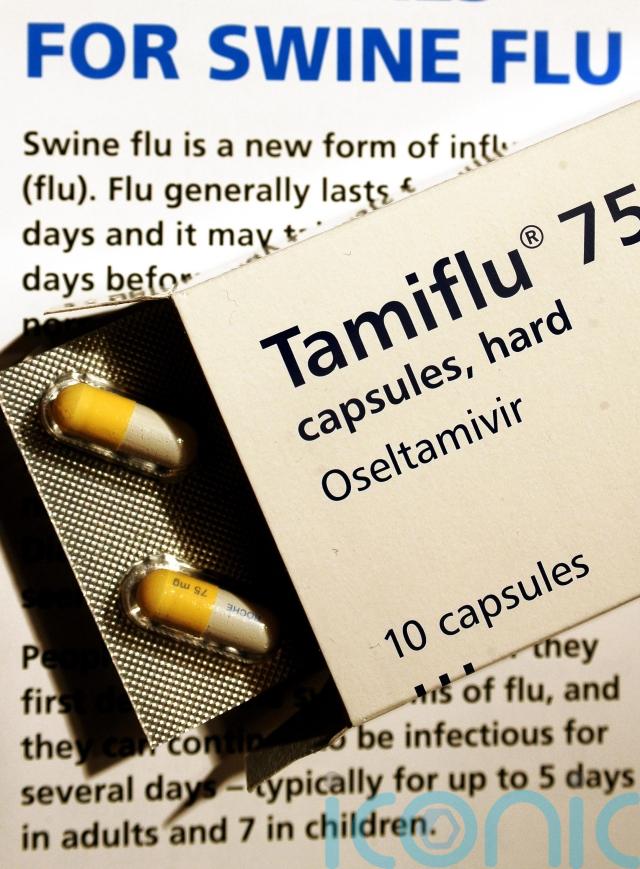
Meetings between health ministers from across the UK “created significant confusion” in the swine flu pandemic 15 years ago, newly released papers have revealed.
The documents also show a sub committee of the Scottish cabinet involved in the response to the pandemic “did not provide an effective forum for collective decision making by ministers”.
Instead, the papers state, meetings of the Cabinet Sub Committee Scottish Government Resilience Room (CSC-SGoRR) were “simply an opportunity” for then deputy first minister Nicola Sturgeon to update ministers on developments.
This was “something that she did at the weekly meetings of the cabinet anyway”, the papers add.
Ministerial attendance at these meetings was “fairly poor”, with the cabinet documents stating this was “no doubt partly a reflection of the fact that it was not, in practice, a key decision-making forum”.
They also said “the way in which Four Nations Health Ministers meetings were handled was not helpful – and created significant confusion”.
Here, the meeting paper from the CSC-SGoRR notes: “Some papers were issued by the Cabinet Office, some were issued by the Department of Health.
“Different people used different circulation lists and there was no numbering system used for the papers (which was particularly unhelpful as there were papers with similar titles going to nearly every meeting!).”
The points were made in a “lessons learned” paper setting out what had worked well as governments across the UK responded to the pandemic – as well as what had not worked.
The papers also reveal there were “some shortcomings initially in the facilities available in the SGoRR room” – with these said to include the lack of fast colour printers, the lack of a “reliable and fast” photocopier and even a “lack of staplers”.
In addition, they said the meeting room used “could do with being a bit bigger”.
The papers note: “There were a number of occasions when we were struggling to fit everybody in – and were only able to do so because a number of ministers either phoned in or did not participate.”
Across the UK, 457 people died in the H1N1 swine flu pandemic, which emerged in April 2009 and ran into 2010.
Figures from February 2010 showed there were 53 deaths in Scotland from the virus at that point.
Later research by the University of Edinburgh found as many as two million people in Scotland may have caught the H1N1 virus.
The cabinet papers revealing the government’s response to the virus were published by National Records of Scotland (NRS) as part of a Scottish Government commitment to make the papers public after 15 years.
Parliamentary business minister Graeme Dey said: “Cabinet records give the public an insight into decision making at the highest level of the Scottish government and demonstrate how ministers respond to key issues of the day.
“I’m pleased to see these new records being added to the cabinet papers already available. They are a great historical resource for researchers of Scottish political and social history.”
NRS chief executive Alison Byrne said: “The records released from the Scottish Government provide a fascinating insight into Scotland’s very recent past.
“National Records of Scotland makes them available online as part of our commitment to making our archives accessible.”
She added the cabinet papers from 2010 cover “a range of topics that many of us will recall, from the grounding of planes by a volcanic ash cloud to the general election in May that year”.
Ms Byrne continued: “Other papers released cover areas such the Referendum (Scotland) Bill, the prison population, climate change and university funding.”

Subscribe or register today to discover more from DonegalLive.ie
Buy the e-paper of the Donegal Democrat, Donegal People's Press, Donegal Post and Inish Times here for instant access to Donegal's premier news titles.
Keep up with the latest news from Donegal with our daily newsletter featuring the most important stories of the day delivered to your inbox every evening at 5pm.

This publication supports the work of the Press Council of Ireland and Office of the Press Ombudsman, and our staff operate within the Code of Practice of the Press Council. You can obtain a copy of the Code, or contact the Council, at www.presscouncil.ie, Lo-call 1800 208 080 or email: info@presscouncil.ie.