Garda Gráinne McLoone and Garda Patrick Kelly accompany
Search


07 Jan 2026

Please allow ads as they help fund our trusted local news content.
Kindly add us to your ad blocker whitelist.
If you want further access to Ireland's best local journalism, consider contributing and/or subscribing to our free daily Newsletter .
Support our mission and join our community now.
To continue reading this article, you can subscribe for as little as €0.50 per week which will also give you access to all of our premium content and archived articles!
Alternatively, you can pay €0.50 per article, capped at €1 per day.
Thank you for supporting Ireland's best local journalism!


The Scottish Government has been urged to reduce the “crippling” workload facing teachers.
The EIS (Educational Institute of Scotland) trade union is currently balloting members on potential strike action linked to what they say is a failure to cut class contact time, as promised in the 2021 SNP manifesto.
The ballot is due to run to January 14, but the union has said teachers hope the Government will have reached an “epiphany” – referencing the Christian feast to mark the end of the festive period on January 6.
The union’s general secretary, Andrea Bradley, said: “Epiphany is a time that is associated with the giving of gifts.
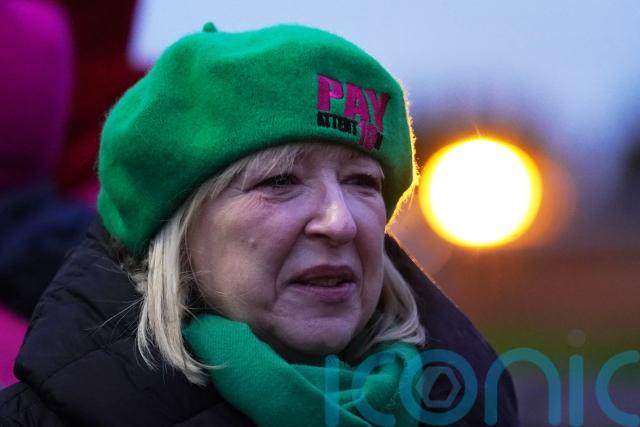
“The only gifts that Scotland’s teachers want to see this year (are) the same ones that they have been promised for the past five years: action to reduce their crippling, unfair, unhealthy and unsustainable levels of workload by the permanent employment of the additional teachers that were promised and a concrete plan for the delivery of the reduction in teachers’ class contact time that was promised.
“Scotland’s schools, Scotland’s teachers, Scotland’s young people and the Scottish electorate, as a whole, expect and deserve the promises made to Scottish education to be delivered.”
She added: “Scotland’s teachers have waited five long years, overburdened by continuing excessive workload, for the Scottish Government and their local authority partners to make good on those promises.
“The current statutory industrial action ballot, and the prospect of imminent industrial action in our schools, are direct results of the inaction on the part of the Scottish Government and Cosla on teacher workload.”
A spokeswoman for Cosla said: “Reduced class contact time is highly complex and possible routes forward are being actively explored with the Scottish Government, and will be discussed in the Scottish Negotiating Committee for Teachers (SNCT).
“Reduced class contact time has an estimated cost of £250 million to £310 million. This represents a significant investment, equivalent to the cost of over 7,500 pupil support assistants.
“Cosla is clear that this policy must be fully funded by the Scottish Government.
“Cosla is clear that we must consider the impact of this investment on the attainment of our children and young people through consultation, in line with United Nations Convention on Rights of a Child (UNCRC) and our commitment to addressing child poverty.”
A Scottish Government spokesperson said: “The Scottish Government recently set out proposals to deliver reduced class contact time for Scotland’s teachers, which would provide more time to prepare for lessons, support wider school improvement activities, and undertake professional learning.
“We are committed to working with teaching unions and Cosla to agree our approach to delivering a reduction in class contact time which is key to reducing teacher workload and improving educational outcomes for Scotland’s children and young people.
“Since 2014, teacher numbers have increased by more than 2,700 thanks to Scottish Government investment, including a rise in 2025.
“This means Scotland continues to have the lowest pupil-teacher ratio and the best paid teachers in the UK.”

Subscribe or register today to discover more from DonegalLive.ie
Buy the e-paper of the Donegal Democrat, Donegal People's Press, Donegal Post and Inish Times here for instant access to Donegal's premier news titles.
Keep up with the latest news from Donegal with our daily newsletter featuring the most important stories of the day delivered to your inbox every evening at 5pm.

This publication supports the work of the Press Council of Ireland and Office of the Press Ombudsman, and our staff operate within the Code of Practice of the Press Council. You can obtain a copy of the Code, or contact the Council, at www.presscouncil.ie, Lo-call 1800 208 080 or email: info@presscouncil.ie.