Courtesy of My Lovely Horse Rescue
Search


21 Apr 2026

Please allow ads as they help fund our trusted local news content.
Kindly add us to your ad blocker whitelist.
If you want further access to Ireland's best local journalism, consider contributing and/or subscribing to our free daily Newsletter .
Support our mission and join our community now.
To continue reading this article, you can subscribe for as little as €0.50 per week which will also give you access to all of our premium content and archived articles!
Alternatively, you can pay €0.50 per article, capped at €1 per day.
Thank you for supporting Ireland's best local journalism!


The Scottish Government must tell Scots what capital projects will be scrapped as a result of a black hole in the budget, a think tank has urged.
The Fraser of Allander Institute (FAI) found a £1 billion deficit in the funding available for infrastructure projects – even when the Scottish Government reaches the limits of its narrow borrowing powers – ahead of the publication of the infrastructure pipeline.
According to the FAI, £8.1 billion in projects was laid out in June of last year, but only £7.1 billion will be available, meaning cuts will be necessary.
A raft of national treatment centres as well as the dualling of the A9 and A96 are among the capital projects yet to be completed.
The Government is also wrestling with a multi-billion pound black hole in capital funding by the end of the decade.
But despite issues in capital funding, Rachel Reeves’s budget in November did improve the picture on day-to-day spending, boosting the Scottish Government’s coffers by about £750 million.
Dr Joao Sousa, the deputy director of the FAI, said: “The Scottish Government’s job has been made easier on the resource side this year, mostly due to Barnett consequentials and some unexpected additional funding.
“But this boost masks the fact it will still be in underlying deficit, which means this approach cannot be relied on indefinitely.
“There is no such news on capital, and there something will have to give.
“We hope the long-awaited infrastructure investment plan will explain to the public how projects have been prioritised – and crucially, which ones will no longer be going ahead and why.”
The think tank’s report, released on Thursday, also suggested the Scottish Government would have to consider sizable tax hikes or spending cuts if the UK Government was to work to improve fiscal sustainability.
To get back into the black, Westminster would only be required to stem the growth in health spending modestly and slightly increase tax, but the impact of such a move on the Scottish outlook, the report said, would be “quite severe”.
According to the think tank, a 1.8% drop in health spending and an increase of 3p in income tax in the rest of the UK could lead to a funding gap of about 17%.
Filling that gap using income tax alone would require 9p in the pound to be added to each band, taking the lowest rate in Scotland to 28% and the highest to 57% – before any behavioural changes are taken into account.
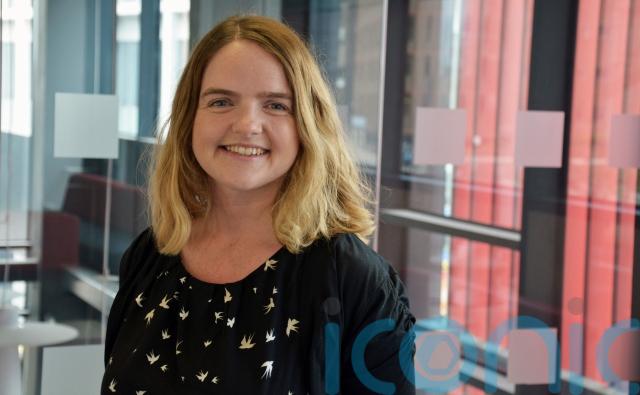
FAI director Mairi Spowage said: “Because so much of the funding for the Scottish Government over the long run comes from health consequentials, the UK Government bearing down on health spending growth would leave the Scottish Government short of good options to close its funding gap.
“The already large gap currently projected by Shona Robison by 2029-30 is clearly unsustainable, and makes the challenge even more daunting.
“The tax rises required to plug the gap seem undeliverable, largely due to Scotland having fewer very high earners, and it’s hard to see how the Scottish Government could respond without having to cut spending.”
Scottish Tory finance spokesman Craig Hoy said the report was a “damning indictment” of the Scottish Government.
“It beggars belief that there’s a £1 billion shortfall in the spending plans Shona Robison announced just six months ago, on top of the existing £1.3 billion gap in her welfare spending plans,” he said.
“If John Swinney were serious about tackling this huge black hole, he would abandon his failed left-wing agenda and instead adopt the Scottish Conservatives’ plans for lower taxes and reduced welfare spending.
“But hard-pressed Scots workers will fear that, once again, they will be made to pick up the tab for SNP mismanagement.”
A Scottish Government spokesperson said: “The Scottish Government has delivered a balanced budget every year, despite facing a challenging financial environment, and remains committed to delivering sustainable public finances.
“The infrastructure delivery pipeline, which will be published alongside the draft budget on January 13, will set out an affordable, deliverable portfolio of infrastructure investments over the next four years.”

Subscribe or register today to discover more from DonegalLive.ie
Buy the e-paper of the Donegal Democrat, Donegal People's Press, Donegal Post and Inish Times here for instant access to Donegal's premier news titles.
Keep up with the latest news from Donegal with our daily newsletter featuring the most important stories of the day delivered to your inbox every evening at 5pm.

This publication supports the work of the Press Council of Ireland and Office of the Press Ombudsman, and our staff operate within the Code of Practice of the Press Council. You can obtain a copy of the Code, or contact the Council, at www.presscouncil.ie, Lo-call 1800 208 080 or email: info@presscouncil.ie.