Search


21 Mar 2026
Search
21 Mar 2026

Please allow ads as they help fund our trusted local news content.
Kindly add us to your ad blocker whitelist.
If you want further access to Ireland's best local journalism, consider contributing and/or subscribing to our free daily Newsletter .
Support our mission and join our community now.
To continue reading this article, you can subscribe for as little as €0.50 per week which will also give you access to all of our premium content and archived articles!
Alternatively, you can pay €0.50 per article, capped at €1 per day.
Thank you for supporting Ireland's best local journalism!


Research into some of the deadliest common cancers receives less than a fifth of funding despite accounting for nearly 40% of deaths, figures show.
The finding is based on data obtained via a Freedom of Information request by the Less Survivable Cancers Taskforce (LSCT).
The stats show research into six less survivable cancers those of the: brain, liver, lung, oesophagus, pancreas or stomach; receives just 18.9% of all government-funded cancer research.
The LSCT said this amounts to each of these cancers receiving around £130 less research funding per death than the average across all cancers.
Some, like oesophageal cancer, receive as little as £40 per death in research funding – compared with an average of £310.
The group said this “stark imbalance” in funding is resulting in poorer outcomes for patients, and called on the Government to reconsider current funding models.
Lorraine Dallas, chair of the LSCT Scotland group, said: “Improving Scotland’s overall cancer survival rates hinges on targeting less survivable cancers, and this data underlines the critical need for urgent action.
“Scotland has played a leading role in pioneering initiatives to support earlier diagnosis and improved surveillance but we have the potential – and vital need – to do so much more.
“We want the next Scottish Government to commit to addressing the research gap and ensuring that all patients, regardless of cancer type, have the best possible chance of survival.”
The LSCT said the funding gap showed the need for increased investment into research aimed at improving outcomes for patients.
It called on the Government to remove barriers such as limited access to and lack of awareness of clinical trials, and to incentivise research into less survivable cancers.
More than 95,000 people are diagnosed with one of the less survivable cancers in the UK every year.
Figures released by the taskforce last year found more than half (61%) of people in Scotland diagnosed with one of the six less survivable cancers will die from their disease within 12 months.
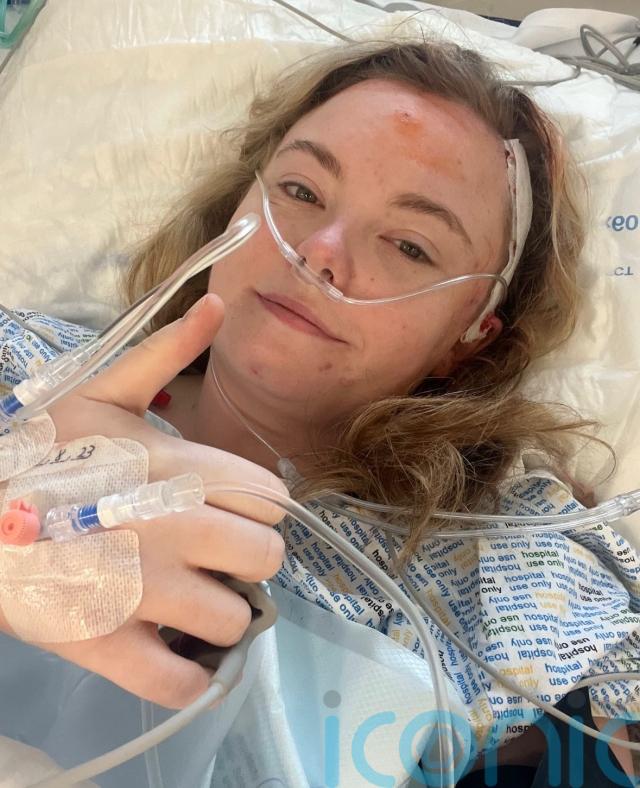
Amy McNamara, from Bathgate, was diagnosed with a high-grade brain tumour called an astrocytoma in July 2023.
The news was all the more devastating because the 30-year-old had already lost two family friends to brain tumours.
Following surgery and months of gruelling radiotherapy and chemotherapy, Ms McNamara is now under active monitoring via three-monthly scans.
She explained: “Although I’m so glad most of my tumour was removed, it’s tough to know that some of it was, and is, still here.
“There’s an urgent need for more research into brain tumours, given the numbers being diagnosed daily, and the poor survival rates.
“These are terrifying statistics to look at, whether you are someone personally diagnosed, or if it’s a family member or friend.”
She said in the short time since her own diagnosis, three people she knows have been diagnosed with a brain tumour.
She added: “As much as current treatments can help, there should be much more effort put into trying to find effective new medications and reduce the pain, as well as trying to catch brain tumours earlier to allow people to still live their lives.”
The LSCT is hosting an event for MSPs at Holyrood today as part of Less Survivable Cancers Awareness Week.
Labour health spokesperson Dame Jackie Baillie said: “So many of us have loved ones who have had their lives cut short due to one of the less survivable cancers.
“If we’re going to improve outcomes for people diagnosed with these devastating diseases then we must prioritise research into improving diagnosis and treatments that can truly make a difference.”
The Scottish Government has been approached for comment.

Subscribe or register today to discover more from DonegalLive.ie
Buy the e-paper of the Donegal Democrat, Donegal People's Press, Donegal Post and Inish Times here for instant access to Donegal's premier news titles.
Keep up with the latest news from Donegal with our daily newsletter featuring the most important stories of the day delivered to your inbox every evening at 5pm.

This publication supports the work of the Press Council of Ireland and Office of the Press Ombudsman, and our staff operate within the Code of Practice of the Press Council. You can obtain a copy of the Code, or contact the Council, at www.presscouncil.ie, Lo-call 1800 208 080 or email: info@presscouncil.ie.