Towards the end of the evidence, the child expressed her desire to see her friend and her cat again
Search


14 Jan 2026

Please allow ads as they help fund our trusted local news content.
Kindly add us to your ad blocker whitelist.
If you want further access to Ireland's best local journalism, consider contributing and/or subscribing to our free daily Newsletter .
Support our mission and join our community now.
To continue reading this article, you can subscribe for as little as €0.50 per week which will also give you access to all of our premium content and archived articles!
Alternatively, you can pay €0.50 per article, capped at €1 per day.
Thank you for supporting Ireland's best local journalism!


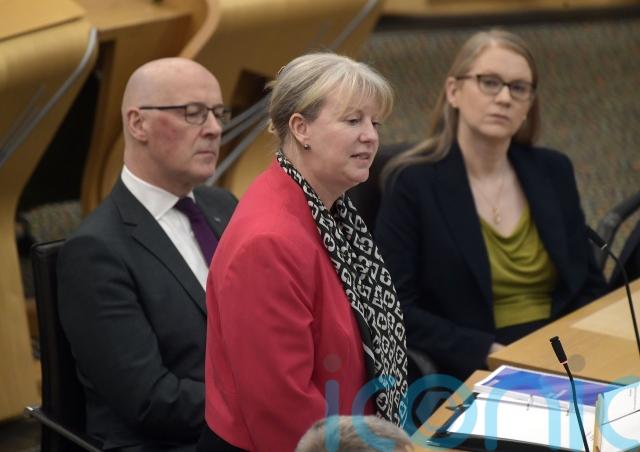
It would have been “extraordinarily expensive” for the Scottish Government to have increased tax thresholds for higher earners, Holyrood’s Finance Secretary has insisted as she came under fire over tax changes in the Scottish Budget.
While Shona Robison opted to raise the thresholds for the basic and intermediate levels of income tax, she kept thresholds for other bands paid by higher earners frozen.
As a result, more than 100,000 Scots are now expected to have to pay income tax at higher rates.
While in 2025-26 there were 728,000 taxpayers in the higher, advanced and top bands, the Scottish Government now expects that to increase to 834,000 in 2026-27.
Ms Robison said it would have cost £125 million alone to increase the threshold for the 42p higher rate of income tax from its current level of £43,663 to £44,000.
She stressed the importance of ensuring the tax changes are “affordable and deliverable”, telling BBC Radio Scotland’s Breakfast programme: “If the higher rate threshold had been raised just to £44,000 that would have cost £125 million.”
Ms Robison added: “It is extraordinarily expensive to raise those thresholds at the higher levels, the money was just not available to do that.”
She said: “Around three quarters of taxpayers are expected to be unaffected by freezes to the higher rate thresholds, and of course people are getting a range of supports, many of a universal basis.”
Ms Robison also said that while some Scots pay more in taxes, they also benefit from a “range of support”, such as free university tuition, with the Finance Secretary telling people: “If your kids go to university you don’t pay tuition fees, that’s potentially tens of thousands of pounds of savings.”
She added: “I think in the round, given the social contract, the supports that people get for the taxes people pay that are not available anywhere else in the UK, we would contend that is a social contract that most people would support.”
Ms Robison’s comments came as she faced criticism over the “marginal” impact the increases in the lower tax thresholds would have – with Labour finance spokesperson Michael Marra saying for most people these changes would save them “potentially about 70 pence a week”, adding that “you couldn’t buy a Mars bar for that”.
Hitting out at the Scottish Government, the Labour MSP said: “It really is tiny, marginal changes and this is what the Finance Secretary was trumpeting.
“What she didn’t talk about was the large number of people who are being dragged into the higher tax bands over the period of the next three years, which is the single biggest tax change in the Budget.
“There was no mention of that in the statement, but that is really where the bulk of the money is going to come from.”
He said this change – which the Scottish Fiscal Commission has said will help increase tax revenues by £72 million in 2027-28 and approximately £200 million a year from 2028-29 onwards – was needed because “the drop in tax receipts in the last few months has put more pressure on the management of a Budget which was already in chaos from the SNP”.
Mr Marra claimed the SNP had “managed to turn £10.3 billion of additional funding from the UK Government into a massive problem through their own mistakes”.
Scottish Conservative finance spokesperson Craig Hoy branded the Budget an “insult to hardworking Scottish workers”, claiming the changes to tax bands for lower earners would only leave them about £40 a year better off.
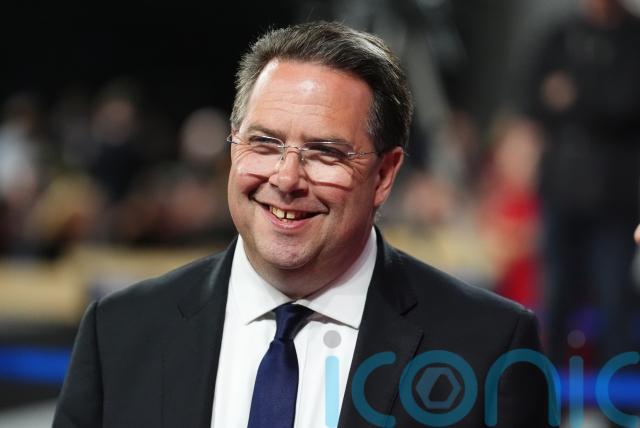
Mr Hoy told BBC Radio Scotland: “Ultimately what we also know is by the end of this decade the majority of hardworking Scots will be paying the upper rate of tax in Scotland.
“That is a tax that was designed for high earners which will be paid by average earners.”
He said that while there had been suggestions the thresholds for higher income tax rates could be increased, this had not happened in the Budget, adding that meant the system was “like a one-way escalator” with “every single year more and more hardworking Scots being pushed into what is effectively now a 50% rate of tax for those earning more than £43,000 a year”.
Mr Hoy said: “If you are earning £43,000 a year and you get a £2,000 pay increase next year, the Scottish Government will take £1,000 of that.
“That’s not fair, it’s not equitable, and that is why the Scottish Government is not growing the Scottish economy.”
He added: “Ultimately the only way to fund our public services now and into the future is to grow the Scottish economy, to increase productivity, but instead this Budget increases the benefits bill by £650 million next year.
“This is a bad Budget for Scotland.”

Subscribe or register today to discover more from DonegalLive.ie
Buy the e-paper of the Donegal Democrat, Donegal People's Press, Donegal Post and Inish Times here for instant access to Donegal's premier news titles.
Keep up with the latest news from Donegal with our daily newsletter featuring the most important stories of the day delivered to your inbox every evening at 5pm.

This publication supports the work of the Press Council of Ireland and Office of the Press Ombudsman, and our staff operate within the Code of Practice of the Press Council. You can obtain a copy of the Code, or contact the Council, at www.presscouncil.ie, Lo-call 1800 208 080 or email: info@presscouncil.ie.