A photo of Scarlett Faulkner surrounded by candles in a church I PICTURE: Facebook
Search


03 Apr 2026

Please allow ads as they help fund our trusted local news content.
Kindly add us to your ad blocker whitelist.
If you want further access to Ireland's best local journalism, consider contributing and/or subscribing to our free daily Newsletter .
Support our mission and join our community now.
To continue reading this article, you can subscribe for as little as €0.50 per week which will also give you access to all of our premium content and archived articles!
Alternatively, you can pay €0.50 per article, capped at €1 per day.
Thank you for supporting Ireland's best local journalism!


Everybody needs to pay more in tax if current levels of public services are to be maintained, an expert has told MSPs.
David Heald, an emeritus professor at Glasgow University’s Adam Smith Business School, told Holyrood’s Finance Committee that this was “a political reality”.
His comments came as he insisted the Scottish Government’s current income tax band arrangements were “ludicrous”.
While there are six income tax bands north of the border – unlike the rest of the UK where three apply – Prof Heald said three of the bands in Scotland were only “trivially different”.
The starter rate, basic rate and intermediate rate tax workers on their earnings at 19%, 20% and 21% respectively – but earnings from £43,663 to £75,000 are then taxed at 42%.
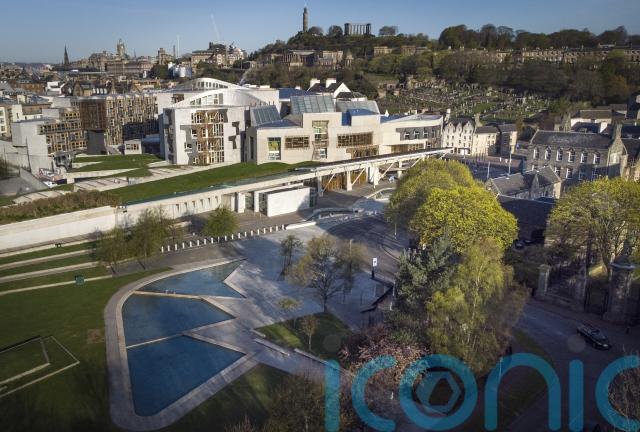
Noting that “more and more people are getting into the higher rate in Scotland”, Prof Heald told MSPs: “If you are going to have six tax bands, it’s ludicrous that three tax bands are trivially different and then you get a jump to 42%.”
The Scottish Government insists its income tax system is more progressive than in the rest of the UK, with SNP ministers saying the 2026-27 draft Budget will mean 55% of earners paying less than they would south of the border.
However, Prof Heald said: “Given the demographic picture and the international uncertainty, trade, tariffs and so on, the failure to recover from Covid and the global financial crisis, if the Scottish public want the same bundle of public service that they now get, everybody is going to have to pay more tax, that is the political choice.
“You can either have more tax, and keep the spend (or) less tax and cut the spend, or some mixture.
“But that is a political reality that this Parliament and the UK Parliament has to face.”
His comments came as he urged the next Scottish Government to maintain the current spending decisions set out by ministers in this year’s draft Budget, with the expert stressing the importance of having “stability of funding”.
Scottish Labour has suggested it might need to have an emergency budget if it wins May’s Holyrood election.
Leader Anas Sarwar said, earlier this month, his party would “keep every option on the table for what we choose to do after the election”.
Finance Committee convener Kenneth Gibson recalled that when Tony Blair came to power at Westminster in 1997, his government had opted to retain the previous Tory administration’s spending limits.
Mr Gibson said that “whether you agreed with those decisions or not, it did actually allow for some stability”.
Prof Heald said he would “recommend” such an approach for the next Scottish Government.
He told MSPs: “Presumably, whatever the political composition of the next Scottish Government, they are going to want to have a re-look at certain things.
“But I would very much urge that one of the things that would benefit efficiency improvements in the public sector in Scotland is actually having stability of funding.”
A Scottish Government spokesperson said: “Our tax decisions enable us to deliver higher investment in the NHS and policies like free tuition not available anywhere else in the UK, while ensuring the majority of taxpayers are expected to pay less income tax than elsewhere in the UK.
“Our Budget delivers for families across the country, with analysis showing lower income households are around £480 better off a year than they would be under UK tax and social security policies.
“We recognise the need for greater funding certainty to support planning across the public sector, which is why the Scottish spending review provides resource spending plans up to 2028-29, and capital spending plans up to 2029-30.”

Subscribe or register today to discover more from DonegalLive.ie
Buy the e-paper of the Donegal Democrat, Donegal People's Press, Donegal Post and Inish Times here for instant access to Donegal's premier news titles.
Keep up with the latest news from Donegal with our daily newsletter featuring the most important stories of the day delivered to your inbox every evening at 5pm.

This publication supports the work of the Press Council of Ireland and Office of the Press Ombudsman, and our staff operate within the Code of Practice of the Press Council. You can obtain a copy of the Code, or contact the Council, at www.presscouncil.ie, Lo-call 1800 208 080 or email: info@presscouncil.ie.