RIP: Body found in search for missing man (63) as heartbreaking statement is issued
Search


10 Mar 2026

Please allow ads as they help fund our trusted local news content.
Kindly add us to your ad blocker whitelist.
If you want further access to Ireland's best local journalism, consider contributing and/or subscribing to our free daily Newsletter .
Support our mission and join our community now.
To continue reading this article, you can subscribe for as little as €0.50 per week which will also give you access to all of our premium content and archived articles!
Alternatively, you can pay €0.50 per article, capped at €1 per day.
Thank you for supporting Ireland's best local journalism!


MSPs are being urged to make a “simple but significant contribution” to tackling climate change by introducing new protections for Scotland’s sea lochs.
Labour’s Sarah Boyack insisted Holyrood could “show leadership” by backing a move to ban dredging and trawling in key parts of the lochs – allowing them to continue to store substantial amounts of carbon.
Research has shown 84,000 tonnes of organic carbon is buried annually in the sediments of Scottish fjords – the name given by scientists to the sea lochs along the country’s coastline.
Ms Boyack is bringing forward an amendment to the Scottish Government’s Natural Environment (Scotland) Bill – which faces its final key vote at Holyrood on Tuesday – to bring in the new protections.
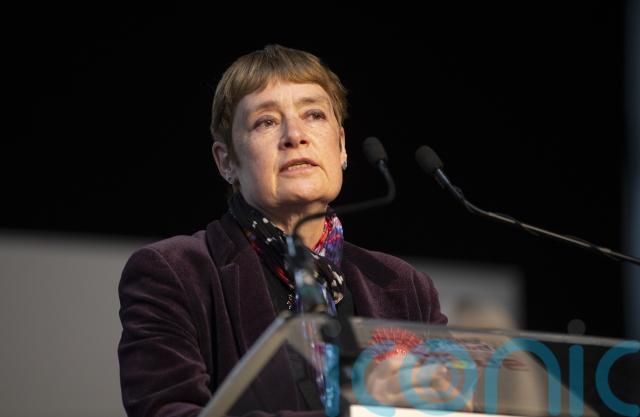
With the research showing the Scottish fjords bury as much organic carbon annually as the North Sea, the Labour MSP pressed the case for action.
Ms Boyack said: “Scottish ministers declared a climate emergency back in 2019. More than a decade has passed since the Scottish Government first mapped out the importance of our sea lochs for storing carbon. Why then has not a single square foot of sea yet been protected for this purpose?”
She insisted: “This is an opportunity for this country to show leadership.
“We cannot afford yet more ‘action plans’ which contain no actual action. Scotland can and must take care of our most important sea lochs for future generations.”
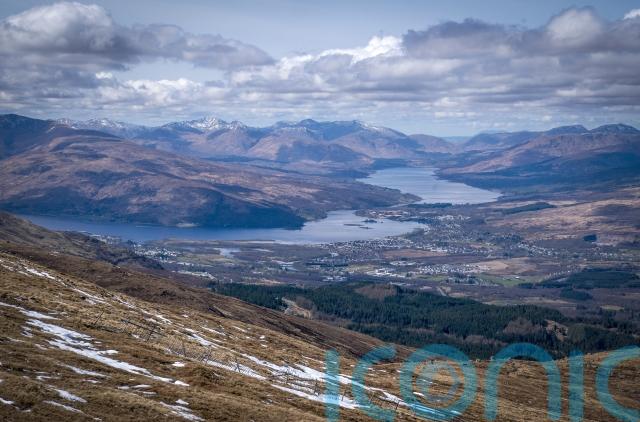
If passed, the new protections could apply to parts of 14 key sea lochs – including Loch Fyne, Loch Linnhe, Loch Torridon, Loch Sunart, Loch Ewe and Loch Etive.
The move has been backed by environmental campaigners at Stock Climate Chaos Scotland, with the group’s Becky Kenton-Lake saying: “Parliament can now make a simple but significant contribution to climate action by introducing targeted protections for a few of Scotland’s iconic sea lochs.
“There are certainly areas where more research on marine carbon stores is needed, but we already know enough to take action here.
“Scotland’s seas are warming at an alarming rate, and this change is possibly the most effective quick win there is on carbon storage.”
Ms Kenton-Lake added: “We have long been promised an action plan on marine carbon, but so far the draft contains no practical actions to protect our vital seabed habitats. This is a golden opportunity for MSPs to start to turn that around.”
The Sustainable Inshore Fisheries Trust (Sift) – which has previously pressed Scottish ministers to adopt such an approach – also backed Ms Boyack’s amendment.
Sift executive director Charles Millar said: “We already have enough evidence to justify decisive action.
“Granting full protection for the carbon-rich areas within the heads of key sea lochs would lock up huge quantities of carbon.
“Nature is a crucial ally in the fight against climate change, and now Parliament has an opportunity to make Scotland a global leader in the protection of our seas so they can continue to limit climate breakdown.”
Mr Millar continued: “Our sea lochs are globally significant, and I would hope Parliament can unite to keep them safe.
“Continued trawling would risk disturbing these relatively small but highly important areas of seabed, and closing them to the most disruptive forms of fishing is an urgently needed first step.”
Bally Philp, national coordinator for the Scottish Creel Fishermen’s Federation, also backed the changes, saying that protecting “carbon-rich sea lochs” could not only “play a meaningful role in tackling climate change” but could also help “create space for a fairer, lower-impact inshore fishing economy”.
He argued: “Keeping dredging and trawling out of these sensitive areas allows well-managed low-impact fisheries such as creeling and hand-diving to thrive, activities that disturb far less stored carbon, generate higher value per kilo landed, support more jobs locally, and have a much smaller footprint in terms of bycatch and seabed damage.
“Properly protected sea lochs are therefore a genuine win-win-win, for climate, for nature, and for coastal fishing communities.”
Climate Action Secretary Gillian Martin stressed that the Scottish Government recognised “the importance of blue carbon habitats as part of a healthy, biodiverse marine environment as well as for their contribution to efforts in mitigating climate change”.
She said: “Scottish ministers already have powers to restrict fishing activity for conservation purposes if evidence suggests this is needed.
“We have published the Blue Carbon Action Plan which sets out priorities for blue carbon habitats in Scotland, including addressing remaining evidence gaps and uncertainties about the impacts of bottom trawling on blue carbon.
“Decisions on future policies aiming to protect blue carbon habitats – both in sea lochs and elsewhere in Scotland’s seas – must be guided by evidence-based science.”

Subscribe or register today to discover more from DonegalLive.ie
Buy the e-paper of the Donegal Democrat, Donegal People's Press, Donegal Post and Inish Times here for instant access to Donegal's premier news titles.
Keep up with the latest news from Donegal with our daily newsletter featuring the most important stories of the day delivered to your inbox every evening at 5pm.

This publication supports the work of the Press Council of Ireland and Office of the Press Ombudsman, and our staff operate within the Code of Practice of the Press Council. You can obtain a copy of the Code, or contact the Council, at www.presscouncil.ie, Lo-call 1800 208 080 or email: info@presscouncil.ie.