The rear of the Friarstown home
Search


30 Mar 2026

Please allow ads as they help fund our trusted local news content.
Kindly add us to your ad blocker whitelist.
If you want further access to Ireland's best local journalism, consider contributing and/or subscribing to our free daily Newsletter .
Support our mission and join our community now.
To continue reading this article, you can subscribe for as little as €0.50 per week which will also give you access to all of our premium content and archived articles!
Alternatively, you can pay €0.50 per article, capped at €1 per day.
Thank you for supporting Ireland's best local journalism!


Scotland’s new patient safety commissioner has said she is “not confident” that circumstances surrounding whistleblowing in the Eljamel inquiry could not happen again.
Newly appointed Karen Titchener gave evidence at the Health, Social Care and Sports Committee on Tuesday.
She was asked by Tory MSP Brian Whittle about concerns if action would be taken now if the circumstances surrounding Tayside brain surgeon Sam Eljamel were to happen again.
Mr Eljamel harmed dozens of patients while working for NHS Tayside before his suspension in December 2013. NHS whistleblowers have previously spoken to press and MSPs that they had been raising concerns since 2009.
Mr Whittle said: “One of the the issues somebody said, they’re not convinced that if there was a rogue surgeon right now in our health boards, the same actions or some of the actions that should have been taken in the Eljamel case would be taken now.
“One, do you think that’s right? And two, if it’s not right, how do we change that confidence factor?”
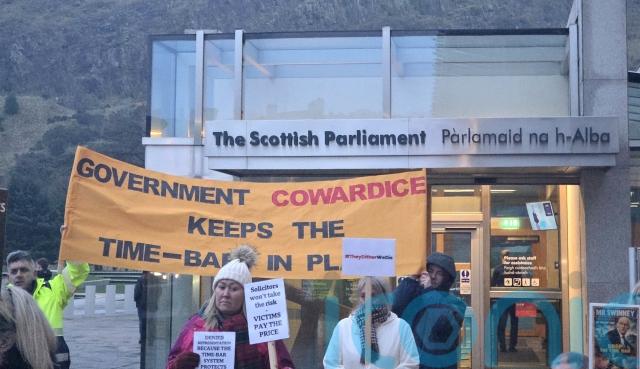
Ms Titchener said she was “not confident” that a similar situation could not happen again.
She said: “I’m not confident that it wouldn’t happen again at the minute from what I’m hearing. It’s that closing ranks and shutting things down.
“Obviously the inquiry is going on with that, I don’t want to dirty the waters. But equally even within the board that that happened, I think there are still concerns.
“I do think we have to start trying to open doors that have been closed and trying to stop boards closing ranks and stopping things, because there’s nothing safe about that.”
The Patient Safety Commissioner for Scotland Bill was introduced in response to the recommendation of the UK Government-commissioned Independent Medicines and Medical Devices Safety Review.
The Scottish Parliament nominated Ms Titchener as Scotland’s first patient safety commissioner in May 2025, and her appointment began in September 2025 for a fixed term of eight years.
She was also asked by Tory MSP Dr Sandesh Gulhane about how she would make whistleblowers feel able to come forward after the Scottish Hospitals Inquiry revealed whistleblowers at the Queen Elizabeth University Hospital were discouraged from speaking out.
She said: “We have to make sure that we don’t have many inquiries, but actually that the patient is listened to (from) day one when they’re concerned, or that staff is listened to (from) day one.
“And if the processes that we have in place aren’t working, then, my door is where that’s going to fall and rest assured I’m no wallflower, and if I hear something from a patient that is endangering life I will be going straight to the top. I’ll be going straight to the health minister.”
She continued that if the health minister did not implement change after discussions she would make sure “that voice is heard”.
She said: “If we’re going to work collaboratively we can’t have a shotgun approach. It has to be done (so) that government know about it.
“But, at the same time, if I tell that to the health minister and nothing gets done, then I will still make sure that that that voice is heard.
“Whether that means going to the press, whether it means going to to to the health boards, because we have to make sure that we’re not bolting the door when the horse is already gone.”
A spokesman for the Scottish Government said: “We recognise the pain, trauma and distress experienced by people impacted by Mr Eljamel’s practice.
“All health service workers should have the confidence to raise concerns and there are dedicated whistleblowing champions in each health board to seek assurance that staff are encouraged and supported to speak up.
“Like the Scottish Hospitals Inquiry, we set up the inquiry into the actions of Mr Eljamel and NHS Tayside, chaired by Lord Weir, to ensure patients get the truth they deserve and to ensure lessons are learned.
“Patient safety is our highest priority and the NHS provides excellent care for the vast majority of people.
“On the rare occasions it does fall short of expectations, health boards must listen and take action to improve, and there are robust processes in place to address these issues.
“All NHS Boards have processes in place to identity any recurring patient safety concerns that are raised, including any scenarios where this relates to individual practitioners.
“The Health Secretary regularly meets with the Patient Safety Commissioner and is always happy to discuss any matters which could improve patient safety and confidence.”
An NHS Tayside spokesperson said: “NHS Tayside has welcomed the Eljamel Inquiry since it was announced in 2023 and has approached it with full openness and transparency.
“We recognise the importance of the inquiry for many patients of Mr Eljamel and their families. We are sincerely sorry again to all patients who have suffered because of the treatment they received from Mr Eljamel.
“NHS Tayside’s due diligence review of Mr Eljamel’s clinical practice, published in 2023, identified significant failings in relation to clinical supervision, governance processes and handling of complaints.
“Since the publication of the due diligence review, and the subsequent announcement of the public inquiry, NHS Tayside has fully committed to making improvements and we believe our clinical and professional governance processes are demonstrably different to those which were in place more than a decade ago.
“However, we accept that the failings identified in the due diligence report have undermined the trust and confidence of patients, families and staff, and we will continue to work hard to try to rebuild that. We know this will only be possible by being open and transparent.
“NHS Tayside will continue to co-operate with the Eljamel Inquiry and will be accountable for its decision-making and actions taken in response to Mr Eljamel’s practice and the concerns raised.”

Subscribe or register today to discover more from DonegalLive.ie
Buy the e-paper of the Donegal Democrat, Donegal People's Press, Donegal Post and Inish Times here for instant access to Donegal's premier news titles.
Keep up with the latest news from Donegal with our daily newsletter featuring the most important stories of the day delivered to your inbox every evening at 5pm.

This publication supports the work of the Press Council of Ireland and Office of the Press Ombudsman, and our staff operate within the Code of Practice of the Press Council. You can obtain a copy of the Code, or contact the Council, at www.presscouncil.ie, Lo-call 1800 208 080 or email: info@presscouncil.ie.