Search


22 Apr 2026
Search
22 Apr 2026

Please allow ads as they help fund our trusted local news content.
Kindly add us to your ad blocker whitelist.
If you want further access to Ireland's best local journalism, consider contributing and/or subscribing to our free daily Newsletter .
Support our mission and join our community now.
To continue reading this article, you can subscribe for as little as €0.50 per week which will also give you access to all of our premium content and archived articles!
Alternatively, you can pay €0.50 per article, capped at €1 per day.
Thank you for supporting Ireland's best local journalism!


The board of Scotland’s publicly-funded heritage body did not want their chief executive to return to work after she was signed off sick, MSPs have been told.
They heard Historic Environment Scotland (HES) chief executive Katerina Brown had “uncovered some substantive concerns” as part of “important work she was taking forward” at the organisation.
Senior Scottish Government official Kenneth Hogg told MSPs the board “did not want her to return to work” after she went on sick leave in May 2025.
Miss Brown told Holyrood’s Public Audit Committee she had gone to her GP “because the situation at work did become extremely difficult”.
She added: “On her advice I was signed off work to protect my health and wellbeing. That is something which I have never done ever in my career.”
She explained to MSPs that it was clear even when she took on the job that there “were some challenges with HES”, adding: “I had some awareness there would be issues to address.”
Another senior Scottish Government civil servant, Shona Riach, told the committee that “ultimately the board took the decision to suspend Miss Brown”.
The chief executive herself meanwhile said that after the period when she was signed off sick, she had spent a number of months trying to return to work.
Miss Brown said she had contacted the HES board and the Scottish Government in July last year, saying: “I’m fit and ready to return to work.”
However she said at that point she was advised not to return to HES – the body responsible for more than 300 historic properties across Scotland including Edinburgh Castle.
“There was a series of attempts to return to work,” Miss Brown said.
There are unacceptable weaknesses in Historic Environment Scotland’s governance arrangements.
It operated for almost six months without a Chief Executive or Accountable Officer, and a substitute should have been appointed by @scotgov.
My new report: https://t.co/8wzqy8pd0Q pic.twitter.com/31q8d3T1wT
— Stephen Boyle (@AuditorGenScot) December 16, 2025
“It wasn’t an entire period of six months of absence, it was two months and then four months of attempted return.”
She added: “I was advised by the board they had received a letter to them with allegations against me, and to refrain from work until they were investigated.”
Ms Riach said when Miss Brown took up the post of HES chief executive in September 2024, she was “looking at all aspects of the business, including governance and accountabilities”.
The Scottish Government’s director-general exchequer added: “Unfortunately that work uncovered some substantive concerns which since then we have been working collectively together to find a way through a resolve.”
Miss Brown told the committee she had reported “concerns” to the heritage body’s board in November 2024 and in February 2025.
Her appearance at the committee comes after a report by Auditor General for Scotland Stephen Boyle highlighted a series of “unacceptable weaknesses” at the heritage body, saying concerns over a “toxic workplace culture” “need to be fully investigated and addressed”.
The report, published in December, noted HES functioned without an accountable officer for almost six months, between May 2 and October 20 2025, when Miss Brown returned to work.
It also highlighted issues with “electronic purchasing cards” used by about a quarter of HES’ 1,600 staff – with the committee told by chief operating officer Stephen Uphill while there are “still in excess of 400” employees who have the cards, “around 35 have been removed recently”.
Work to reduce the number of cards is “ongoing”, Mr Uphill added.
The Auditor General’s report also raised “issues” with expenses policy, saying almost half of trips involving foreign travel by staff had “not been appropriately authorised”.
Meanwhile HES, board members had to pay back cash to the organisation after a leaving do in November 2024.
The invoice for the night out totalled £875 for a dinner attended by 11 people at a cost of £35 per person, with “most of the remainder” of the bill “being from the purchase of alcohol”.
Mr Hogg told MSPs when Miss Brown took up her role with HES, “she began calling out issues which were less visible which were in the category of poor practice”.
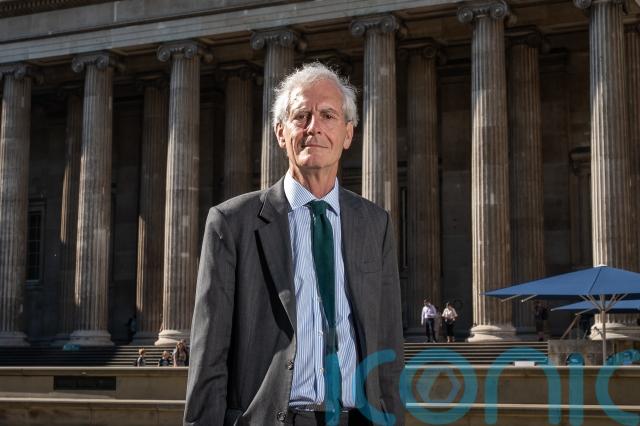
HES board chairman Sir Mark Jones told the committee there “may have been” problems with the body since its creation in 2015.
HES was formed by merging two previous bodies, Historic Scotland and the Royal Commission on the Ancient and Historical Monuments of Scotland.
Sir Mark said: “I think it is possible that amalgamation was not carried through in a way which led to a completely coherent organisation.”
He told the committee work had begun in January this year on an “absolutely thorough review” of HES, looking at “the organisation and its culture”.
With this due to be delivered in May, Sir Mark said: “I’m hoping that report will tackle the questions of culture and will also tackle the questions of organisation.”

Subscribe or register today to discover more from DonegalLive.ie
Buy the e-paper of the Donegal Democrat, Donegal People's Press, Donegal Post and Inish Times here for instant access to Donegal's premier news titles.
Keep up with the latest news from Donegal with our daily newsletter featuring the most important stories of the day delivered to your inbox every evening at 5pm.

This publication supports the work of the Press Council of Ireland and Office of the Press Ombudsman, and our staff operate within the Code of Practice of the Press Council. You can obtain a copy of the Code, or contact the Council, at www.presscouncil.ie, Lo-call 1800 208 080 or email: info@presscouncil.ie.