PICTURES: All smiles at Tractor and Truck Run held in aid of Laois school
Search


04 Feb 2026

Please allow ads as they help fund our trusted local news content.
Kindly add us to your ad blocker whitelist.
If you want further access to Ireland's best local journalism, consider contributing and/or subscribing to our free daily Newsletter .
Support our mission and join our community now.
To continue reading this article, you can subscribe for as little as €0.50 per week which will also give you access to all of our premium content and archived articles!
Alternatively, you can pay €0.50 per article, capped at €1 per day.
Thank you for supporting Ireland's best local journalism!


Scotland’s new exams body is to survey both teachers and students about changes to exams in a dozen subjects.
Qualifications Scotland, which became fully operational earlier this week, is asking view on proposed changes to some current courses.
Thee could see it reduce the length of exam papers, along with the number of marks available – a move which should give students more time to complete their papers.
In addition to this it is also looking to clarify the volume of evidence that students need to produce for an assessment.
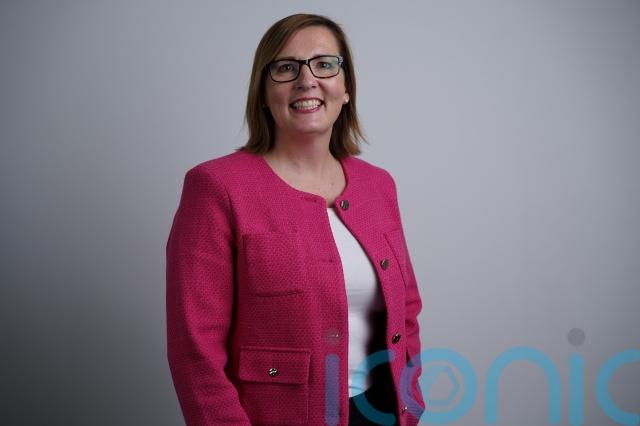
Chief examiner Donna Stewart said the move was “the start of our commitment to improve qualifications and ensure they are fit for purpose in a modern, flourishing Scotland”.
It comes as Qualifications Scotland – which takes over from previous body the Scottish Qualifications Authority – looks to review “the entire portfolio of qualifications taken in schools, colleges, training providers and in the workplace”.
Ms Stewart however stressed that “changes will be made in collaboration with learners and educators – and will not be made in isolation”.
The chief examiner added: “We start with improvements to some of our current National Courses, based on direct feedback from educators and learners.
“We’re making changes to improve assessments and to support learners over the next few years before reformed National Courses are introduced.”
Qualifications Scotland is now looking at making changes to the following subjects and courses: biology at National 5 to Advanced Higher level; business management at National 5 and Higher level; chemistry at both National 5 and Higher; dance at National 5 and Higher; economics at National 5 and Higher; English at Higher level; environmental science at National 5 and Higher; human biology at Higher level; Latin at National 5 and Higher; media at National 5 and Higher; politics at Higher level and physics at National 5 to Advanced Higher level.
Qualifications Scotland’s school partnership team has already been “visiting schools and listening to teachers and learners”, Ms Stewart said.
She added: “What we hear is that they are ready for much more agile qualifications, for a reduced workload on teachers and for reduced assessment for learners, while still maintaining the integrity of our qualifications.
“We have heard this and are working towards those principles.”
In the longer term, Qualifications Scotland has set out to review, design and develop reformed National courses – with this work being done in conjunction with curriculum improvements being developed by Education Scotland.
It is hoped that this will reduce the reliance on “high stakes” exams for pupils, with reformed National courses expected to come in from 2031.
Ms Stewart said: “Qualifications reform is a significant and long-term area of work. We’ll do it in collaboration with schools, colleges, employers, training providers, and learners.
“Our aim is to make sure that our qualifications are current, relevant and ready for the future, and to support clearer progression pathways.”

Subscribe or register today to discover more from DonegalLive.ie
Buy the e-paper of the Donegal Democrat, Donegal People's Press, Donegal Post and Inish Times here for instant access to Donegal's premier news titles.
Keep up with the latest news from Donegal with our daily newsletter featuring the most important stories of the day delivered to your inbox every evening at 5pm.

This publication supports the work of the Press Council of Ireland and Office of the Press Ombudsman, and our staff operate within the Code of Practice of the Press Council. You can obtain a copy of the Code, or contact the Council, at www.presscouncil.ie, Lo-call 1800 208 080 or email: info@presscouncil.ie.