Search


03 Apr 2026
Search
03 Apr 2026

Please allow ads as they help fund our trusted local news content.
Kindly add us to your ad blocker whitelist.
If you want further access to Ireland's best local journalism, consider contributing and/or subscribing to our free daily Newsletter .
Support our mission and join our community now.
To continue reading this article, you can subscribe for as little as €0.50 per week which will also give you access to all of our premium content and archived articles!
Alternatively, you can pay €0.50 per article, capped at €1 per day.
Thank you for supporting Ireland's best local journalism!


Scotland’s health boards could have to make “big increases in efficiency and productivity” to avoid services suffering, a think tank has warned.
The Institute for Fiscal Studies (IFS) said real-terms increases to territorial and national health boards amounted to an average of 0.4% a year over the next three years.
This is “just one-sixth the rate of the overall increase” for spending in health and social care, where funding is to grow by 2.4% a year in real terms.
For health boards, the report said there was a “very slow rate of growth” which would “require big increases in efficiency and productivity to avoid degradation in service quality”.
Health boards could “struggle with their small funding increases unless they can deliver large efficiency gains”, the report added.
It comes as day-to-day spending on health and social care is to increase by 0.2% in real terms in 2026-27, the IFS Budget report said.
After cash is transferred to councils to pay for wage increases for social care workers, it said the amount for health and care services would fall by 0.6% in real terms.
The Scottish Government is, meanwhile, said to be “planning a huge relative shift in funding out of hospitals and to the community” over the period 2026-27 to 2028-29.
The IFS contrasted the average 0.4% a year increase to health boards with a rise of nearly 12% a year on average to remaining parts of the health and social care portfolio.
While the report was “unclear” how this money would be distributed between primary care services, such as GPs and the social care sector, the report said this represented a “major (relative) transfer of resources out of hospitals”.
The think tank also warned it is “high likely” that spending on health and social care will have to be “topped up substantially in 2026–27”.
It said this would be the case “especially if ambitious targets for efficiency savings” are not achieved.
While the Scottish Government is targeting annual savings of 3%, the IFS said health boards had reported savings averaging 1.3% in 2024-24 and 2.2% in 2024-25.
IFS research economist Martin Brogaard, co-author of the report, said the Scottish Government was “banking on big improvements in hospital and ambulance service productivity” along with a “shift in resources to some combination of primary and social care to refocus on preventing ill health”.
Mr Brogaard added that ministers may hope this will “enable health funding to stretch further and avoid a deterioration in service quality”.
He said: “The Scottish Government faces a difficult funding outlook, which necessitates tricky trade-offs between different areas of both day-to-day spending and investment spending.”
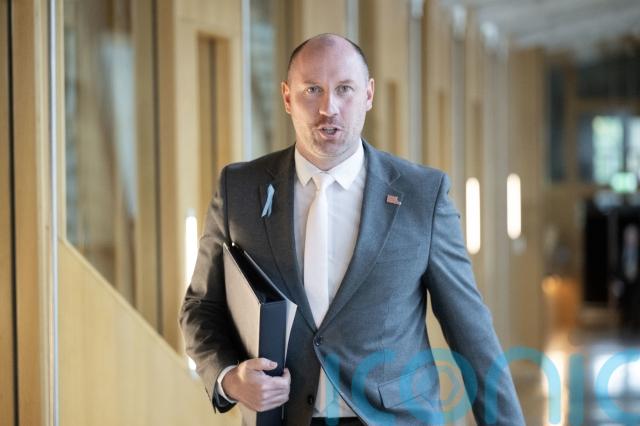
Health Secretary Neil Gray said: “Our draft budget includes record funding of £22.5 billion for health and social care to support a more sustainable and resilient system.
“Our plan is delivering: long waits have reduced for seven consecutive months, we are seeing downward trends across nearly all waiting list indicators, and thousands more appointments, operations and procedures are being delivered this year.
“We want the people of Scotland to live healthier, longer lives, with services that are accessible, efficient and tailored to people’s needs.
“While challenges remain, we will continue to reform, focusing on prevention, improving access and shifting the balance of care to communities.
“Our spending plans provide help for hard-pressed families and businesses, alongside investment in public services and infrastructure and we will continue to seek to work constructively to ensure the Budget passes.”
He continued: “Scottish public finances continue to face a challenging fiscal environment, which is why the spending review also set out efficiency and reform plans, detailing how £1.5 billion of cumulative savings will be delivered, including £0.6 billion in 2026-27.
“Tough choices, reform and efficiencies are all needed to balance the demands for public spending within our funding constraints. We must ensure that our investments are efficient, effective and targeted to make the greatest impact.”

Subscribe or register today to discover more from DonegalLive.ie
Buy the e-paper of the Donegal Democrat, Donegal People's Press, Donegal Post and Inish Times here for instant access to Donegal's premier news titles.
Keep up with the latest news from Donegal with our daily newsletter featuring the most important stories of the day delivered to your inbox every evening at 5pm.

This publication supports the work of the Press Council of Ireland and Office of the Press Ombudsman, and our staff operate within the Code of Practice of the Press Council. You can obtain a copy of the Code, or contact the Council, at www.presscouncil.ie, Lo-call 1800 208 080 or email: info@presscouncil.ie.