Search


18 Feb 2026
Search
18 Feb 2026

Please allow ads as they help fund our trusted local news content.
Kindly add us to your ad blocker whitelist.
If you want further access to Ireland's best local journalism, consider contributing and/or subscribing to our free daily Newsletter .
Support our mission and join our community now.
To continue reading this article, you can subscribe for as little as €0.50 per week which will also give you access to all of our premium content and archived articles!
Alternatively, you can pay €0.50 per article, capped at €1 per day.
Thank you for supporting Ireland's best local journalism!


There has been a failure in leadership to fix delayed discharge for more than a decade, a veteran SNP MSP has said.
Colin Beattie said politicians had been warned for 15 years that the issue reflected a long-standing failure to shift the balance of care from hospitals to communities.
But he said there had been “no movement since then” and that “nothing has changed”.
He told Holyrood’s Audit Committee: “The Auditor General told the committee that the delayed discharge reflects a wider, long-standing failure to shift the balance of care from hospitals to community settings.
“Since ever I have been in this committee that has been the headline. Nothing has changed and that is 15 years I have been sitting here.”
The former SNP treasurer said witnesses to the committee have been “clear that progress depends on clearer leadership, stronger governance, firmer accountability at both national and local levels”.
He added: “But none of this seems to have happened. I mean, I say again, this is a repeat. This comes up every time I report in front of this committee. There is no movement. Why?”
He said despite issues with leadership, governance and accountability being raised “again and again and again”, “we don’t seem to see any movement on it”.
Speaking to Caroline Lamb, director-general for health and social care and chief executive of NHS Scotland, he said: “We’ve heard 20 years, in my case 15 years, of reassurances from yourself and your predecessors over the years.
“Why should we believe that this time it’s going to work?”

Ms Lamb said the “strategic intent for some time” has been to move care from hospitals to the community.
She said while some progress had been made on delayed discharge, she accepted “that hasn’t been as fast as we would want it to be”.
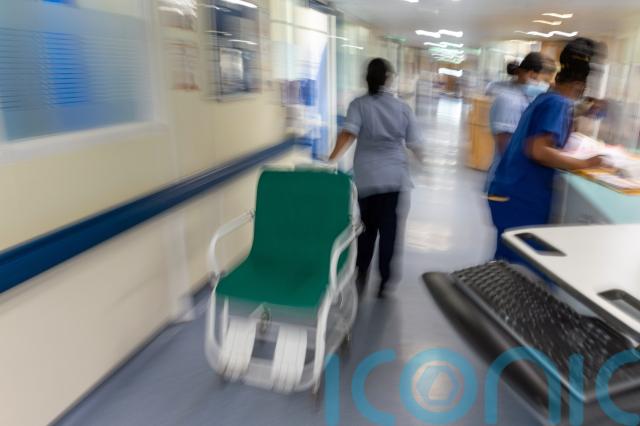
She said she was “very concerned” by figures that showed around one in 10 hospital beds were unnecessarily occupied by people experiencing delayed discharge while two-thirds of those who were delayed were over 75.
“I’m concerned because of the impact that it has on the individuals,” she said.
“We know how bad it is for people to be in hospital in an acute bed, particularly for longer than they need to be.
“We know how that involves deconditioning and how actually the evidence is that the longer people spend in hospital, the more care support they’re likely to need when they do get home.”
Ms Lamb accepted the key recommendations from a recent Audit Scotland report but said some would be “complex” to implement, “requiring a whole system approach”.
Scotland’s public services watchdog found in January that delayed discharges cost the NHS at least £440 million.
It showed more than 720,000 bed days were lost in 2024-25 with the patients being well enough to be discharged, with one in every nine beds in Scottish healthcare settings occupied by someone who did not need to be there.
People can be delayed in hospital for a number of reasons, but the most common is the lack of a social care package.
The report called for better analysis and transparency to understand the cost and impact of delayed discharge, and for leaders to assess current measures to stem the problem.

Subscribe or register today to discover more from DonegalLive.ie
Buy the e-paper of the Donegal Democrat, Donegal People's Press, Donegal Post and Inish Times here for instant access to Donegal's premier news titles.
Keep up with the latest news from Donegal with our daily newsletter featuring the most important stories of the day delivered to your inbox every evening at 5pm.

This publication supports the work of the Press Council of Ireland and Office of the Press Ombudsman, and our staff operate within the Code of Practice of the Press Council. You can obtain a copy of the Code, or contact the Council, at www.presscouncil.ie, Lo-call 1800 208 080 or email: info@presscouncil.ie.