
Courtesy of My Lovely Horse Rescue
Search


21 Apr 2026

Please allow ads as they help fund our trusted local news content.
Kindly add us to your ad blocker whitelist.
If you want further access to Ireland's best local journalism, consider contributing and/or subscribing to our free daily Newsletter .
Support our mission and join our community now.
To continue reading this article, you can subscribe for as little as €0.50 per week which will also give you access to all of our premium content and archived articles!
Alternatively, you can pay €0.50 per article, capped at €1 per day.
Thank you for supporting Ireland's best local journalism!


The police need to “do things differently” on mental health callouts, the body representing rank-and-file officers has said.
Speaking at Holyrood’s Criminal Justice Committee on Wednesday, Scottish Police Federation (SPF) chairman David Threadgold said between 60% and 80% of Police Scotland’s operational capacity is being drained by dealing with mental health calls.
According to Police Scotland, officers were called to 14,500 mental health incidents every month in 2025, with 85% not involving a crime.
In one case, Mr Threadgold told MSPs that two officers were forced to stay with a woman struggling with her mental health for four days before eventually driving her to Northumberland.
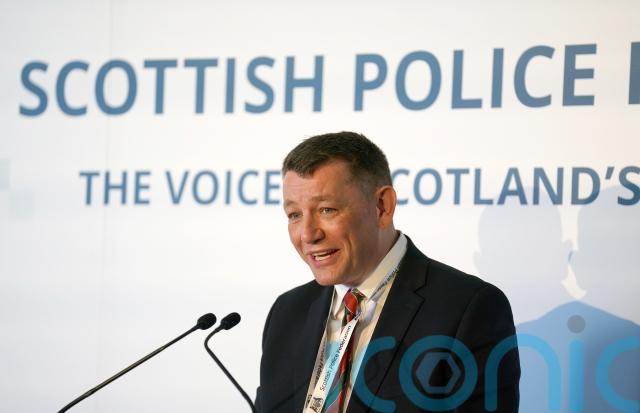
“We have got to start to do things differently in the police, because there is no prospect, in my opinion, of this broad situation changing any time soon,” he said.
“If we don’t we will just continue to have this discussion in three years’ time as we did three years ago when I started this job.
“It impacts on our ability to do what we’re good at and it impacts on the health of colleagues who suffer the consequences.”
Mr Threadgold went on to say that policing had “become the default” service to be called on when the health service cannot deal with mental health issues.
Assistant Chief Constable Catriona Paton also appeared before the committee, telling MSPs that policing should “have a role” in relation to mental health, but officers should be allowed to “step back” when any threat to life is over.
“It remains that there is still a significant proportion where officers are attending and they are not best placed to either attend, and/or remain with individuals without it impacting and being a deviation on our core purpose,” she said.
“When the crisis is over, we need to be able to return to that, our Chief Constable has also been clear we cannot continue to fill the gaps.”
While acknowledging there had been improvements, Ms Paton added: “Much more needs to be done.
“And, again, that more needs to be that recognition that if we agree it’s not police, then what are we doing in terms of filling the gap?”
Stephen Gallacher, director of mental health at the Scottish Government, also spoke to MSPs, telling them “progress has been achieved in a number of areas”.
He said: “I’m pleased that this has been achieved through collaborative work of the mental health partnership delivery group to improve our emergency and unscheduled care mental health pathways.
“Mental health service reform is a priority for me and the mental health directorate, and working collaboratively to make sure people in distress receive the right support in the right place at the right time, and tackling unnecessary demand on policing, is a critical part of this.”

Subscribe or register today to discover more from DonegalLive.ie
Buy the e-paper of the Donegal Democrat, Donegal People's Press, Donegal Post and Inish Times here for instant access to Donegal's premier news titles.
Keep up with the latest news from Donegal with our daily newsletter featuring the most important stories of the day delivered to your inbox every evening at 5pm.

This publication supports the work of the Press Council of Ireland and Office of the Press Ombudsman, and our staff operate within the Code of Practice of the Press Council. You can obtain a copy of the Code, or contact the Council, at www.presscouncil.ie, Lo-call 1800 208 080 or email: info@presscouncil.ie.