Search


22 Apr 2026
Search
22 Apr 2026

Please allow ads as they help fund our trusted local news content.
Kindly add us to your ad blocker whitelist.
If you want further access to Ireland's best local journalism, consider contributing and/or subscribing to our free daily Newsletter .
Support our mission and join our community now.
To continue reading this article, you can subscribe for as little as €0.50 per week which will also give you access to all of our premium content and archived articles!
Alternatively, you can pay €0.50 per article, capped at €1 per day.
Thank you for supporting Ireland's best local journalism!


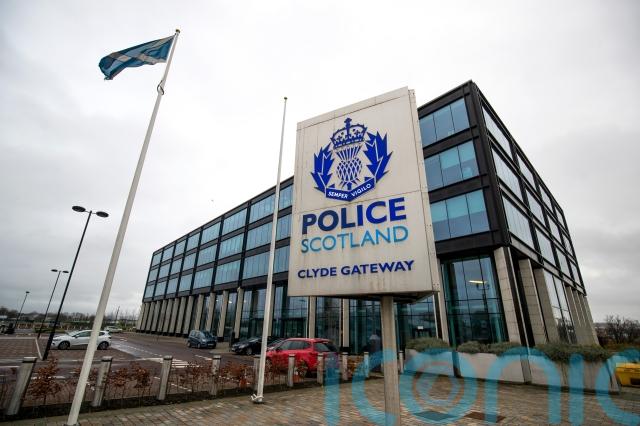
Scotland’s independent police watchdog has warned investigations into policing incidents could be delayed, saying it lacks the resources it needs to cope with a sharply rising workload.
The Police Investigations and Review Commissioner (Pirc) said in the fourth quarter of last year, it saw a 239% rise in the number of investigations started, and this increased demand has continued into 2025-26.
Grounds for an investigation include serious injuries or death following police contact, allegations of criminality by officers, and instances of serious officer misconduct.
The body is also projecting a 250% increase in the number of complaint handling review (CHR) applications from members of the public – where it reviews policing bodies’ handling of complaints made about them.
Pirc said more resources are needed if it is to “deliver the level of service that the public and others expect”.
Addressing a meeting of the Scottish Police Authority on Thursday, Commissioner Laura Paton said “over 95%” of its investigations are directed by the Crown, meaning the body has “no discretion” about whether to undertake them.
She continued: “The Crown has issued a standing instruction that all allegations engaging Article 3 of the European Convention on Human Rights come to Pirc for investigation, and that includes all allegations of assault made by a member of the public against the police.
“It’s really these cases that make up the majority of our investigative workload.”
She added the rise is a “direct result” of the change to the law on corroboration introduced in late 2024, which she said has resulted in “a significantly higher proportion of cases referred to Pirc now proceeding to investigation”.
She said in 2024/25, the body’s performance in completing investigations within its 90 or 120-day targets was “very good” – but it is now expecting them to take longer.
“The increase in demand that began in the last quarter of 24-25 has a real impact on what we are able to deliver,” she told the meeting.
“While we can remain focused on delivering high-quality investigations, we are not going to be able to complete those investigations as quickly as we would like, and as quickly as we had done in the past.
“That means that the complainer and the subject officer required to wait longer for an outcome, and it also has an impact on our staff.”
She attributed the projected rise in CHRs to Police Scotland’s current complaints “backlog”, explaining that clearing this will result in additional demand on Pirc.
“As well as over 600 live complaints, (Police Scotland) has a backlog of over 1,050 unallocated complaints, with another 525 complaints awaiting assessment by the National Complaints Assessment and Resolution Unit,” she said in the 2024/25 Pirc annual report, which was being presented at the meeting.
“It is expected that efforts by Police Scotland to address this backlog, including securing funding to appoint 26 additional complaint handlers, will result in Pirc experiencing an increase in demand for CHRs.”
She also said Pirc had seen a “surge” in inquiries from the public about complaints made about the police, often before Police Scotland’s own investigations into them had been concluded.
The commissioner, who took up the role last April, said Pirc needs additional resources if it is to cope with the rising demand – despite an uplift for next year already having been secured.
“We have received an uplift for next year, for which we are grateful, although it is not all that we consider that we require,” she said.
A Scottish Government spokesperson said: “We remain committed to supporting Pirc to ensure we have robust and independent oversight of policing.
“Our draft 2026-27 budget provides £8.5 million for Pirc – an additional £1 million, or 13.5% – in recognition of the additional demands being placed on the organisation.”
Assistant Chief Constable Lynn Ratcliff said: “A local complaint allocation plan has recently been implemented resulting in unallocated complaints, requiring investigation, being allocated to local and national divisions to contact complainers and investigate their complaint.
“To maintain consistency and compliance with Pirc statutory guidance, the Professional Standards Department is providing initial training, support and quality assurance checks.
“The aim of this plan is to effectively resolve outstanding complaints and increase the visibility and understanding of complaints in divisions, while maintaining the quality, addressing matters efficiently and identifying learning.”

Subscribe or register today to discover more from DonegalLive.ie
Buy the e-paper of the Donegal Democrat, Donegal People's Press, Donegal Post and Inish Times here for instant access to Donegal's premier news titles.
Keep up with the latest news from Donegal with our daily newsletter featuring the most important stories of the day delivered to your inbox every evening at 5pm.

This publication supports the work of the Press Council of Ireland and Office of the Press Ombudsman, and our staff operate within the Code of Practice of the Press Council. You can obtain a copy of the Code, or contact the Council, at www.presscouncil.ie, Lo-call 1800 208 080 or email: info@presscouncil.ie.