Search


22 Apr 2026
Search
22 Apr 2026

Please allow ads as they help fund our trusted local news content.
Kindly add us to your ad blocker whitelist.
If you want further access to Ireland's best local journalism, consider contributing and/or subscribing to our free daily Newsletter .
Support our mission and join our community now.
To continue reading this article, you can subscribe for as little as €0.50 per week which will also give you access to all of our premium content and archived articles!
Alternatively, you can pay €0.50 per article, capped at €1 per day.
Thank you for supporting Ireland's best local journalism!


Scotland’s Wellbeing Minister has said the Government is looking at assessment without diagnosis for neurodevelopmental disorders to curb long waiting lists.
Giving evidence in the Scottish Parliament at the Equalities, Human Rights and Civil Justice Committee, Mental Wellbeing Minister Tom Arthur gave evidence towards the Inquiry into Neurodivergence in Scotland.
It was announced in the 2026 draft budget that £7.5 million had been earmarked for young people to improve neurodevelopmental assessments and care.
SNP MSP Karen Adam asked the minister how this funding would reduce waiting times which have seen some people waiting years for neurodevelopmental assessments.
In some areas of Scotland health board areas have closed waiting lists.
The Committee agreed to undertake the inquiry in May 2025 looking at the challenges facing neurodivergent people and the services for them in Scotland.
Speaking at the committee, Mr Arthur made it clear that “diagnosis is not a requirement to access support”.
He said that while he recognised the importance of diagnosis, the Scottish Government would be looking at assessment and help without one.
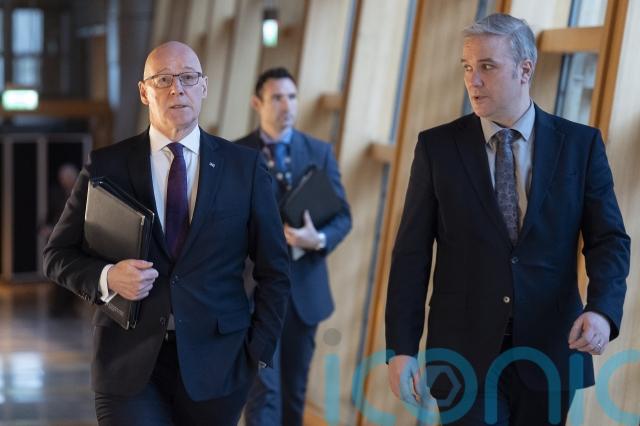
The minister said: “One of the things I would want to highlight, really at the outset of this session, is I very much recognise the importance that is placed upon assessment and diagnosis, both in relation to questions around identity and validation.
“Also specifically in the case of the ADHD where in some cases it is required to ensure that the most appropriate treatment can be provided, specifically medication.
“I also recognise that the committee will have heard evidence that, and what she will touch upon this in more detail, is that where we do have a system that is in principle based upon need, that there are many who feel that without a assessment and diagnosis, it is more difficult to access support.
“And I’m conscious that that in itself then leads to greater pressure and focus placed upon the question of assessment and diagnosis.”
He continued that “diagnosis is not a requirement to access support”.
Mr Arthur said: “As I touched on in my opening remark that diagnosis is not a requirement to access support and often it can be the case is that very small interventions at the right time can have the most profound impact in improving an individual’s wellbeing.
“When thinking about how we utilise the resource at our disposal. It has to be applied in a way that is consistent with that needs based approach, so that we can ensure we are meeting everyone who has a need, recognising as well that there will be individuals who do not meet diagnostic thresholds, but who still have a need that must be addressed and support that is required.”
Scottish Green MSP Maggie Chapman shared concerns that without a diagnostic assessment, often people “can’t access that support”.
Robby Steel, principal medical officer for Mental Health, Mental Health Directorate, Scottish Government, responded: “As a psychiatrist I would say we need to be robust about the mechanisms that we use, the clinical mechanisms we use for confirming or refuting a diagnosis, but assessment is much broader than diagnosis.
“Assessment of needs, of educational needs, and the thing that might be causing the person the biggest problem in their life may actually not be the thing that they fulfil the diagnostic criteria for, if they do fill the diagnostic criteria at all.”
Mr Steel pointed to the increase in demand for diagnosis of neurodevelopmental conditions such as ADHD and autism across the Western world.
He continued: “In our system it’s ended up with NHS waiting lists. Whether we need a different paradigm for looking at it and allowing people to access assessments, reserving the NHS for for those who have a profile that suggests they need a full clinical assessment might be the way forward.”

Subscribe or register today to discover more from DonegalLive.ie
Buy the e-paper of the Donegal Democrat, Donegal People's Press, Donegal Post and Inish Times here for instant access to Donegal's premier news titles.
Keep up with the latest news from Donegal with our daily newsletter featuring the most important stories of the day delivered to your inbox every evening at 5pm.

This publication supports the work of the Press Council of Ireland and Office of the Press Ombudsman, and our staff operate within the Code of Practice of the Press Council. You can obtain a copy of the Code, or contact the Council, at www.presscouncil.ie, Lo-call 1800 208 080 or email: info@presscouncil.ie.