Search


21 Apr 2026
Search
21 Apr 2026

Please allow ads as they help fund our trusted local news content.
Kindly add us to your ad blocker whitelist.
If you want further access to Ireland's best local journalism, consider contributing and/or subscribing to our free daily Newsletter .
Support our mission and join our community now.
To continue reading this article, you can subscribe for as little as €0.50 per week which will also give you access to all of our premium content and archived articles!
Alternatively, you can pay €0.50 per article, capped at €1 per day.
Thank you for supporting Ireland's best local journalism!


More than one million people could be in receipt of disability benefits by the end of the next Holyrood term in 2031, experts have predicted – with Scotland’s total benefits bill also forecast to grow.
With the Scottish Fiscal Commission (SFC) predicting welfare costs could rise from £7.4 billion in 2026-27 to £9.2 billion by 2030-31, the independent body warned ministers in the next government will either need to raise more in taxes or cut spending in other areas to fund this.
In a report looking at the challenges ministers could face after May’s election, the SFC said: “The next Scottish government will need to increase its funding, or cut spending to other areas, to maintain its social security commitments.”
As well as the increase in those receiving disability benefits, SFC chairman Professor Graeme Roy said there could be “close to a million people” paying higher rates of income tax by the end of the next Scottish Parliament.
This he said was “largely due” to the Scottish Government having frozen the threshold at which people start paying the higher rate of income tax at £43,663, so rising wages see more people paying the higher charge.
Prof Roy said: “You see that in terms of the types of people who are now higher rate taxpayers, whether that be police constables after a few years or teachers with a few years’ experience, they pay more.”
There have been large increases in social security spending over this parliament, more than in any other part of the Scottish Budget. Based on current policies, we forecast social security spending will continue to increase. (2/4) pic.twitter.com/XFYnmfJ6Zr
— Scottish Fiscal Commission (@scotfisccomm) February 25, 2026
The SFC report – the last the organisation will publish before May’s election – warned the overall proportion of day-to-day funding needed to pay for benefits in Scotland could rise, from 13.7% in 2026-27 in 15.1% in 2030-31.
The SFC said: “We estimate devolved social security will account for 15% of the day-to-day budget by the end of the next parliament.
“We expect recent trends will continue, and we forecast that the total number of people receiving disability payments in Scotland will exceed one million by 2030-31.”
As a result the SFC said “over 80% of social security spending will be on disability payments”.
It raised the issue as it warned financial “pressures” will “mean the next Scottish government will need to make difficult choices”.
Tackling climate change will also “impact on the Scottish public finances in the next parliament and beyond”, the SFC added – saying incoming ministers will be responsible for making progress towards the country’s 2045 net zero target.
But this work could require an average of £0.7 billion a year additional public spending in Scotland over the period 2026 to 2050, it said.
With the 2030 child poverty target – when legislation states the number of youngsters in relative poverty should be below 10% – coming in the next Holyrood term, the SFC also said “the next Scottish government will need to take steps to achieve these goals”.
We have published our Fiscal Sustainability Perspectives report exploring what Scotland’s finances mean for the next parliament. Read it here: https://t.co/w4ac6uPOraA quick thread on some of the headline messages below 🧵 (1/4) pic.twitter.com/b3yQHkruDl
— Scottish Fiscal Commission (@scotfisccomm) February 25, 2026
The report further highlighted how capital funding – which pays for infrastructure projects such as schools, roads and hospitals – is “expected to decline over the next parliament in real terms”.
As a result the SFC warned there “will be less funding available to invest in public infrastructure, and the Scottish government may face difficult decisions about where to invest the capital budget”.
It said political parties in the run-up to the election “need to be clear about what the Scottish government can afford and the impact on public spending for people in Scotland”.
Party manifestos published ahead of the ballot “should make clear if any additional spending commitments set out would need cuts to other areas of spending or raising more revenue to fund them”, the SFC said.
Prof Roy said: “Political parties must be realistic and open when making new commitments ahead of the May election.
“Their manifestos should make clear where additional spending pledges imply higher taxes or reductions in other areas of public spending.”
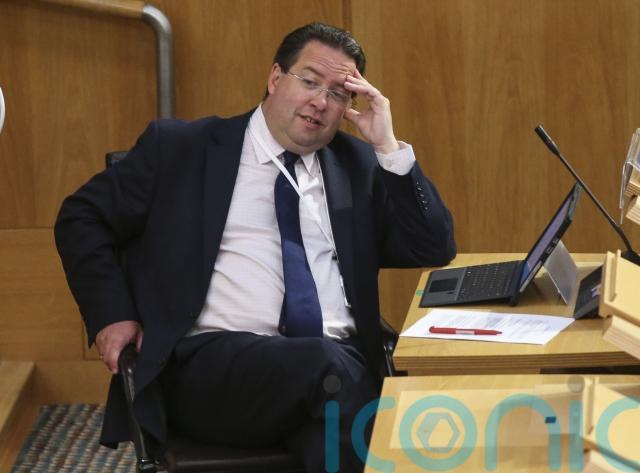
The Conservatives said the report shows that if the SNP is voted back into power, “the economic consequences will be catastrophic”.
Tory finance spokesman Craig Hoy said: “This is a damning reflection of the SNP’s economic illiteracy, which has led to unsustainable spending, stagnant growth and higher taxes.
“The benefits bill has spiralled out of control, dwarfing all other areas and creating a black hole in the nation’s finances that is set to cost taxpayers £10 billion a year by the end of the decade.
“It’s unaffordable and unsustainable to have one million Scots on disability benefits alone.
“Yet, astonishingly, only the Scottish Conservatives are willing to say that welfare spending must be reined in. Every other party, including Reform, are in denial.”
A Scottish Government spokesperson said the report “recognises the pressures the Scottish Government faces, especially when we have limited fiscal flexibilities”.
They added: “The Scottish Government has delivered a balanced budget every year despite the challenging financial environment.
“The decisions taken to ask higher earners to pay a little bit more – while ensuring most income taxpayers are expected to pay less than in the rest of the UK – support vital public services and cost-of-living measures such as free tuition, free prescriptions and the Scottish child payment to help tackle child poverty.
“The Scottish Government focuses resources to support strategic priorities – growing the economy, eradicating child poverty, tackling the climate emergency and providing high-quality and sustainable public services – whilst embedding a strategic approach to tax and reform.”

Subscribe or register today to discover more from DonegalLive.ie
Buy the e-paper of the Donegal Democrat, Donegal People's Press, Donegal Post and Inish Times here for instant access to Donegal's premier news titles.
Keep up with the latest news from Donegal with our daily newsletter featuring the most important stories of the day delivered to your inbox every evening at 5pm.

This publication supports the work of the Press Council of Ireland and Office of the Press Ombudsman, and our staff operate within the Code of Practice of the Press Council. You can obtain a copy of the Code, or contact the Council, at www.presscouncil.ie, Lo-call 1800 208 080 or email: info@presscouncil.ie.