Search


21 Apr 2026
Search
21 Apr 2026

Please allow ads as they help fund our trusted local news content.
Kindly add us to your ad blocker whitelist.
If you want further access to Ireland's best local journalism, consider contributing and/or subscribing to our free daily Newsletter .
Support our mission and join our community now.
To continue reading this article, you can subscribe for as little as €0.50 per week which will also give you access to all of our premium content and archived articles!
Alternatively, you can pay €0.50 per article, capped at €1 per day.
Thank you for supporting Ireland's best local journalism!


The public inquiries system is “overstretched and poorly defined”, MSPs have heard.
The Finance Committee has examined the cost effectiveness of public inquiries, which it found often have “ever-expanding timescales, costs and expectations”.
Committee convener Kenneth Gibson said during a debate in Holyrood on Thursday: “Our scrutiny found that public inquiries remain an essential mechanism for holding public bodies to account, reviewing past wrongs, identifying solutions and recommending policy changes.
“Nevertheless, the current system is overstretched and poorly defined.
On Thursday @scotparl will debate our report on the cost-effectiveness of public inquiries.
We found inquiries are:– over-stretched– poorly defined– subject to limited financial control.
We say @scotgov should set defined timescales and fixed budgets.
2:25pm -3.45pm📺SPTV pic.twitter.com/xS3YcGdy0a
— Finance and Public Admn Committee (@SP_FinancePAC) February 26, 2026
“Inquiries often lack a core objective, whether that is in forensic investigation, policy reform or truth-telling. Instead they often attempt to perform all those functions with ever-expanding timescales, costs and expectations.”
The overall cost of inquiries to the public purse has been more than £258 million since 2007, Mr Gibson said.
The committee has asked the Government for clear guidance for the purpose, limitations and scope of inquiries.
He continued: “We therefore ask the Scottish Government to amend the Inquiries (Scotland) Rules 2007 to require refined budgets and timescales for inquiries, with Parliament to be notified with justification for any extensions provided.”
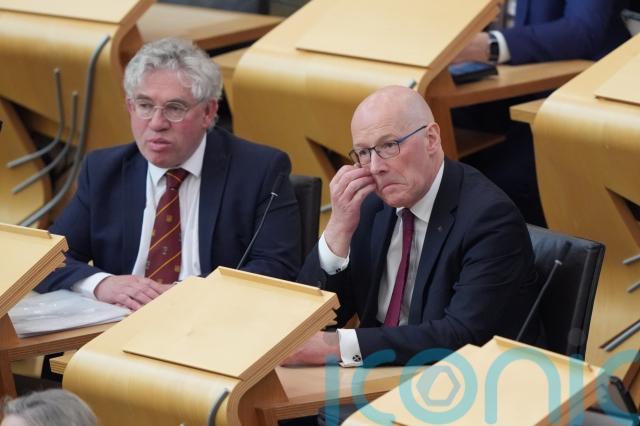
Mr Gibson said he is “disappointed” the Government has not accepted many committee recommendations.
He said: “I welcome the Scottish Government’s generally positive reception to our report, but I am disappointed it has fallen short of accepting many of the concrete, practical and evidenced actions that our committee recommended.”
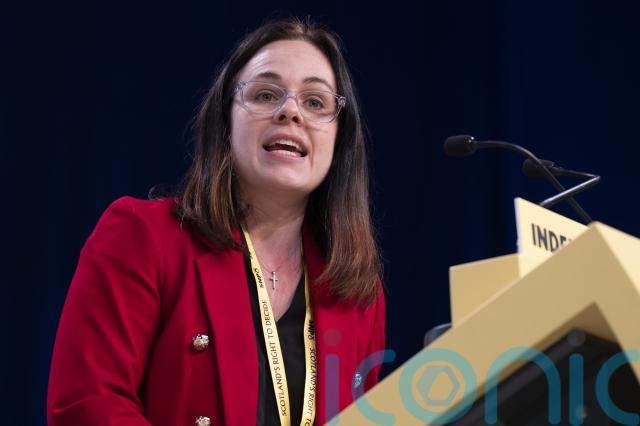
Deputy First Minister Kate Forbes said she believes there are circumstances where a limited timescale is not always the “best idea”.
She added: “With the Scottish Child Abuse Inquiry, I absolutely support the fact that it has taken longer than three years, because when it was first established it probably was not envisaged just the scale of the evidence that would be coming forward.
“I think it was vitally important that that inquiry has been allowed to run its course in taking all the evidence that it has.”
As well as the abuse inquiry, there are public inquiries ongoing in Scotland into the death of Sheku Bayoh in police custody, and into the police investigation into the murder of Emma Caldwell in 2005.
Other inquiries are examining the Scottish Government’s response to Covid, and problems with the Queen Elizabeth University Hospital in Glasgow and the Royal Hospital for Children and Young People in Edinburgh, with an inquiry also looking at the actions of disgraced neurosurgeon Sam Eljamel during his time working for NHS Tayside.
Ms Forbes continued: “We think that it is absolutely right that in some occasions in particular there should be a clearer approach to requiring explicit anticipated timescales.
“We discussed this before, but where the terms of reference are set then it is up for the chair to consider how the inquiry fulfils its terms of reference.
“I think there is a balance here for how to ensure that the inquiry chair is free to follow the evidence wherever it leads, and where a timescale has been indicated and the chair then feels that they do not need to use the full time, or indeed need to extend it, I think that needs to be a discussion with ministers.”

Subscribe or register today to discover more from DonegalLive.ie
Buy the e-paper of the Donegal Democrat, Donegal People's Press, Donegal Post and Inish Times here for instant access to Donegal's premier news titles.
Keep up with the latest news from Donegal with our daily newsletter featuring the most important stories of the day delivered to your inbox every evening at 5pm.

This publication supports the work of the Press Council of Ireland and Office of the Press Ombudsman, and our staff operate within the Code of Practice of the Press Council. You can obtain a copy of the Code, or contact the Council, at www.presscouncil.ie, Lo-call 1800 208 080 or email: info@presscouncil.ie.