
Pictured is a still of a University of Athens map shared by Carlow Weather on social media
Search


03 Mar 2026

Please allow ads as they help fund our trusted local news content.
Kindly add us to your ad blocker whitelist.
If you want further access to Ireland's best local journalism, consider contributing and/or subscribing to our free daily Newsletter .
Support our mission and join our community now.
To continue reading this article, you can subscribe for as little as €0.50 per week which will also give you access to all of our premium content and archived articles!
Alternatively, you can pay €0.50 per article, capped at €1 per day.
Thank you for supporting Ireland's best local journalism!


Scotland’s Chief Constable has made clear police officers “cannot continue” to spend more time helping people in mental health crisis than dealing with crime.
Jo Farrell said the force has “to do something different in this space” because its “primary responsibility” is the prevent and detect crime.
Dealing with those in crisis is “mental health and not a justice issue” she insisted to the Scottish Police Authority.
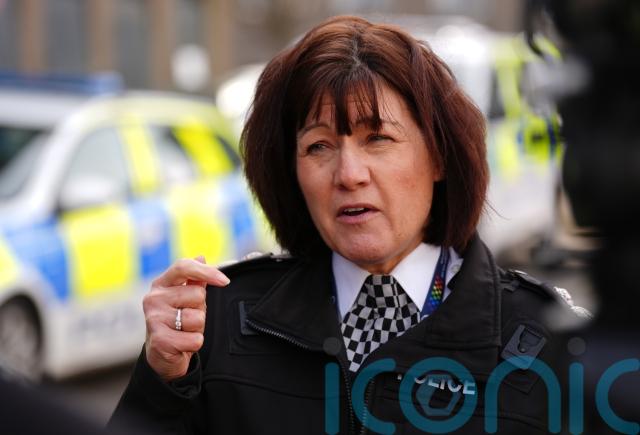
Her comments have been backed by David Threadgold, the chairman of the Scottish Police Federation, who said that Police Scotland has to “become more selfish as an organisation” and focus on its core duties.
Mr Threadgold told justice and home affairs magazine 1919 that “Police Scotland is at the point – and it was acknowledged publicly by the Chief – where we are going to have to do something different”.
Speaking about the police force he said: “So much of our focus and our ability to play our part in the public sector in Scotland has been lost, because we’ve been picking up the health function.
“That has to change now.”
His comments came after the Chief Constable told the Scottish Police Authority that the “primary responsibility” of police officers is “around prevention and detection of crime and bringing offenders to justice”.
Speaking out about the time officers spend helping those in mental health crisis, she said: “We are going to have to do something very different in this space.
“I cannot continue to have a situation where we are spending more time in this arena than we are on our core roles and responsibilities.
“I’m saying that publicly… having engaged at every level, having entered into collaborations and other agreements, now is the time for us as Police Scotland to do something different in this space, because we cannot continue to operate in this way, and our responsibilities lie elsewhere, and threat, risk and harm directs us into other areas.”
In the wake of those comments Scottish Conservative justice spokesman Liam Kerr called on Scottish Government ministers to “listen to the experts and ease the pressure on our frontline officers”.
Mr Kerr said: “Police are often the first on the scene and the last to leave, but that doesn’t mean their goodwill should be exploited.
“Those experiencing a mental health crisis should ideally get support from those with medical training, not police officers, who should be dealing with criminal behaviour.”
Meanwhile Labour justice spokeswoman Pauline McNeill said with mental health services “in crisis” the police are now “expected to act as the emergency service of last resort”.
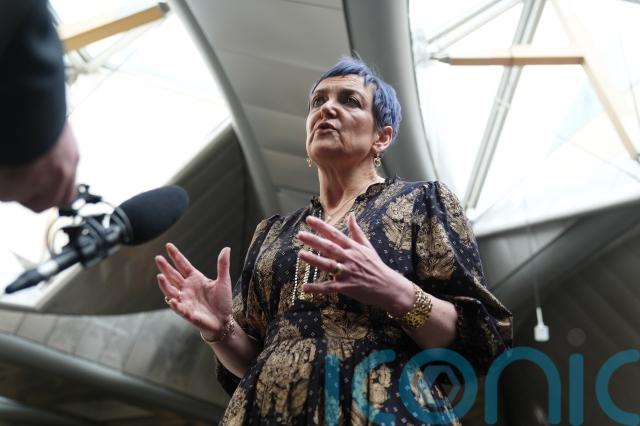
She stated: “Almost one in five police incidents now relates to mental health distress, with officers routinely tied up for hours on cases they are not trained to handle.
“Despite the dedication of frontline police, this means fewer officers on our streets and thousands of vulnerable people denied the professional mental health support they urgently need.”
Justice Secretary Angela Constance said she was “grateful” to police “for all they do to help those in distress” as she told how the Government was investing more funding to help people in crisis.
She also stressed that “statistics show that mental health-related incidents recorded by Police Scotland reduced between 2023-24 and 2024-25”.
Ms Constance said the Government is “working in partnership with Police Scotland, the Scottish Police Authority, health boards and local authorities to drive forward more improvements”, insisting that “these actions are making a difference”.
The Justice Secretary added: “Police Scotland’s use of the ‘enhanced mental health pathway’, directing emergency calls from people in distress to the 24/7 NHS 24 mental health hub, avoids the need for officers to attend mental health incidents and has freed up 76,000 hours of officer time since 2020.
“This is additional to initiatives such as the ‘distress brief intervention’, which reduces unnecessary callouts and facilitates quick access to compassionate and effective support.
“We are investing an additional £3.5 million in improving our 24/7 response to mental health emergencies and have recently announced the expansion of NHS 24’s mental health hub support to include psychological therapies.”

Subscribe or register today to discover more from DonegalLive.ie
Buy the e-paper of the Donegal Democrat, Donegal People's Press, Donegal Post and Inish Times here for instant access to Donegal's premier news titles.
Keep up with the latest news from Donegal with our daily newsletter featuring the most important stories of the day delivered to your inbox every evening at 5pm.

This publication supports the work of the Press Council of Ireland and Office of the Press Ombudsman, and our staff operate within the Code of Practice of the Press Council. You can obtain a copy of the Code, or contact the Council, at www.presscouncil.ie, Lo-call 1800 208 080 or email: info@presscouncil.ie.