Why is there no RTE Late Late Show tonight?
Search


07 Mar 2026

Please allow ads as they help fund our trusted local news content.
Kindly add us to your ad blocker whitelist.
If you want further access to Ireland's best local journalism, consider contributing and/or subscribing to our free daily Newsletter .
Support our mission and join our community now.
To continue reading this article, you can subscribe for as little as €0.50 per week which will also give you access to all of our premium content and archived articles!
Alternatively, you can pay €0.50 per article, capped at €1 per day.
Thank you for supporting Ireland's best local journalism!


Scotland’s public services are performing significantly worse than they were before the Covid-19 pandemic, a study has found.
The Institute for Fiscal Studies (IFS) said hospitals, schools and courts are doing worse than pre-2020 levels despite a substantial increase in funding.
Six years on since the start of the pandemic, the independent think tank said there are signs of improvement.
It said comparisons with the rest of the UK are difficult to make due to how services are delivered and monitored, but the evidence suggests Scotland is doing better in some areas but worse in others.
The study pointed to the number of hospital admissions and outpatient appointments in Scotland continuing to be below 2019 levels, unlike in England and Wales.
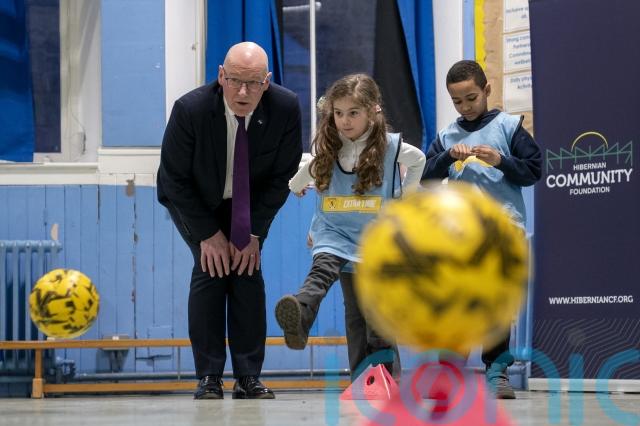
Performance in international Pisa tests for 15-year-olds has been consistently falling and is lower than in England since the early 2010s, while the gap between school absence rates in Scotland and England has grown since the pandemic.
The IFS also said that after a bigger deterioration during the pandemic, Scottish courts have been significantly reducing backlogs over the last two years, while they have continued to rise slowly and steadily in England and Wales.
Accident and emergency waits, while far from target, are not quite as long in Scotland as in the rest of Britain.
The report noted that despite NHS staffing numbers being up 14%, hospital activity remains below pre-pandemic levels.

Looking ahead, the think tank said a “tough funding outlook and the hangover from some bad budgeting habits” of the current Scottish Government means it will be difficult to sustain “let alone improve” service performance in the coming parliamentary term.
The warnings come as part of the key findings from the IFS’s second Scottish election briefing, funded by the Nuffield Foundation and the Robertson Trust.
The reports look at how spending on public services in Scotland has evolved over time and how it compares with England.
The IFS’s previous report suggested Scotland may have to axe free tuition fees and more generous benefits as its budget becomes more strained.
In February, the think tank found that while Scotland received 26% more per resident for devolved public services compared to England, this funding advantage will continue to decline.
🚨The KEY finding from our new @theIFS election briefing on @scotgov funding.
Scotland enjoys a big funding advantage compared to England – 26% as of 2024-25. That's the main reason for more generous services.
BUT advantage is being squeezed – from 32% in 2019 to 23% in 2028… https://t.co/kPYszTR6uH
— David Phillips (@fiscalphillips) February 17, 2026
Olly Harvey-Rich, a research economist at IFS and a co-author of the report, said: “Scotland has seen some recent improvement in waiting times for pre-planned hospital treatment, and A&E waiting times are a little better than in both England and Wales.
“However, waiting times remain much higher than pre-pandemic. And in contrast to England and Wales, Scotland has failed to restore hospital activity to pre-pandemic levels, which will be holding back performance.
“That’s despite increases in funding and staffing, suggesting that hospitals in Scotland are substantially less productive than pre-pandemic. The same is true of England and Wales, but even bigger increases in staffing in these countries have enabled activity to overtake pre-pandemic levels.”
Magdalena Dominguez, a senior research economist at IFS and another co-author of the report, said: “Court performance in Scotland deteriorated sharply during the pandemic, but there has been clear improvement over the past three years, with reductions in both backlog and case duration.
“In England and Wales, pressures built up more gradually, but backlogs and waiting times remain high, with less evidence of easing.
“Scotland’s recent trajectory has been more positive, although the backlog for serious cases remains around twice its pre-pandemic level.”
David Phillips, head of devolved and local government finance at IFS and also a co-author of the report, added: “Scottish public service spending is substantially higher than in England overall, including for schools, where performance seems to lag England.
“Looking ahead, there is set to be a significant slowdown in increases in funding from the UK Government.
“Combined with a hangover from some bad budgeting habits the current Scottish Government has got into – for example, relying on one-off funding for recurrent costs such as pay increases – this means the Scottish budget will be under strain.
“Indeed, in the absence of increases in revenues – whether from tax rises or significant increases in economic growth in Scotland – many public services will likely face cuts in their budgets over the coming Parliament.
“That will make sustaining – let alone improving – performance a real challenge for the next Scottish government.
“Indeed, if it were not for additional UK Government funding confirmed in the spring statement this week, a post-election emergency Scottish budget and in-year cuts to other services would have been very much on the cards, in order to top up health spending and prevent significant financial problems in the Scottish NHS.”
The Scottish Government has been approached for comment.

Subscribe or register today to discover more from DonegalLive.ie
Buy the e-paper of the Donegal Democrat, Donegal People's Press, Donegal Post and Inish Times here for instant access to Donegal's premier news titles.
Keep up with the latest news from Donegal with our daily newsletter featuring the most important stories of the day delivered to your inbox every evening at 5pm.

This publication supports the work of the Press Council of Ireland and Office of the Press Ombudsman, and our staff operate within the Code of Practice of the Press Council. You can obtain a copy of the Code, or contact the Council, at www.presscouncil.ie, Lo-call 1800 208 080 or email: info@presscouncil.ie.