The shocking act happened near the Shannon River on the Condell Road I PICTURE: Google Maps
Search


12 Mar 2026

Please allow ads as they help fund our trusted local news content.
Kindly add us to your ad blocker whitelist.
If you want further access to Ireland's best local journalism, consider contributing and/or subscribing to our free daily Newsletter .
Support our mission and join our community now.
To continue reading this article, you can subscribe for as little as €0.50 per week which will also give you access to all of our premium content and archived articles!
Alternatively, you can pay €0.50 per article, capped at €1 per day.
Thank you for supporting Ireland's best local journalism!


John Swinney has said voters will be able to judge him in 2031 if he misses the Government’s child poverty target, as he hinted he will not resign if he fails to achieve his key pledge.
Since taking office in 2024, the First Minister has made the eradication of child poverty his driving mission, but the Government remains well short of reducing the rate – which currently sits at 22% – to 10% by the end of the decade.
The Government has already missed its interim target of reducing the rate to 18% by 2023-24.
With the SNP still enjoying a substantial lead over opposition parties in the polls and Mr Swinney looking to be in power after May’s election, he refused to say when asked by the Press Association if he will resign if he misses the goal.
“I’m just going to do everything I can to make sure we achieve those targets and make the priorities within Government to do all of that,” he said.
“Those are the substantial commitments I make to the public in Scotland to make sure that we put the resources in place to support the policies that can achieve that objective.
“Now, of course, I’m doing that within a context of prevailing conditions in the UK that could be very hostile to the agenda that I’m taking forward.
“I will do my level best to achieve that and allow the people of Scotland to judge on my record.”
Pressed again on whether he will quit if he misses the target, the First Minister said: “People will be able to see what I’ve done by 2031… it’s entirely up to the public to make their judgment.
“But I’m confident that I can give the leadership and the direction and the resources and the policy interventions to make sure that we achieve those targets.”
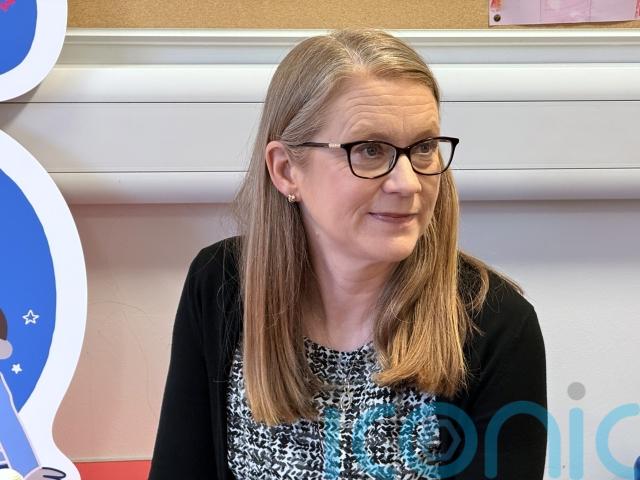
The First Minister’s comments come as the Government prepared to unveil a new child poverty plan on Thursday, which will cover the next parliamentary session.
Speaking ahead of the publication, Social Justice Secretary Shirley-Anne Somerville said the plan will “provide a brighter future for every child”.
She added: “It will focus on tackling the root causes of child poverty, boosting incomes, and reducing everyday costs.
“It will also include details on how we will further embed support where people need it, when people need it, by ensuring the public and third sector act as one in communities across the country.
“Through bold action, rates of relative child poverty in Scotland have reached the lowest in almost a decade, standing nine percentage points below the UK average.
“Policies only seen in Scotland, like the Scottish child payment, are central to this, and giving more children the opportunity to thrive.
“Ensuring that is the case for every child remains our top priority.”

Subscribe or register today to discover more from DonegalLive.ie
Buy the e-paper of the Donegal Democrat, Donegal People's Press, Donegal Post and Inish Times here for instant access to Donegal's premier news titles.
Keep up with the latest news from Donegal with our daily newsletter featuring the most important stories of the day delivered to your inbox every evening at 5pm.

This publication supports the work of the Press Council of Ireland and Office of the Press Ombudsman, and our staff operate within the Code of Practice of the Press Council. You can obtain a copy of the Code, or contact the Council, at www.presscouncil.ie, Lo-call 1800 208 080 or email: info@presscouncil.ie.